Sculpture & Ceramics
He didn't just paint the revolution — he built it, fired it, and glazed it.
The sculptor
Picasso made sculpture throughout his life, often from nothing: the 1912–14 cardboard and sheet-metal guitars that are cubism in three dimensions; the great bronze heads of Marie-Thérèse Walter (1931–32), modeled in plaster at Boisgeloup; the welded and assembled figures of the postwar years. His method was collage thinking applied to space — found objects, bicycle seats and handlebars becoming a bull’s head (Bull’s Head, 1942).
Vallauris: the potter
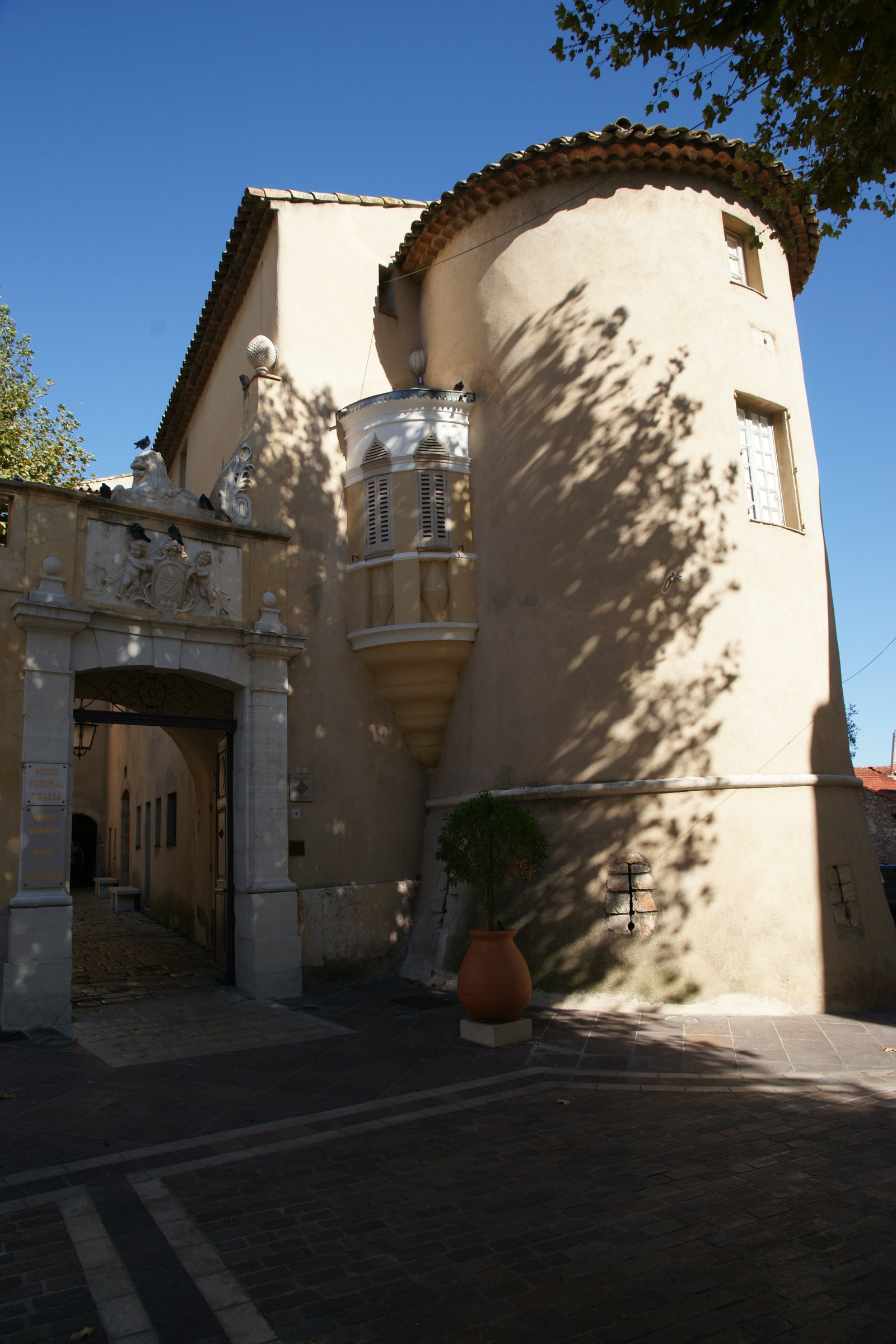
In 1946, visiting Vallauris in the south of France, Picasso was captivated by the Madoura pottery. He stayed to work — and kept working for years, producing thousands of ceramic pieces: plates painted with bullfights and owls, vessels reshaped into animals and faces, clay treated with a painter’s freedom and a child’s delight. Ceramics, the most ancient and humble of media, got the full Picasso reinvention.
Linocuts
In the 1950s–60s he revolutionized the linocut, developing a reductive method — carving and printing successive colors from a single block — that produced prints of startling chromatic richness from a medium most artists used for posters.
Why it matters
The sculpture and ceramics prove the central thesis of his career: the idea, not the medium, is the art. Cardboard, clay, bronze, linoleum — Picasso treated every material as another kind of paint, and every kind of paint as another way of thinking.
Source notes
Vallauris dates and the Madoura collaboration are documented in the standard literature and the Musée Picasso-Paris. See Sources.