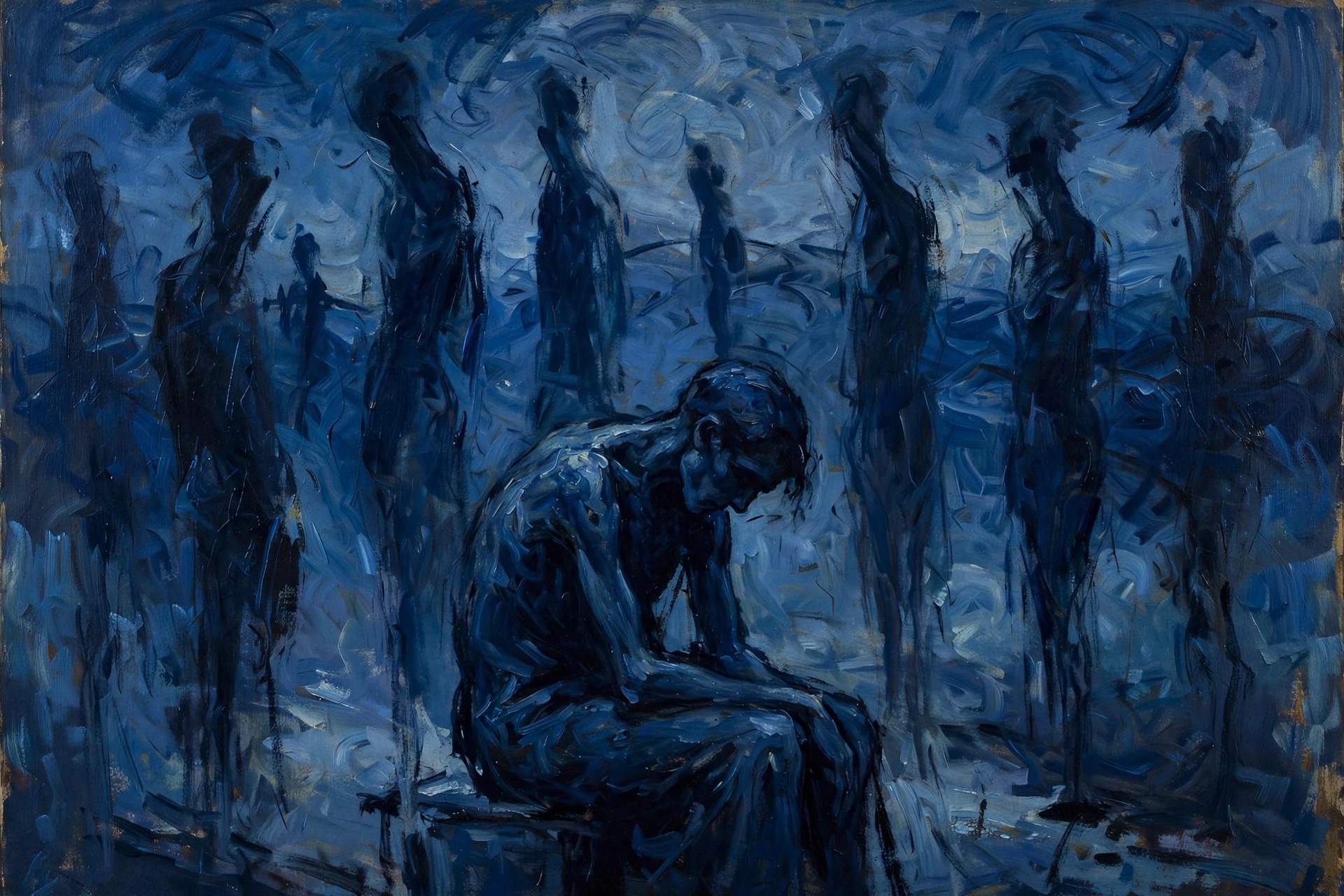
Blue Period
1901–1904 — grief, poverty, and a palette the color of mourning.
How it began
On 17 February 1901, Picasso’s closest friend Carles Casagemas shot himself in a Paris café, hours after failing to kill the woman he loved. Picasso, nineteen, was in Madrid when he heard. He painted his dead friend repeatedly — laid out in his coffin, rising toward a mourning figure — and then kept painting in the cold blue of that loss for three years.
The color was not only grief. Picasso was poor, living between Barcelona and Paris, surrounded by the people respectable society looked past: beggars, blind street musicians, prostitutes, mothers nursing children in bare rooms. Blue flattened them into a single weather — melancholy as atmosphere.
What to look for
- Near-monochrome blue, sometimes warmed by a touch of ochre or green — color as emotion rather than description.
- Elongated, gaunt figures with downcast eyes; the influence of El Greco, whom Picasso had studied at the Prado.
- Subjects of destitution: The Old Guitarist (1903–04, Art Institute of Chicago), La Vie (1903, Cleveland Museum of Art), The Blind Man’s Meal (1903, Metropolitan Museum of Art).
- A classical gravity beneath the sadness — these are composed, deliberate paintings, not sketches of despair.
The market’s verdict, then and later
Almost nothing sold. The Blue Period was a commercial failure in its own time — dealers found it too depressing. A century later, Blue Period works are among the most valuable paintings on earth: Boy with a Pipe (1905, technically the Rose Period’s threshold) sold at Sotheby’s in 2004 for $104.2 million, then the highest price ever paid for a painting at auction.
Why it matters
The Blue Period was Picasso’s first fully personal style — the moment he stopped proving he could paint like the old masters and started painting what he felt. Every later reinvention follows the same pattern: a shock, a color, a world.
Source notes
The Casagemas suicide (17 February 1901) and its role in the Blue Period are documented in Richardson’s biography and standard references. Auction figures are reported sale results (Sotheby’s, May 2004). See Sources.