Rose Period
1904–1906 — love arrives, and blue gives way to rose.
How it began
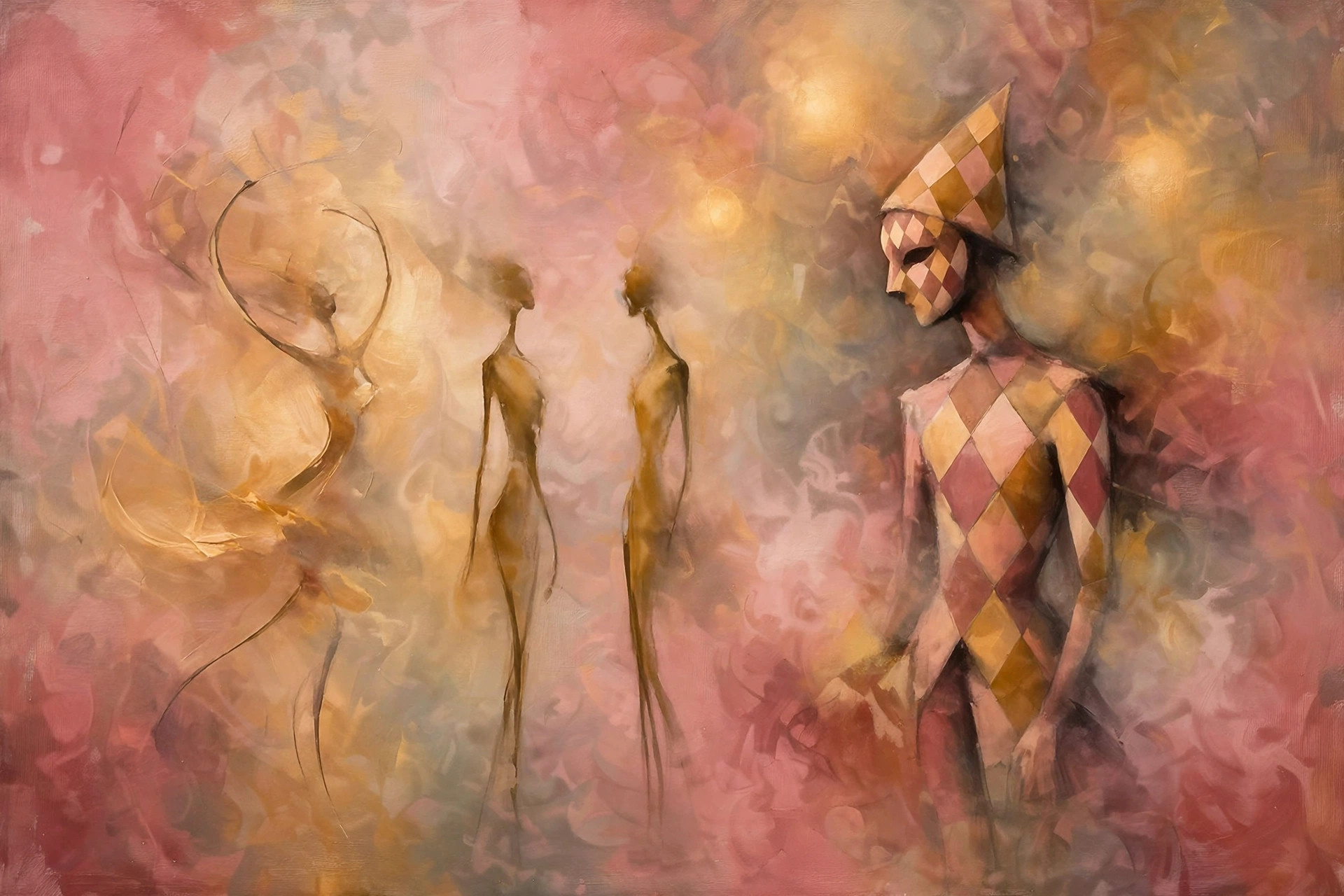
In 1904 Picasso settled in Paris — a studio at the Bateau-Lavoir in Montmartre — and met Fernande Olivier, the first great love of his adult life. The grays lifted. His palette warmed into pinks, roses, and ochres; his subjects turned to the traveling performers he watched at the Cirque Médrano: harlequins, acrobats, saltimbanques — itinerant entertainers who, like Picasso himself, lived on talent and the edge of respectability.
What to look for
- Rose, pink, and warm ochre replacing the Blue Period’s cold monochrome — though melancholy never fully leaves; the harlequin is often pensive, even sad.
- The harlequin as self-portrait: Picasso identified with the masked clown-outsider and painted him repeatedly.
- Key works: Family of Saltimbanques (1905, National Gallery of Art, Washington), Boy with a Pipe (1905, private collection), The Acrobat’s Family with a Monkey (1905).
- A new monumentality — figures grow larger, calmer, more sculptural, pointing toward the classical turn that would follow.
The hinge to what came next
The Rose Period ends around 1906, when two shocks redirect him: the ancient Iberian sculpture he saw at the Louvre, and the African masks and figures circulating through Paris. The warm naturalism of the saltimbanques fractures into the mask-like faces of the proto-cubist works of 1906–07 — and then into Les Demoiselles d’Avignon. (African Art, Les Demoiselles)
Source notes
Period dates are conventional ranges. The Fernande Olivier relationship (1904–1912) and the Cirque Médrano material are documented in Richardson and in Olivier’s own memoirs. See Sources.