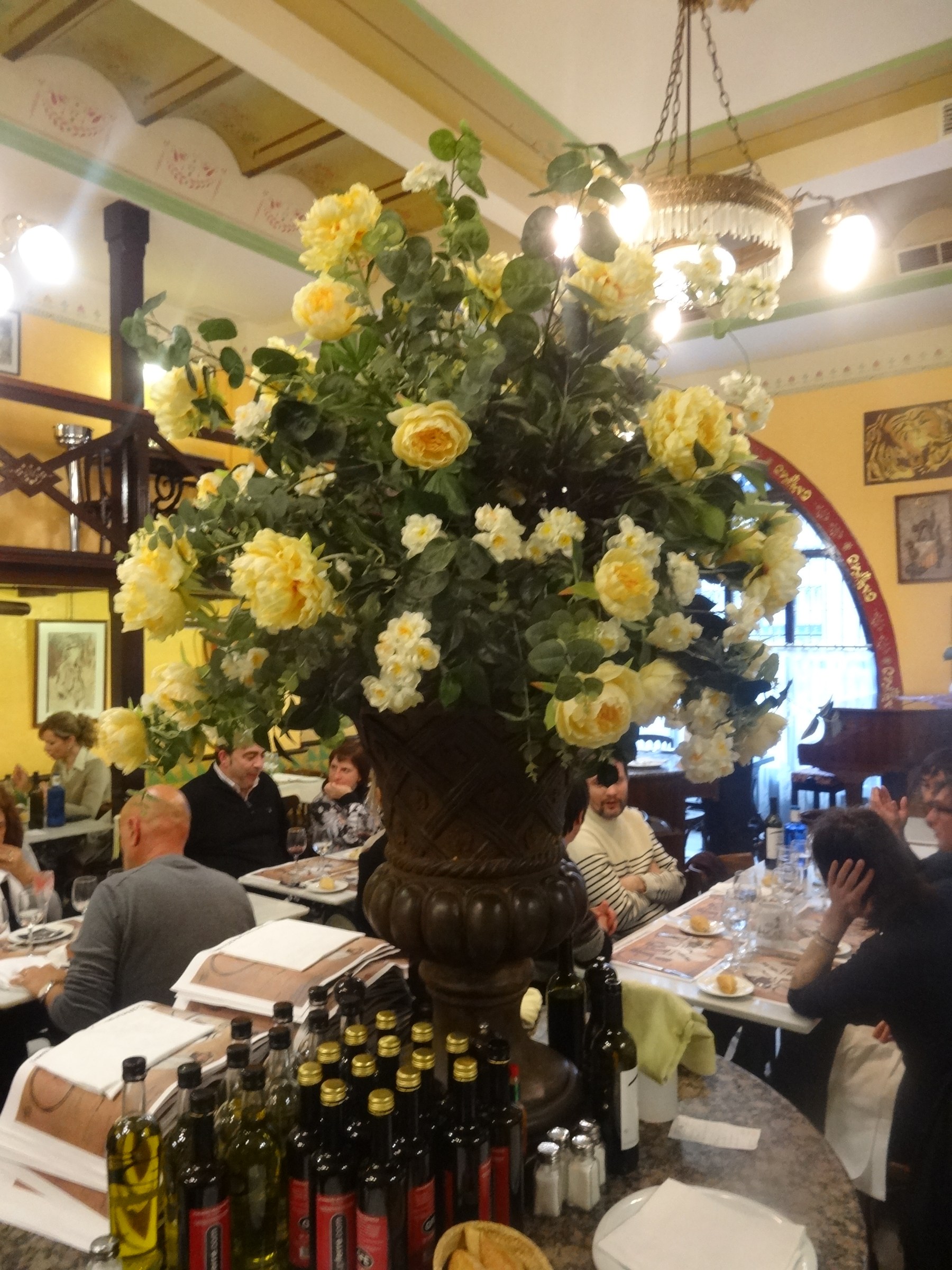
Barcelona & Els Quatre Gats
1895–1900 — the café that made the bohemian.
La Llotja
Arriving in Barcelona in 1895, the thirteen-year-old Picasso passed the entrance exams for the La Llotja fine-arts school with work the examiners found startling. He absorbed the academic method — and immediately began looking past it, toward the city’s avant-garde.
The Four Cats
Els Quatre Gats (“The Four Cats”), a café in the Casa Martí modeled on Paris’s Le Chat Noir, was the headquarters of Catalan modernisme. Picasso fell into its circle — painters, poets, wits — designed the café’s menu (a drawing that is itself a small masterpiece of the era), and in February 1900 held his first solo exhibition there: charcoal portraits of the circle, hung salon-style.
The circle
Carles Casagemas, the doomed closest friend. Jaime Sabartés, the lifelong secretary-to-be. The painters Ramon Casas and Santiago Rusiñol, the house’s patron spirits. It was a complete bohemian education: talk, drink, manifestos, poverty worn as a uniform.
What Barcelona gave him
Two things he never lost: the caricaturist’s eye — the quick, cruel, loving line of the café portraits — and the understanding that art happens in rooms full of people arguing, not in academies. When he got to Paris, he rebuilt the room: the Bateau-Lavoir circle, the Rotonde, the studios. The pattern was set at Els Quatre Gats.
Source notes
The 1900 Els Quatre Gats exhibition and the menu design are documented in the standard biographies. See Sources.