Start Here
Ten minutes on Napoleon Bonaparte — the Corsican artillery officer who ruled Europe, the real record, the honest gaps, and where to go next.
Who was he?
Napoleon Bonaparte (1769–1821) was a French military commander and ruler who rose from provincial obscurity to dominate Europe between 1796 and 1814, fell, returned for a hundred days, and died in British exile on St. Helena. In fifteen years of power he recast French law, administration, and education, redrew the map of Europe in war after war, and left a legend that outlived every one of his institutions.
The short version: born in Corsica, trained as an artillery officer, made famous by the revolutionary wars, seized power in a coup in 1799, crowned himself emperor in 1804, won at Austerlitz and Jena, broke his empire invading Russia in 1812, abdicated in 1814, escaped Elba, lost at Waterloo in 1815, and dictated his own legend from a damp house on a South Atlantic island until his death.
The full narrative is on the Biography page. This page is the fast version.
What did he actually do? (the short list)
- Seized power by coup (18 Brumaire, 9 November 1799) and ended a decade of revolutionary government as First Consul.
- Rebuilt the French state: the Napoleonic Code (1804), the Bank of France, the lycée system, prefects, the Concordat with the Church (1801).
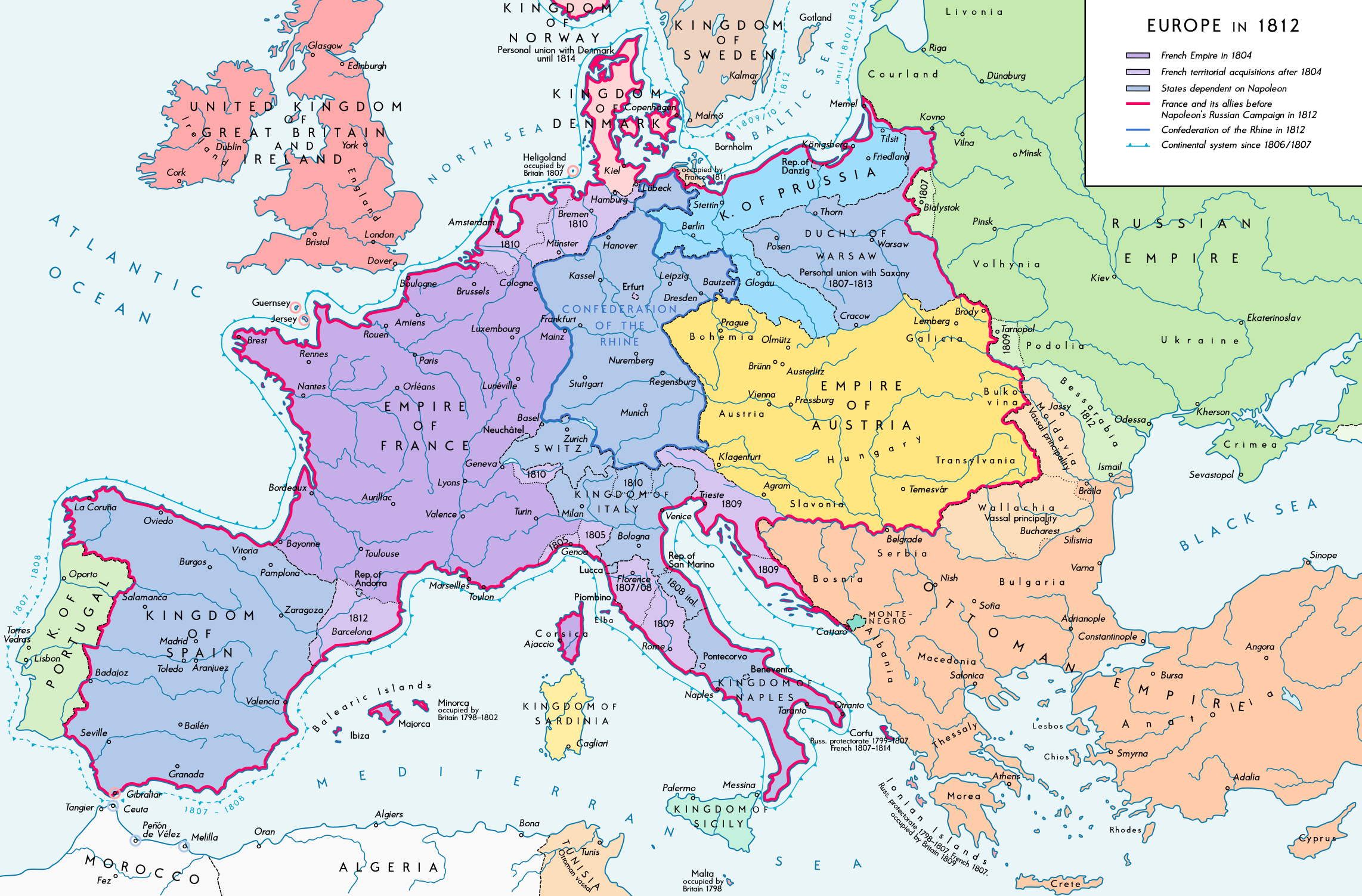
- Redrew Europe by conquest: satellites and allies from Spain to Poland at the empire’s height in 1811–1812.
- Destroyed the old order’s armies at Austerlitz (1805) and Jena (1806) — then lost it all in Russia (1812) and at Waterloo (1815).
- Wrote constantly: thousands of surviving letters, orders, and proclamations — the raw material for everything he said.
For the campaigns in detail, see Campaigns; for the dates, Timeline.
Three things people get wrong
- He was not short. At his death he measured 5 feet 2 inches in French inches, which is about 5′6″–5′7″ (1.69 m) — roughly average for a Frenchman of his generation. The myth came from British caricature, the French/English inch confusion, and the habit of surrounding himself with tall guardsmen. See Legend vs. Scholarship.
- Most of his famous quotes are fake. “Never interrupt your enemy when he is making a mistake,” “a leader is a dealer in hope,” “China is a sleeping giant” — none of them is found in his letters, proclamations, or any contemporary source. The Sayings page includes only quotations with a real source and labels the misattributions plainly.
- He was not only a general. The Civil Code he signed is still the basis of law across much of Europe, Latin America, and beyond. Armies forget him; law schools don’t.
Where to go next
- The narrative: Biography
- The dates, with certainty labels: Timeline
- The five defining campaigns: Campaigns
- His real words — and the fake ones: Sayings
- The people around him: People
- The legend, checked against the record: Legend vs. Scholarship
- Terms explained: Glossary
- How this site knows what it knows: Methodology
Source notes
- This primer is a summary of the site’s longer pages; each section links to the page that carries the full citations.
- Dates here are Gregorian; where the Revolutionary calendar applied, both are given (see Methodology).
- Every factual claim above is expanded and sourced on Biography, Timeline, or Legend vs. Scholarship. No claim on this page rests on a source not cited elsewhere on the site.