Glossary
The terms, decoded — in plain language.
Armée du Nord
The army Napoleon led in the 1815 campaign — about 72,000 men, the force destroyed at Waterloo.
Austerlitz
See Campaigns. The battle of 2 December 1805 in Moravia; Napoleon’s most famous victory, the “Battle of the Three Emperors.”
Bicorne
The two-cornered hat Napoleon wore sideways (“en bataille”), which became his visual signature. He wore it to be recognized at a distance — early personal branding.
Brumaire, 18
The coup of 9 November 1799 that overthrew the Directory and made Bonaparte First Consul. The Revolutionary calendar’s month of Brumaire; see Revolutionary calendar.
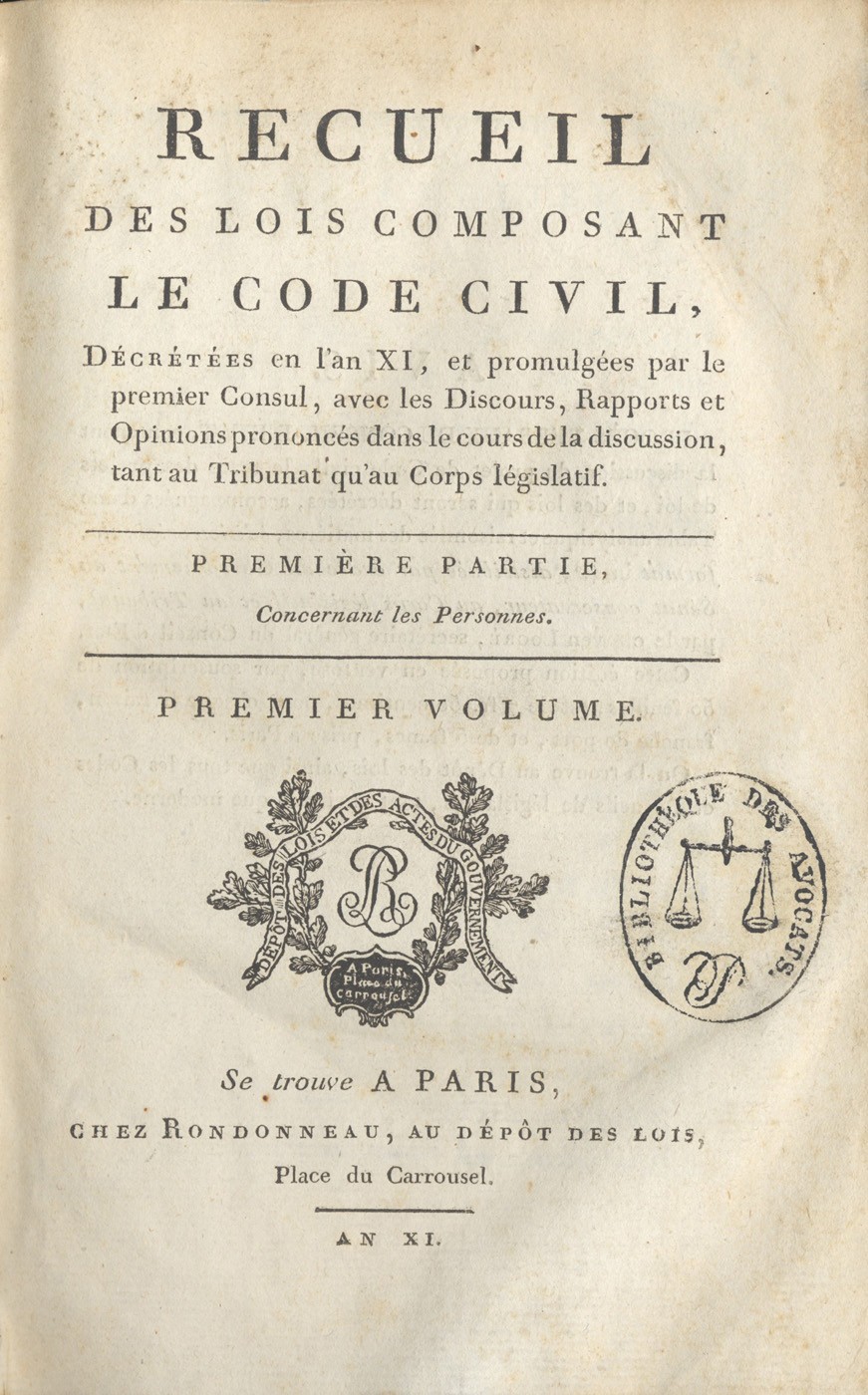
Civil Code (Code civil / Napoleonic Code)
The 1804 codification of French civil law: equality before the law, property rights, secular marriage — and the legal subordination of women and the re-embracing of slavery in the colonies. Still the basis of law in much of Europe, Latin America, and beyond.
Coalition wars
The series of alliances against revolutionary and Napoleonic France (First through Seventh Coalitions, 1792–1815), financed largely by Britain. Napoleon defeated the first six in turn; the Seventh ended him at Waterloo.
Concordat
The 1801 agreement between Napoleon and Pope Pius VII restoring the Catholic Church in France — on the state’s terms, with bishops nominated by the government.
Consulate
The regime of 1799–1804, with Napoleon as First Consul. Technically republican, functionally a military dictatorship with plebiscites.
Continental System
Napoleon’s 1806–1814 attempt to close all of Europe to British trade, meant to strangle Britain’s economy. It strangled Europe’s instead, and enforcing it led to the Peninsular War and the invasion of Russia.
Corps (d’armée)
The Napoleonic army’s great organizational innovation: self-contained combined-arms formations (infantry, cavalry, artillery) that could march separately and fight together — the reason the Grande Armée could move faster than its enemies.
Directory
The five-man government of revolutionary France (1795–99) that Napoleon overthrew on 18 Brumaire.
Elba
The Mediterranean island where Napoleon was exiled after his first abdication (1814) — sovereign of a miniature empire for ten months before his escape.
Grande Armée
Strictly, the army Napoleon led into Russia in 1812 (about 600,000 men); loosely, his main field army of the Empire years. Famous for its speed, its staff work, and its destruction.
Hundred Days
The period from Napoleon’s landing in France (1 March 1815) to his second abdication (22 June 1815) — the return from Elba and the Waterloo campaign.
Les Invalides
The Paris military hospital and chapel whose dome covers Napoleon’s tomb; his remains were installed there in 1861 after their return from St. Helena in 1840.
Longwood
Napoleon’s residence-in-captivity on St. Helena (1815–21) — damp, windswept, and the setting for the memoirs and conversations that built his legend.
Marshal of the Empire
The highest military rank Napoleon created (1804); eighteen generals received the baton at first, more later. Ney, Davout, Murat, and Berthier were among them. The title carried enormous prestige and, usually, a title of nobility.
Mémorial de Sainte-Hélène
Emmanuel de Las Cases’s record of Napoleon’s conversations on St. Helena, published from 1823 — the founding text of the Napoleonic legend. Indispensable and unreliable in roughly equal measure.
Peninsular War
The war in Spain and Portugal (1808–14) after Napoleon seized both thrones — a grinding guerrilla conflict plus Wellington’s campaigns that bled the Empire of a quarter-million men. Napoleon later called it his “Spanish ulcer.”
Plebiscite
The yes/no popular votes by which Napoleon legitimized each step of his rise — the Constitution of Year VIII, the life consulate, the Empire. The results were overwhelming and, in the counting, not always scrupulous.
Prefect
The Napoleonic administrator of each French département — the backbone of the centralized state he built, and still the backbone of French administration.
Revolutionary calendar
The French Republic’s calendar (1793–1805), which renamed the months and reset the year. Napoleonic dates in it — 13 Vendémiaire (5 October 1795), 18 Brumaire (9 November 1799) — are always given here with Gregorian equivalents.
St. Helena
The South Atlantic island where Britain imprisoned Napoleon from October 1815 until his death on 5 May 1821.
Tilsit
The 1807 treaties (signed 7 and 9 July) after Friedland, when Napoleon and Tsar Alexander I met on a raft in the Niemen and became — briefly — allies dividing Europe.
Waterloo
See Campaigns. The battle of 18 June 1815 in Belgium where Wellington and Blücher destroyed the Armée du Nord — the end of the Napoleonic Wars and a byword for final defeat.
Whiff of grapeshot
The 13 Vendémiaire (5 October 1795) action in which Bonaparte’s cannon cleared royalist insurgents from the streets of Paris — the episode that made him the Directory’s indispensable man. The phrase is Carlyle’s, not Napoleon’s.
Source notes
- Definitions follow standard historical usage; where a term’s meaning is contested (e.g., the exact scope of “Grande Armée”), the entry says so.
- Dates attached to terms are documented; see Timeline for the full chronology.
- The note on plebiscite counting reflects the scholarly consensus that Napoleon’s referenda were managed affairs — stated as consensus, not as a precise fraud allegation.