Sources
What this site is built on — and where to read further.
Primary sources
- Correspondance de Napoléon Ier (32 volumes, published 1858–1870). The bedrock: thousands of Napoleon’s letters, orders, and notes. Where this site marks a quotation Documented, it is traceable here or to an official act of the same standing.
- Official proclamations and bulletins of the Grande Armée. Napoleon’s public voice — brilliant, and propagandistic. Used for what he said publicly, never as neutral evidence for what happened.
- The will, dictated at St. Helena, April 1821. The source of the “ashes on the banks of the Seine” passage quoted on Sayings.
- The Civil Code (1804), the Concordat (1801), and the laws of the Consulate and Empire. The documentary record of what he did as a ruler.
Memoirs (use with care)
- Emmanuel de Las Cases, Mémorial de Sainte-Hélène (1823). The founding text of the legend — Napoleon’s St. Helena conversations as his follower recorded them. A primary source for Napoleon’s self-image; a secondary and partisan source for facts.
- Louis-Antoine Bourrienne, Mémoires (1829–31). Napoleon’s former secretary — intimate, score-settling, sometimes unreliable.
- Armand de Caulaincourt, Mémoires (published 1933). The most respected of the insider memoirs, especially on Russia 1812 and the fall.
- General Gourgaud and General Montholon, St. Helena diaries and accounts — the sources for the disputed last words and much of the exile detail.
The rule this site follows: a memoir claim stated by one witness is Reported; stated by several independent witnesses, it may be treated as established; contradicted by documents, it loses.
Modern scholarship
- Andrew Roberts, Napoleon: A Life (2014). The most readable one-volume modern biography; sympathetic, massively documented.
- Adam Zamoyski, 1812: Napoleon’s Fatal March on Moscow (2004). The standard modern account of the Russian catastrophe.
- Philip Dwyer, Napoleon: The Path to Power (2008) and Citizen Emperor (2013). The best scholarly two-volume life; strongest on the revolutionary years.
- David A. Bell, Napoleon: A Concise Biography (2015). Short, sharp, and skeptical — the best single-volume corrective.
- Antoine-Henri Jomini, Summary of the Art of War (1838). The contemporary military theory that transmitted (and possibly invented) several famous Napoleonic maxims — see Sayings.
Images
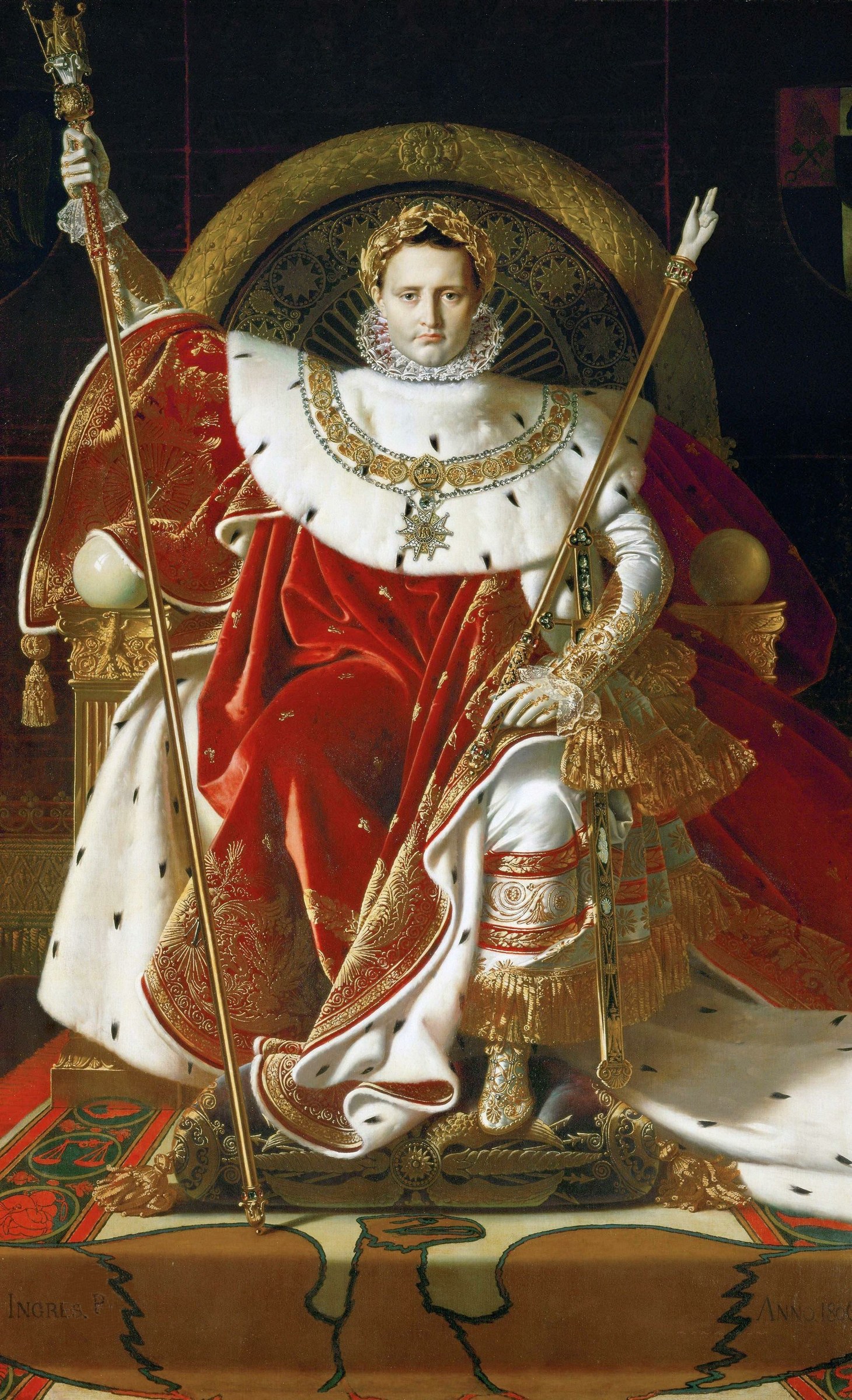
See the image captions for credits and context. Illustrated character art is a dramatization.
Captions throughout the site state each image’s status: contemporary record, official propaganda, later retrospective, or commercial print.
What this site does not use
- Quotation collections without sources (the main vector for fake Napoleon quotes).
- Wikipedia as a citation (useful as a finding aid; never as the authority).
- Napoleon’s bulletins as evidence for casualty figures or enemy losses.
- Any source that cannot be named. If a claim’s only basis is “it is said,” the claim is labeled accordingly or omitted.
Source notes
- The bibliography above names real works; publication details are as stated. Readers checking a specific claim should start with the Correspondance for documented quotations and with Dwyer or Roberts for narrative facts.
- See the image captions for credits and context. Illustrated character art is a dramatization.
- Correction policy: if a reader produces a primary source for any claim labeled Attributed or any item in the misattributions list, the page will be corrected with the new source cited — see Methodology.