Start Here
Lincoln in five minutes — who he was, why he matters, and how this site handles what we know, what we don't, and what gets misquoted.
The one-paragraph life
Abraham Lincoln (February 12, 1809 – April 15, 1865) was the 16th president of the United States, serving from March 4, 1861, until his assassination. A self-educated lawyer from Illinois, he rose through state politics, lost a famous 1858 Senate race to Stephen A. Douglas, and won the presidency in 1860 as the candidate of the new Republican Party — an outcome that helped trigger Southern secession and the Civil War. As president he preserved the Union, managed a fractious cabinet and a revolving cast of generals, issued the Emancipation Proclamation (January 1, 1863), pushed the Thirteenth Amendment abolishing slavery, delivered the two most famous speeches in American political history, won re-election in 1864, and was shot by the actor John Wilkes Booth on April 14, 1865 — five days after Robert E. Lee’s surrender at Appomattox effectively ended the war.
Why he matters (the neutral version)
Three things, none of them simple:
- He held the country together through its breaking. Whether secession was legal, whether the war was necessary, and what it cost are argued to this day — see Reception & Debates. That the United States survived as one nation is the fact; the moral accounting is the argument.
- He turned a war for the Union into a war against slavery. The Emancipation Proclamation was a limited military measure that changed the war’s meaning — see the deep dive.
- He wrote the language the country still uses to talk about itself. “A house divided,” “the better angels of our nature,” “government of the people, by the people, for the people” — see Sayings, which prints only what he verifiably said, and quarantines the famous fakes.
How to read this site
- Verbatim means verbatim. Quotations are printed exactly as documented, with their source. Famous lines that aren’t his live in a labeled misattributed section.
- Uncertainty is labeled. The Timeline marks each date as certain, approximate, or disputed. When historians disagree, the pages say who says what.
- Tone is neutral. This site is neither hagiography nor prosecution. Lincoln owned no slaves and called slavery a moral wrong; he also held views on race that modern readers will find repellent, and said so on the record. Both facts are documented here.
- Images are honest. Photographs and paintings are real public-domain works with verified captions (including a corrected caption on the Emancipation image — it shows the preliminary proclamation). The animated character art is labeled AI-generated dramatization, and the owner’s character sheet is kept as a private style reference, never displayed.
The fastest tour
If you read three pages, read these: Biography (the life), the Second Inaugural (his mind, in 703 words), and Lincoln mythology (how the marble man was built — and what’s underneath).
Source notes
- Orientation summary; all claims documented on the linked pages with primary sources in sources.md.
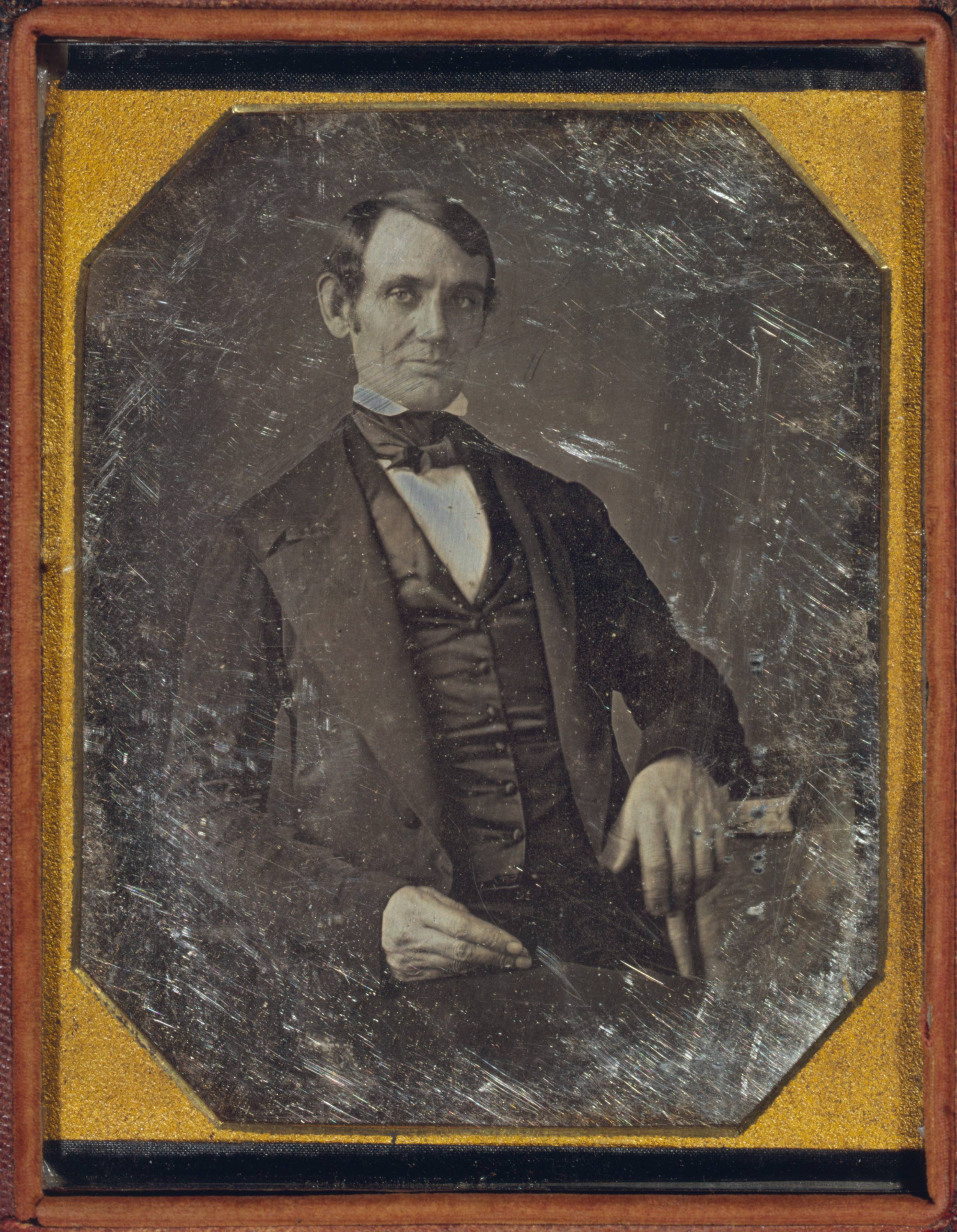
- Image: the earliest known Lincoln photograph, a daguerreotype from c. 1846 attributed to Nicholas H. Shepherd — taken when Lincoln was a congressman-elect from Illinois (see the image credits on this page).