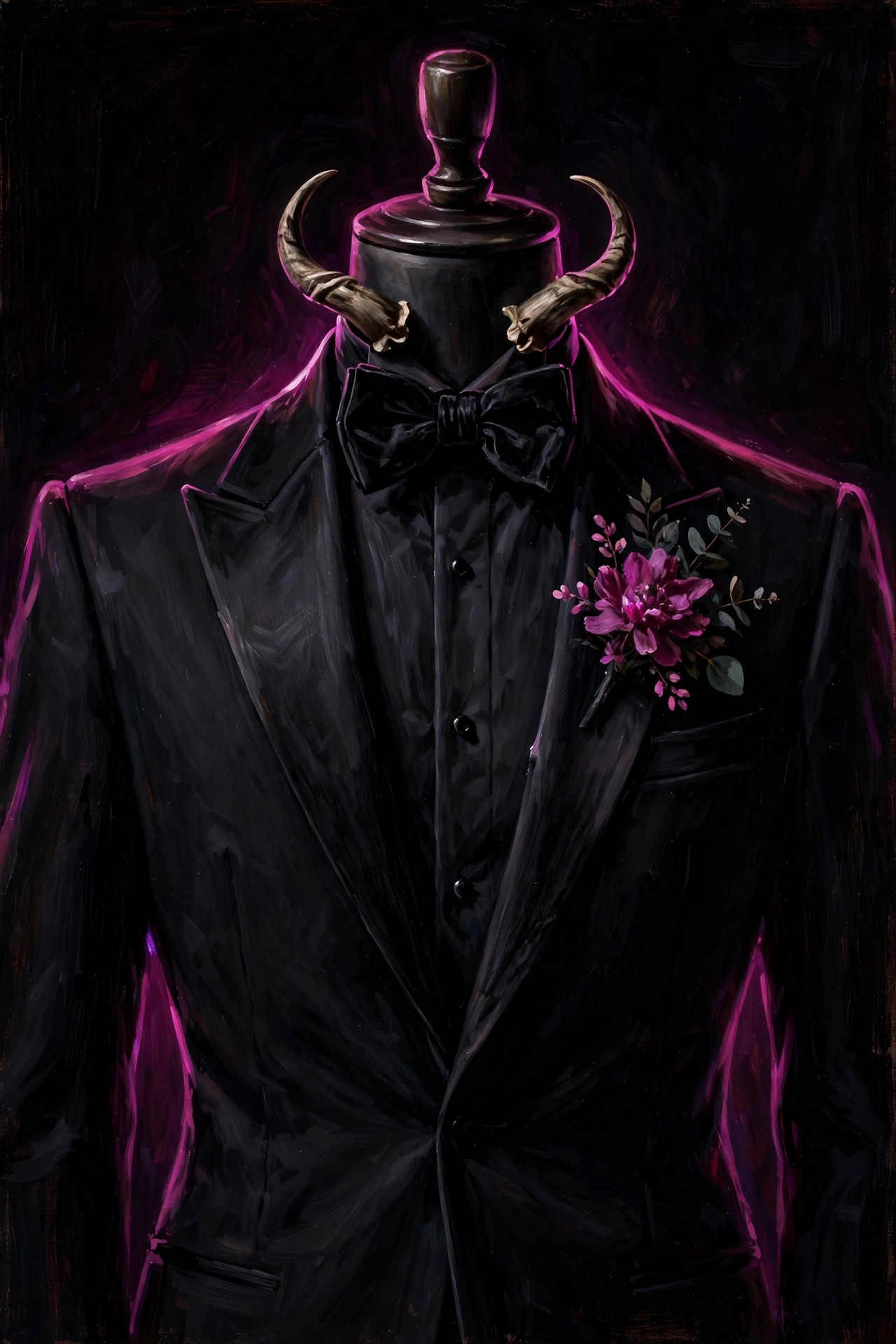
The Demon Tuxedo
The horns get the attention; the tuxedo does the work. An anatomy of the look.
The tuxedo’s in-universe history is declared invention. See Methodology.
The outfit
Impeccable black tie, cut close: peak lapels, a velvet bow tie (never silk — the house has opinions), onyx studs, and a fresh magenta boutonnière nightly — said to be a cutting from the first bouquet ever thrown at him. Patent shoes polished to a mirror the host checks before every show. The horns rise above it all, polished too.
Why it matters
The tuxedo is the character’s thesis statement: a demon who chose mortal formalwear as his livery. In the lore, it was a condition of his resignation from the underworld — he left the uniform behind and dressed like he was invited. It tells the audience everything before he says a word: this monster has manners, this danger is decorative, this evening is under control.
The rules of the look
- The bow tie is velvet, always. Silk is for other demons.
- The boutonnière is magenta, always. Red is for amateurs.
- The shoes are mirrors. The host checks his reflection in them, not from vanity — “from quality control.”
- The tuxedo is never removed on stage, never loosened, never less than perfect. The chaos is in the act; the suit is the anchor.
In the visual language
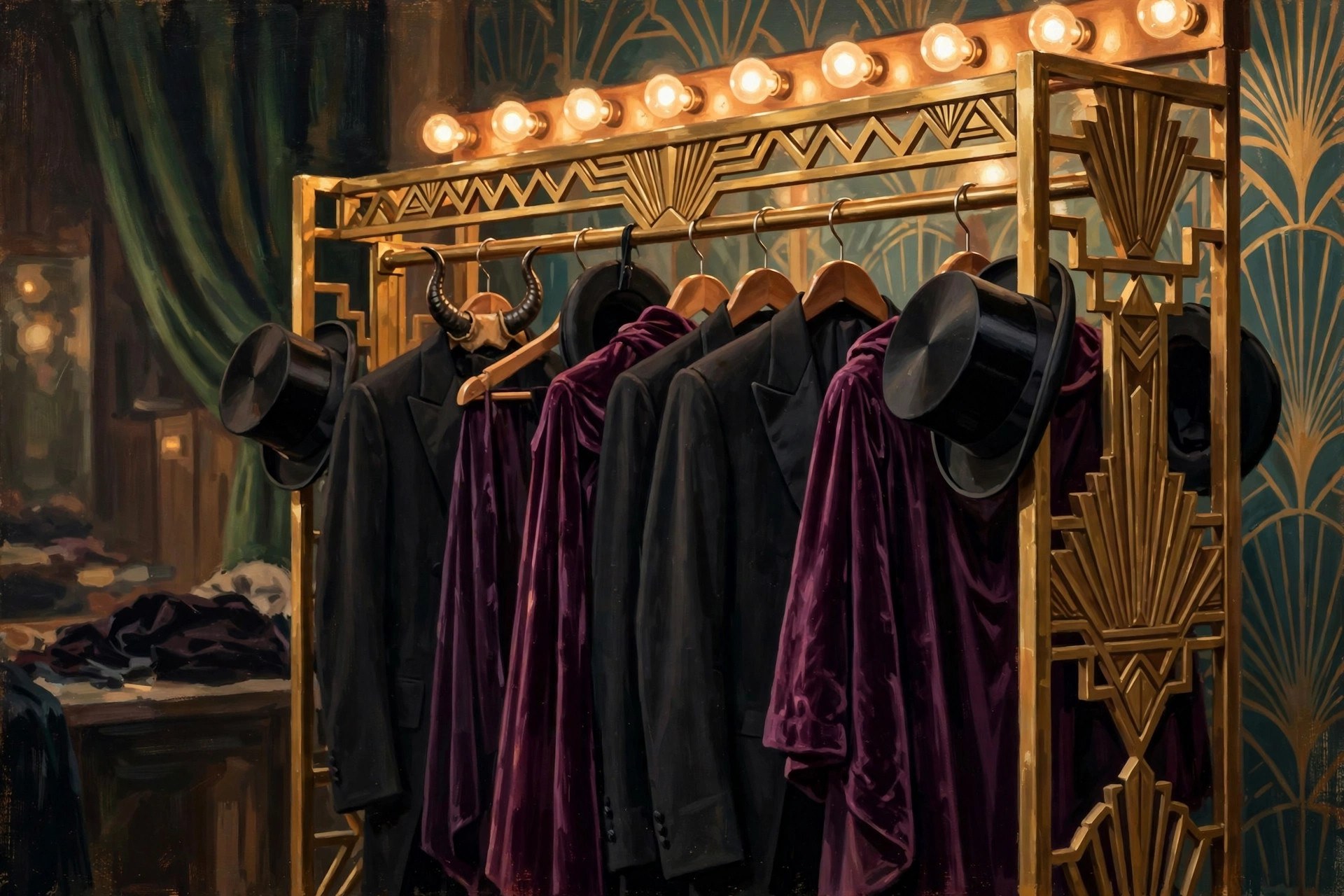
The tuxedo gives this site’s design its black — the velvet dark of the dark theme, the formal black of the light theme’s ink. See Visual Style Guide.
Source notes
- The tuxedo’s in-universe history and rules: declared invention expanding the card line “Velvet Damnation Demon Tuxedo” (Vizlings, Nocturnals; 14 app chats).
- Canon-vs-invention policy: methodology.md (2026-09-27).