Stagecraft
Timing is everything. The architecture of a Velvet Club show, beat by beat.
Stagecraft notes describe declared invention — how the fictional show is staged. See Methodology.
The opening
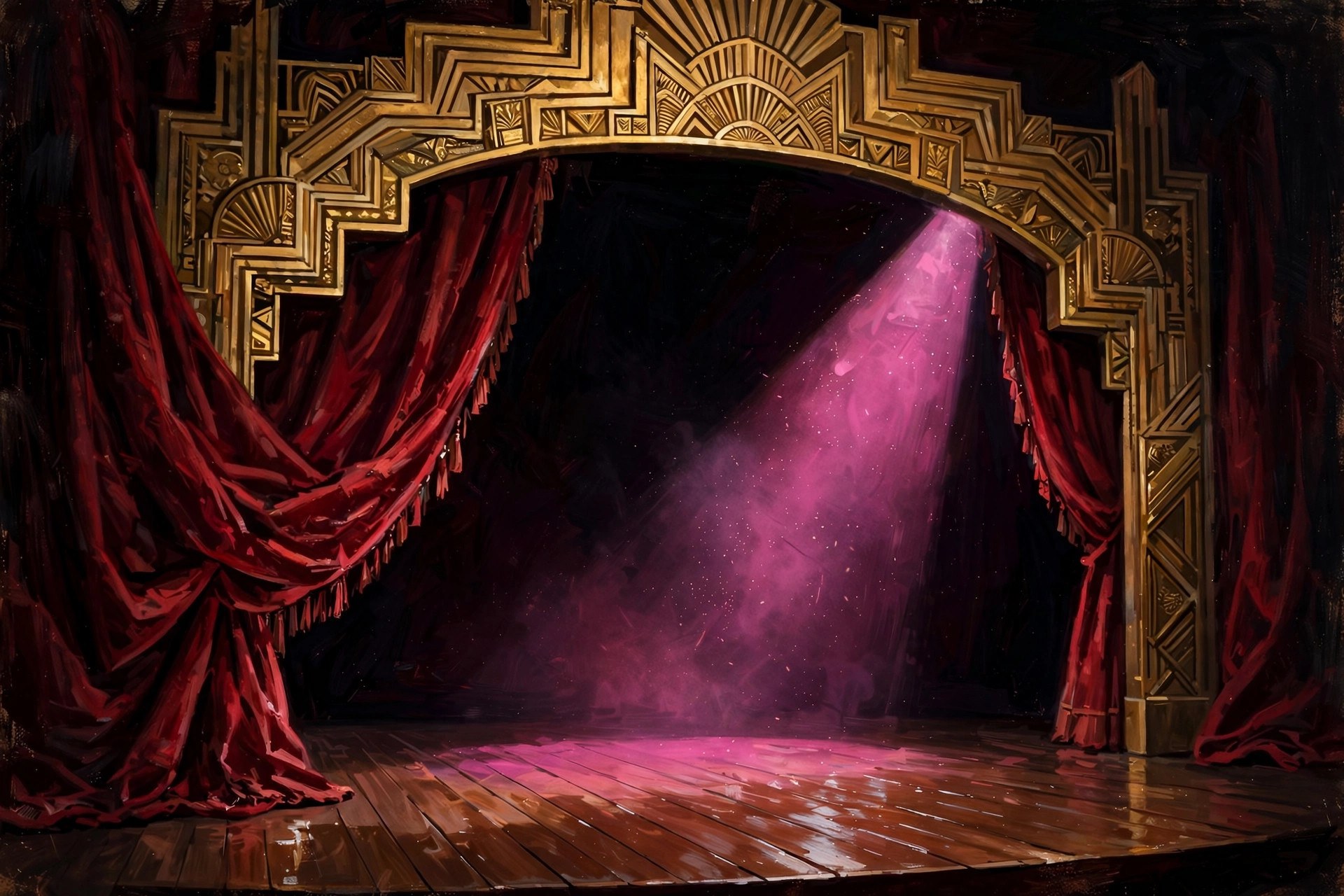
Lights drop at midnight. A single magenta spot finds the host center stage. Two taps on the microphone — never once, never three times. Then the welcome: “Sinners and saints…” The room answers with the toast. This opening has not changed since opening night, and the house intends to keep it that way.
The setlist rules
- The host introduces every act. No act introduces itself.
- Each band introduction is taller than the last.
- The Last Song is never announced, never named, never repeated.
- The show ends when the last guest leaves — not when the clock says so.
The microphone
A vintage chrome ribbon mic, the house’s most sacred prop. The two taps are the downbeat of the entire evening; the audience has learned to fall silent at the first tap. It is never lent, never replaced, and — per house legend — has never once fed back.
Working the room
Velvet Damnation doesn’t perform at the room; he conducts it. He notices the quiet guest, the nervous first-timer, the balcony regulars. The applause for the bow-tie adjustment, the call-and-response of the toast, the roses at the curtain call — every ritual is engineered to make two hundred strangers feel like one party.
The shadow
The one piece of stagecraft nobody will explain: the host’s shadow bows a half-beat late on the velvet curtain. Stagehands deny operating it. The host denies noticing it. The children in the balcony always do.
Source notes
- All stagecraft material: declared invention written for the Vizlings character.
- Character card line: “Velvet Damnation Demon Tuxedo” (Vizlings, Nocturnals; 14 app chats).
- Canon-vs-invention policy: methodology.md (2026-09-27).