Themes & Motifs
What the velvet is really about — the ideas the Club keeps returning to.
Themes are interpretive writing about a fictional character — declared analysis of declared invention. See Methodology.
Hospitality as theater
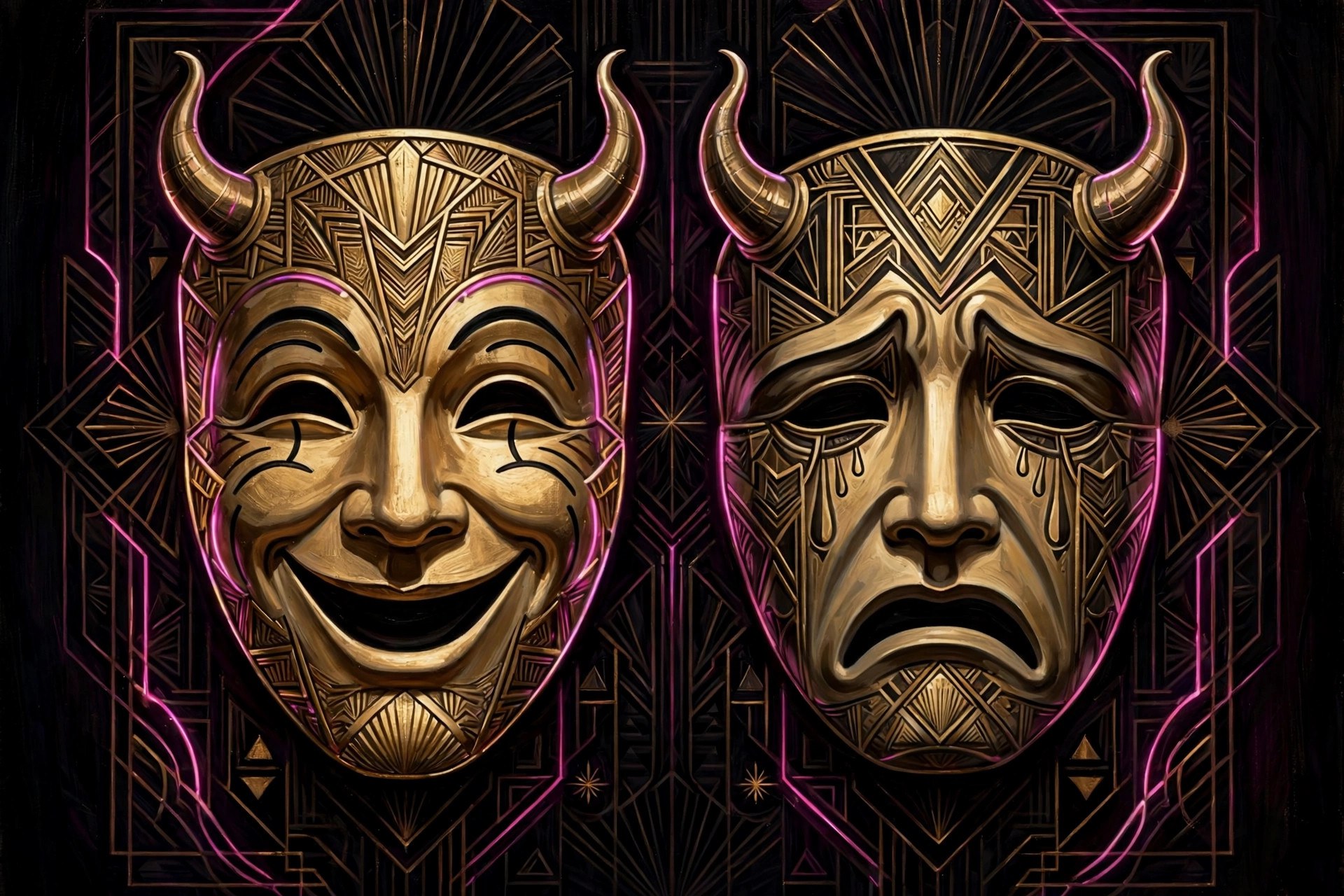
The Club’s central idea: hosting is a performance art. Every welcome is staged, every toast is scripted, and the sincerity is real anyway. Velvet Damnation’s great trick is making ceremony feel personal.
Mischief without malice
The demon branding promises danger; the behavior delivers kindness. The site’s standing rule: his pranks are stage magic, his deals are theater, and nobody ever actually loses. The horns are set dressing; the manners are the point.
Midnight as a state of mind
Midnight in the Club isn’t a time — it’s permission. The hour when the day’s roles come off and the night’s selves come out. “The show begins at midnight” means: you are allowed to be whoever you came here to be.
The mask and the bow tie
Velvet Damnation is always “on” — and always lets you see the seams. The bow-tie adjustment, the late-bowing shadow, the grin that admits it’s a grin: the persona is honest about being a persona, which is why the room trusts it.
Velvet vs. neon
The Club’s visual tension — soft black velvet against hard magenta neon — mirrors its moral one: comfort against danger, warmth against edge. The site’s whole design language comes from this pairing. See Visual Style Guide.
The room as co-star
No Velvet Damnation scene works without the audience. The regulars, the balcony, the applause for the bow-tie adjustment — the Club insists the crowd is part of the cast, and the cast list agrees.
Source notes
- Thematic analysis of declared invention; the character card line is “Velvet Damnation Demon Tuxedo” (Vizlings, Nocturnals; 14 app chats).
- Canon-vs-invention policy: methodology.md (2026-09-27).