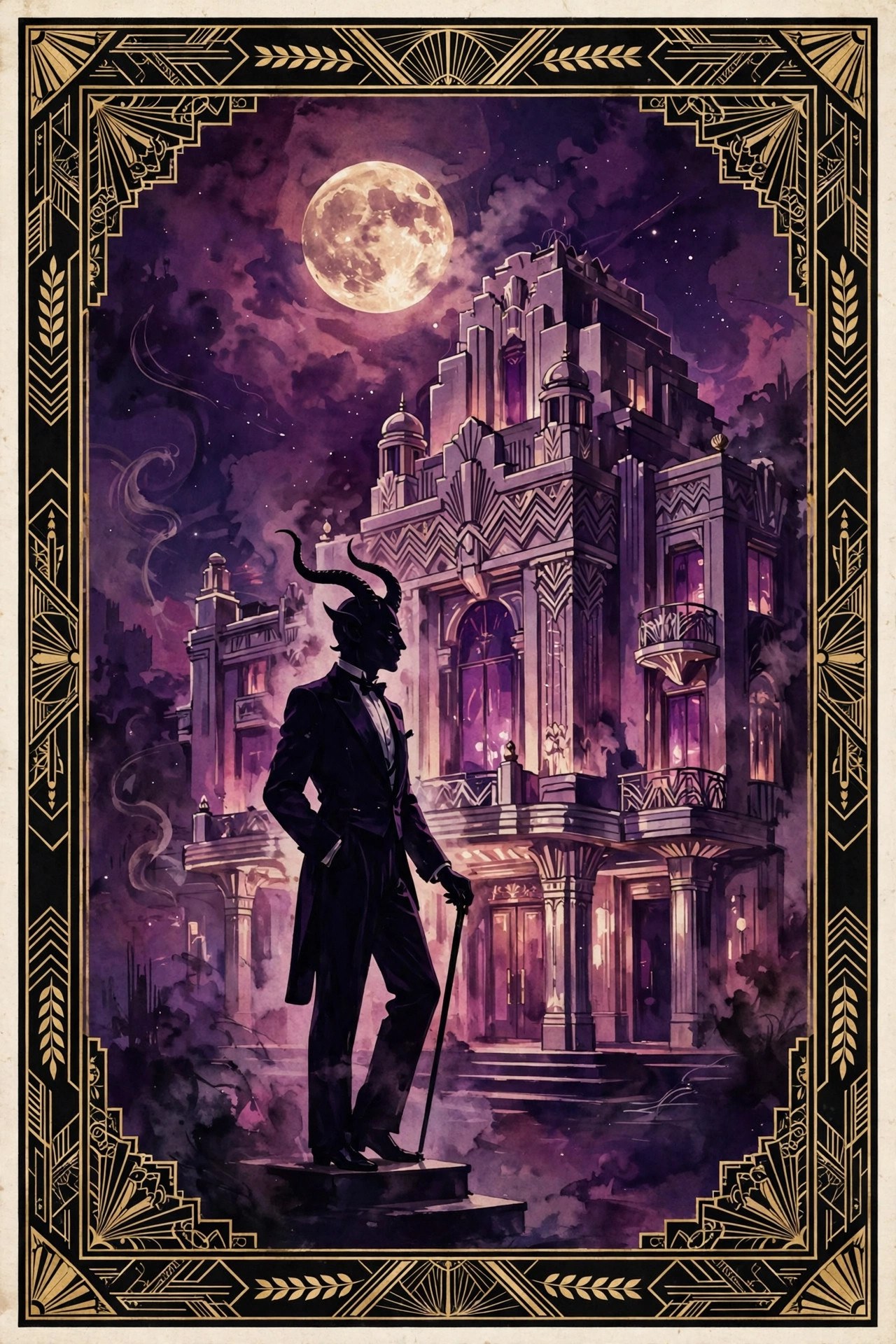
Lore & Backstory
A story, told the way the house tells it — after midnight, with a drink in hand, and none of it sworn true.
Everything on this page is declared invention — the character’s backstory as told in-universe by the Club itself. It is not canon from the Vizlings app. See Methodology.
The founding story
The house story goes like this: Velvet Damnation was once middle management in the underworld — contracts, ledgers, brimstone by the ton — and he was magnificent at it, which was the problem. One night, so the story goes, he attended a mortal cabaret as part of a routine soul audit, and instead of auditing anything he stayed for the second show, and then the third. By dawn he had resigned his post, kept the horns, ordered a tuxedo, and signed a lease on a condemned theater with what witnesses describe as “theatrical finality.”
He named it The Velvet Club, because — his words — “damnation should at least be comfortable.”
The first midnight
The Club’s official founding date is given as the first midnight after the lease was signed, which the house celebrates annually as Founders’ Midnight. Regulars will tell you the opening night had seven guests, one band, and a chandelier that fell during the second act and was applauded as choreography. Velvet Damnation has never corrected the story. He has, however, been heard to say it gets better every year.
Why a tuxedo
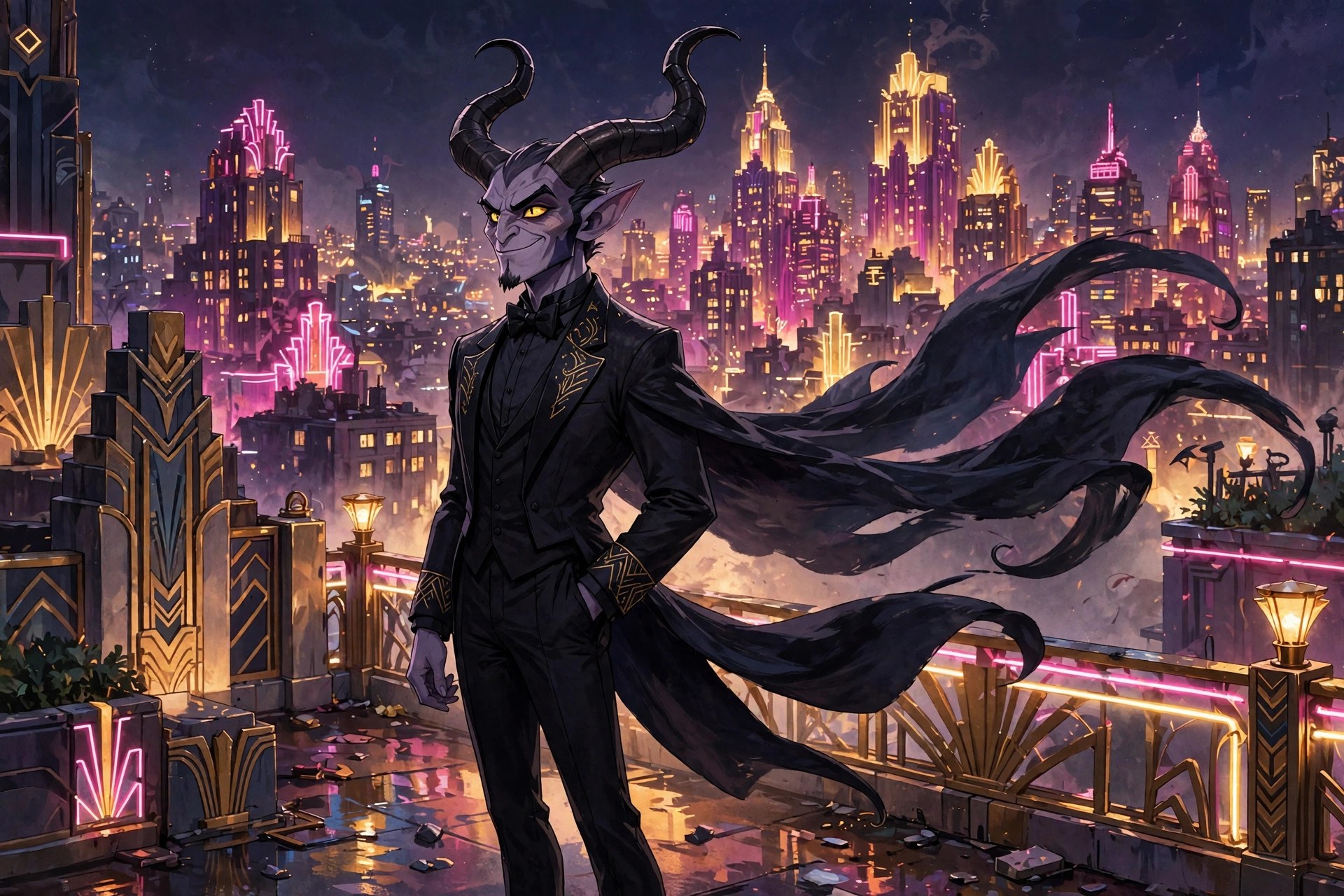
In the lore, the tuxedo was a condition of the resignation: he left the underworld’s uniform behind and chose mortal formalwear as his new livery — “If I’m going to be among the damned and the delightful, I’ll dress like I was invited.” The magenta boutonnière is said to be a cutting from the first bouquet ever thrown at him. He wears a fresh one nightly. See The Demon Tuxedo.
What the lore does not claim
The backstory claims nothing about the real world, real history, or real people. It is a stage legend for a stage character. For the actual cultural history of hell-themed cabarets — the real 1890s Paris venues that make this fiction fun — see Demons in Cabaret.
Source notes
- This page is 100% declared invention expanding the card line “Velvet Damnation Demon Tuxedo” (Vizlings, Nocturnals; 14 app chats).
- The founding story, Founders’ Midnight, and the tuxedo legend are in-universe house stories, labeled as such.
- Canon-vs-invention policy: methodology.md (2026-09-27).