Timeline
The documented life, in order — baptism to burial to First Folio.
Dates marked (documented) come from parish registers, court records, or printed title pages. Dates marked (estimated) are scholarly consensus ranges for composition, based on publication, performance records, and stylistic evidence. The distinction is the point.
1564 — Baptized at Stratford (documented)
26 April 1564: “Gulielmus filius Johannes Shakspere” is entered in the Holy Trinity baptismal register. Birth date unrecorded; 23 April is traditional.
1582 — Marries Anne Hathaway (documented)
27 November 1582: a Worcester consistory court bond permits the marriage of “William Shagspere” and “Anne Hathwey of Stratford.” She is 26, he is 18. Their daughter Susanna is baptized 26 May 1583; twins Hamnet and Judith on 2 February 1585.
1585–1592 — The lost years (no documents)
Seven silent years. No record places Shakespeare anywhere. The legends (deer-poaching, schoolmastering, touring player) all date from later retellings.
1592 — “Shake-scene” in London (documented)
Robert Greene’s Groats-Worth of Wit (entered in the Stationers’ Register 20 September 1592) sneers at the “upstart Crow… the only Shake-scene in a country.” Shakespeare is now an established, envied London playwright.
1593–1594 — The narrative poems (documented)
Venus and Adonis (entered 18 April 1593) and The Rape of Lucrece (entered 9 May 1594), both dedicated to the Earl of Southampton. Print makes his name.
1594 — The Lord Chamberlain’s Men (documented)
The company forms under Henry Carey, Lord Chamberlain. Shakespeare is a founding sharer — actor, playwright, and part-owner for the rest of his career.
1596 — Hamnet dies (documented)
11 August 1596: “Hamnet filius William Shakspere” is buried at Holy Trinity, aged 11. The following years produce Hamlet and King Lear — grieving fathers on stage; the connection is inference, not record.
1597 — Buys New Place (documented)
Shakespeare pays £60 for New Place, the second-largest house in Stratford — the act of a wealthy man investing his theatre earnings at home.
1598 — Meres’s praise (documented)
Francis Meres’s Palladis Tamia names Shakespeare “most excellent in both kinds for the stage,” listing twelve plays — the first critical survey of the canon, and proof of his standing among the learned.
1599 — The Globe (documented)
The company rebuilds the Theatre’s timbers as the Globe on Bankside. The Chamberlain’s Men — now with their own playhouse — enter their greatest decade.
1603 — The King’s Men (documented)
Elizabeth dies (24 March); James I patents the company as the King’s Men (17 May). Shakespeare becomes a Groom of the Chamber. The tragedies begin: Othello (c. 1603–04), Lear (c. 1605–06), Macbeth (c. 1606).
1608 — Blackfriars (documented)
The King’s Men take the indoor Blackfriars playhouse for winter seasons — smaller, candlelit, expensive. The late romances (Cymbeline, The Winter’s Tale, The Tempest) are written for its intimacy.
1609 — The Sonnets printed (documented)
Shake-speares Sonnets. Neuer before Imprinted is published by Thomas Thorpe, dedicated to the mysterious “Mr. W.H.” Whether Shakespeare authorized it is unknown.
1613 — The Globe burns (documented)
29 June 1613: during Henry VIII (written with John Fletcher), a stage cannon sets the thatch alight. The Globe burns to the ground; no casualties. Rebuilt within a year.
1616 — Death and burial (documented)
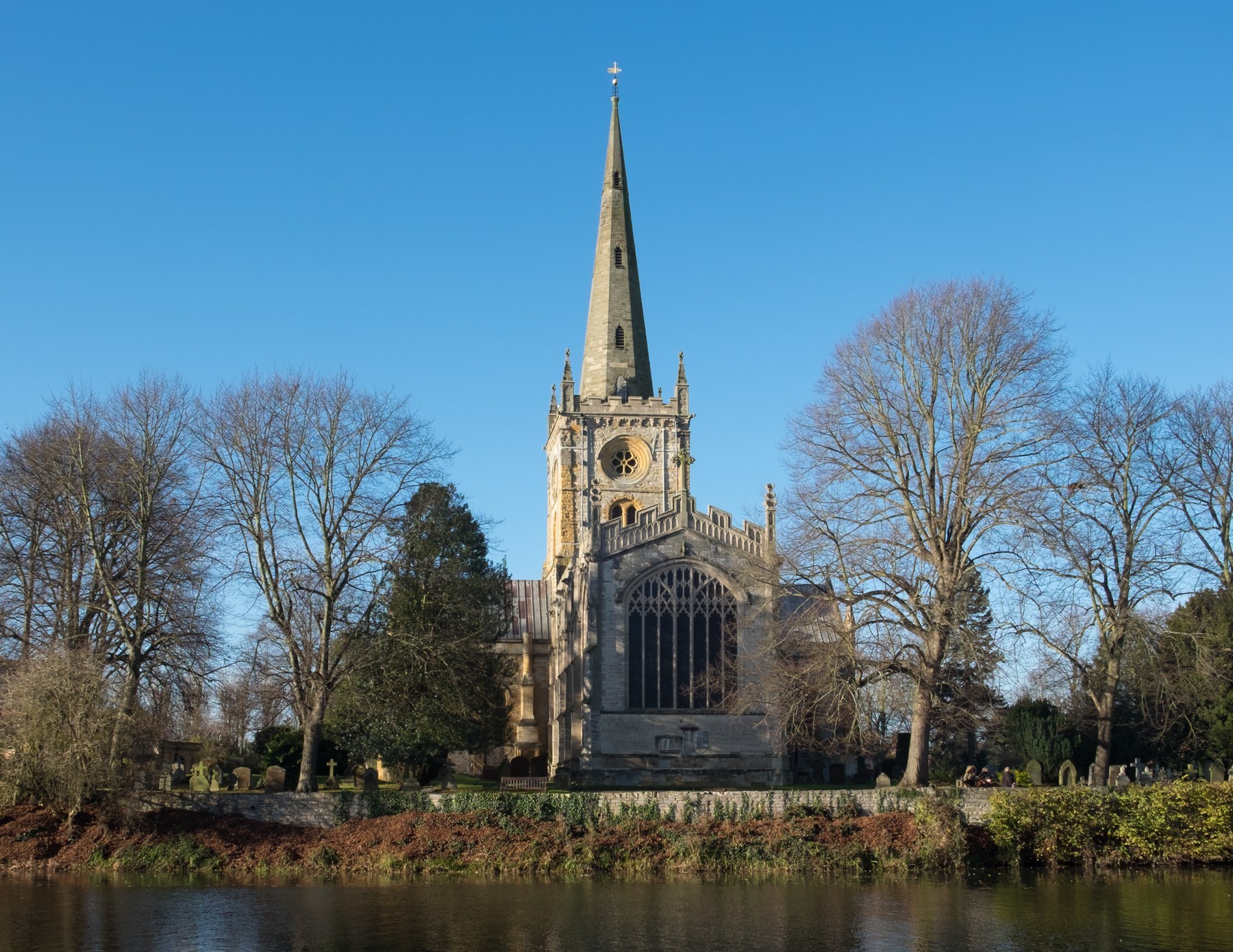
23 April 1616 (traditional date): Shakespeare dies, aged 52. Buried 25 April in Holy Trinity. His will leaves the “second best bed” to Anne Hathaway.
1623 — The First Folio (documented)
Mr. William Shakespeares Comedies, Histories, & Tragedies is printed in London by Isaac Jaggard and Edward Blount, edited by actors John Heminges and Henry Condell. Thirty-six plays; eighteen never printed before. Without it, half the canon — including Macbeth, Julius Caesar, Twelfth Night, and The Tempest — would not exist.
Source notes
- Parish-register entries (baptisms, marriages, burials): Holy Trinity, Stratford-upon-Avon; Worcester consistory court (marriage bond).
- Stationers’ Register entries and title-page dates: English Short Title Catalogue.
- Greene (1592), Meres (1598), the King’s patent (1603), the Globe fire account (reported in a letter by Sir Henry Wotton, July 1613): contemporary documents.
- Composition dates for plays (e.g., Hamlet c. 1600–01, Macbeth c. 1606): scholarly consensus ranges from the Oxford and Arden chronologies — labeled (estimated) wherever used; see plays and methodology.
- Image: Holy Trinity Church, Stratford-upon-Avon (photograph by DeFacto, CC BY-SA 4.0) — see the image credits on this page.