The Authorship Debate
Who really wrote the plays? The full history of the doubt — from the first skeptics to the Supreme Court — with the evidence on both sides.
The reception page states this site’s position: the plays were written by William Shakespeare of Stratford. This page is the deep dive — how the question arose, who the alternative candidates are, and what the mainstream case rests on. The skeptical arguments are reported from their own advocates; the rebuttals from mainstream scholarship.
How the doubt began
Nobody in Shakespeare’s lifetime doubted he wrote the plays. The first published doubts are mid-19th century:
- 1856 — William Henry Smith wrote to Lord Ellesmere proposing Francis Bacon; Delia Bacon (no relation) published her case in Putnam’s Monthly and expanded it into The Philosophy of the Plays of Shakspere Unfolded (1857) — the first book-length challenge, proposing a group of authors headed by Bacon.
- 1888 — Ignatius Donnelly’s The Great Cryptogram claimed to find Bacon’s signature encoded in the plays. The ciphers never survived independent checking.
- 1891 — James Greenstreet proposed William Stanley, 6th Earl of Derby; 1907 — Karl Bleibtreu proposed Roger Manners, 5th Earl of Rutland.
- 1920 — the schoolteacher J. Thomas Looney published Shakespeare Identified, proposing Edward de Vere, 17th Earl of Oxford — and Oxford replaced Bacon as the leading alternative. Sigmund Freud endorsed the theory; Charlton Ogburn’s The Mysterious William Shakespeare (1984) made it the most popular skeptical position. Oxfordianism even reached the U.S. Supreme Court, where Justices Antonin Scalia and John Paul Stevens publicly disagreed — Scalia doubting, Stevens defending the Stratford man.
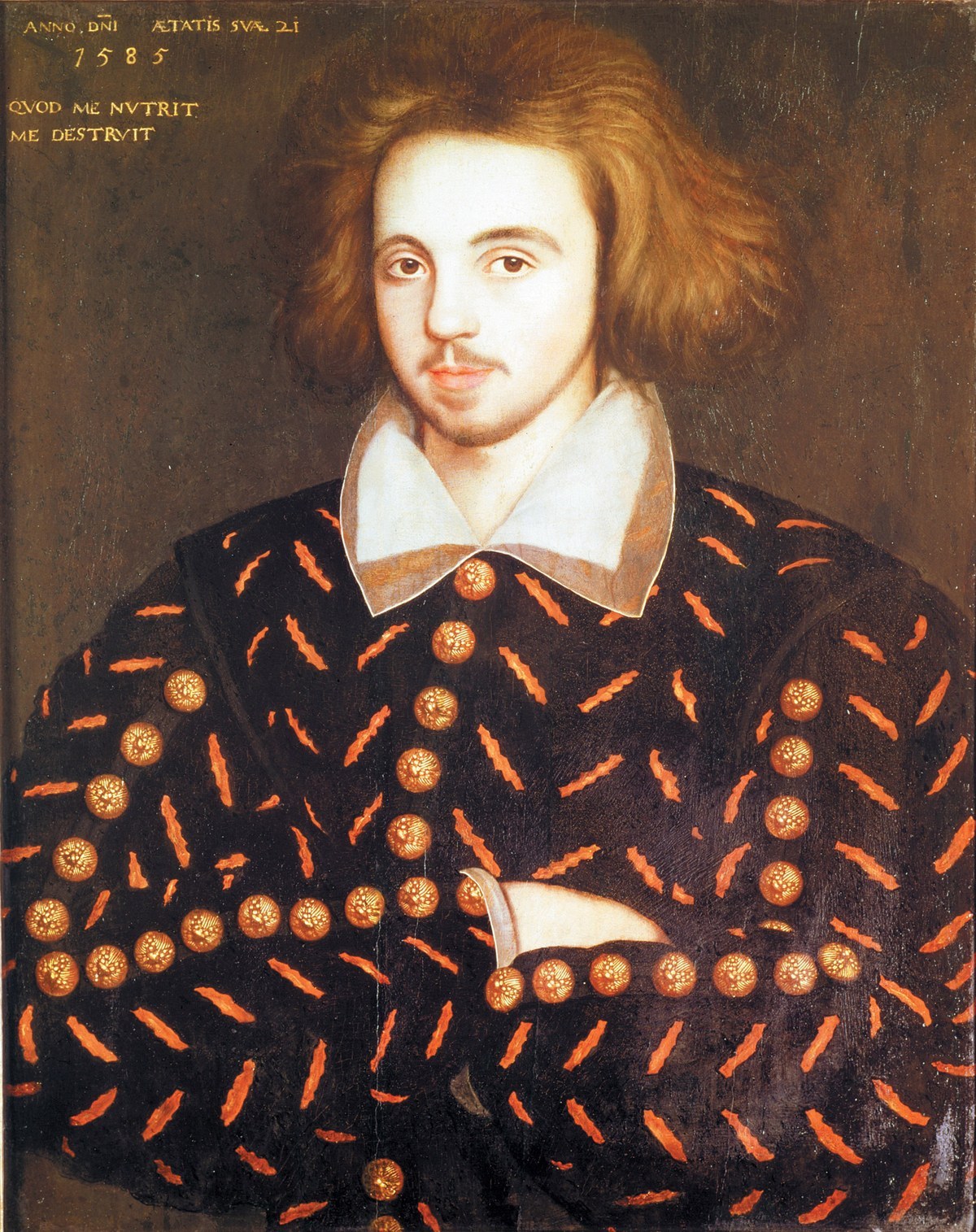
- 1955 — Calvin Hoffman’s The Murder of the Man Who Was “Shakespeare” brought the Marlovian theory to prominence: Christopher Marlowe faked his death in 1593 and wrote on.
In 2007, the Shakespeare Authorship Coalition issued a “Declaration of Reasonable Doubt,” gathering thousands of signatories. The debate is socially alive; in scholarship, it is settled — see below.
The candidates and their problems
Francis Bacon (1561–1626) — philosopher, essayist, statesman. The original 19th-century candidate, proposed on the theory that a man of low birth could not have written the plays. Problem: Bacon’s known prose style is nothing like the plays’, and no contemporary ever connected him to the theatre. The cipher “evidence” has been repeatedly debunked.
Edward de Vere, 17th Earl of Oxford (1550–1604) — the most popular alternative: aristocratic, university-educated, traveled in Italy, wrote competent lyric poetry. The theory invokes the “stigma of print” — a nobleman could not publish plays openly — to explain the front man. Problems: Oxford died in 1604, before King Lear, Macbeth, Antony and Cleopatra, Coriolanus, The Winter’s Tale, Cymbeline, and The Tempest were written; Oxfordians must therefore redate the late plays earlier, against the documentary record (the Lear quarto is 1608, the King’s Men performed the late plays for years after 1604). No contemporary linked Oxford to the plays; his known poetry is judged far below the plays’ standard.
Christopher Marlowe (1564–1593) — the great blank-verse pioneer, born two months before Shakespeare to a Canterbury shoemaker. The theory: his stabbing at Deptford on 30 May 1593 was faked (to escape an atheism charge), and he wrote on behind Shakespeare’s name. Problems: the coroner’s inquest into his death is a documented legal proceeding; the theory requires a conspiracy of faked death, sustained for decades, with no documentary trace — the most elaborate machinery of any candidate. Marlowe’s known style, brilliant as it is, is audibly different from Shakespeare’s.
Group theories — Delia Bacon’s committee, and modern variants. Problem: computational stylistics now confirms what readers always felt — the canon has a consistent authorial signal across genres and decades, with detectable collaboration seams (Fletcher, Wilkins, Middleton) exactly where scholars placed them.
The mainstream case, in full
The consensus of Shakespeare scholars — the working assumption of every major edition, biography, and university department — rests on converging evidence, not authority:
- His name is on the title pages. From Venus and Adonis (1593, dedication signed “William Shakespeare”) through the quartos, the plays were sold under his name in his lifetime. Love’s Labour’s Lost (1598) was the first play quarto to carry it.
- His colleagues identified him. Heminges and Condell — actors who worked beside him for twenty years — collected the Folio as the works of their “friend and fellow.” Ben Jonson, who mocked bad writing for a living, addressed the Folio’s author as the “Sweet Swan of Avon.”
- The documents connect the man to the theatre. The Stratford records and the London records (the 1592 “Shake-scene” attack, the 1598 listing as a “principal comedian,” the 1603 patent, the Globe and Blackfriars shares) describe one continuous person: Stratford glover’s son, London actor-sharer-playwright.
- The “too learned” objection misreads the period. A Stratford grammar school drilled Latin rhetoric, Ovid, and the classics — exactly the plays’ toolkit. The legal and courtly knowledge is what a working theatre professional absorbs; the Italian “local color” is full of errors no traveler would make.
- No alternative explains the evidence better. Every candidate theory requires a decades-long conspiracy of silence among printers, actors, patrons, and officials — with zero documentary leakage — plus redating the plays against the record. The Stratford man requires no conspiracy at all.
What the debate is really about
The authorship question is, at bottom, a class argument wearing historical costume: the persistent feeling that a glove-maker’s son could not have written Hamlet. Four centuries of snobbery have not produced a document; the documents we have point one way. This site follows them — while keeping the skeptical case visible, because the desire behind it (to understand how genius works) is legitimate even when the theory isn’t.
Source notes
- Chronology of the debate: Delia Bacon (Putnam’s Monthly, 1856; book 1857); W.H. Smith (1856); Donnelly (1888); Greenstreet (1891); Bleibtreu (1907); Looney (1920); Hoffman (1955); Ogburn (1984); Declaration of Reasonable Doubt (2007). De Vere (1550–1604), Bacon (1561–1626), Marlowe inquest (30 May 1593).
- Scalia/Stevens disagreement: widely reported public positions (Scalia Oxfordian-leaning; Stevens Stratfordian).
- Mainstream case: the New Oxford Shakespeare Authorship Companion (2016); title-page evidence (Venus and Adonis 1593; Love’s Labour’s Lost quarto 1598).
- Computational stylistics confirming a consistent authorial signal with collaboration seams: the standard finding of modern attribution studies (e.g., the New Oxford Shakespeare’s Marlowe/Fletcher/Wilkins/Middleton attributions).
- Editorial policy: methodology. This page does not claim unanimity — it claims convergence of evidence.
Limitations
- “Consensus” here means the overwhelming position of specialists, not a poll; dissenting scholars exist and are cited where their arguments are specific.
- The class origins of the doubt are this page’s interpretation, stated as such — skeptics would describe their motives differently.