The King's Men
The company Shakespeare belonged to for his whole London career: how it formed, how it worked, and how it survived him.
For most of his working life, Shakespeare was not a freelance writer but a member of a company — actor, playwright, and shareholder. The company changed names, theatres, and fortunes, but it was the institutional home of nearly every play.
Formation: the Lord Chamberlain’s Men (1594)
In 1594, after the plague years broke up the old playing companies, the Lord Chamberlain’s Men formed around a core of experienced players. Their patron was Henry Carey, Lord Hunsdon, the Lord Chamberlain — patronage was a legal necessity: under the 1572 Vagabonds Act, players without a noble patron could be treated as vagabonds. The company’s leading tragedian was Richard Burbage; its comic star, at first, was Will Kemp; its house playwright, soon, was William Shakespeare.
The royal patent (1603)
Elizabeth I died on 24 March 1603; James I reached London in May. One of his early acts was to take the Lord Chamberlain’s Men under his own patronage. The royal patent of 19 May 1603 licensed nine men — Lawrence Fletcher, William Shakespeare, Richard Burbage, Augustine Phillips, John Heminges, Henry Condell, William Sly, Robert Armin, and Richard Cowley — as the King’s Servants, “to use and exercise the art and faculty of playing… within their now usual house called the Globe” and on tour.
From 1603 the company was the King’s Men: the first acting company in England under a reigning monarch’s direct patronage. The practical rewards were real — regular court performances at Christmas and Shrovetide, at fees of £10 a play, and a prestige no rival company could match.
How the company worked
The King’s Men were organized as a joint-stock fellowship, not a modern employer–employee business:
- Sharers owned the company and split its profits. Shakespeare was a sharer throughout his London career, usually reckoned at about one-twelfth to one-fourteenth of the company (see Shakespeare the businessman).
- Hired men were paid wages — actors for small parts, stagehands, musicians.
- Boy players were apprenticed to sharers and played the women’s roles. The company needed boys who could sing, act, and eventually graduate to adult parts.
This structure explains Shakespeare’s writing: he wrote for a known ensemble — Burbage the tragedian (Hamlet, Lear, Othello are built for him), Armin the fool, a rotating cast of skilled boys — and for his own commercial interest. A hit play paid him three ways: as author, as actor, as sharer.
The playhouses
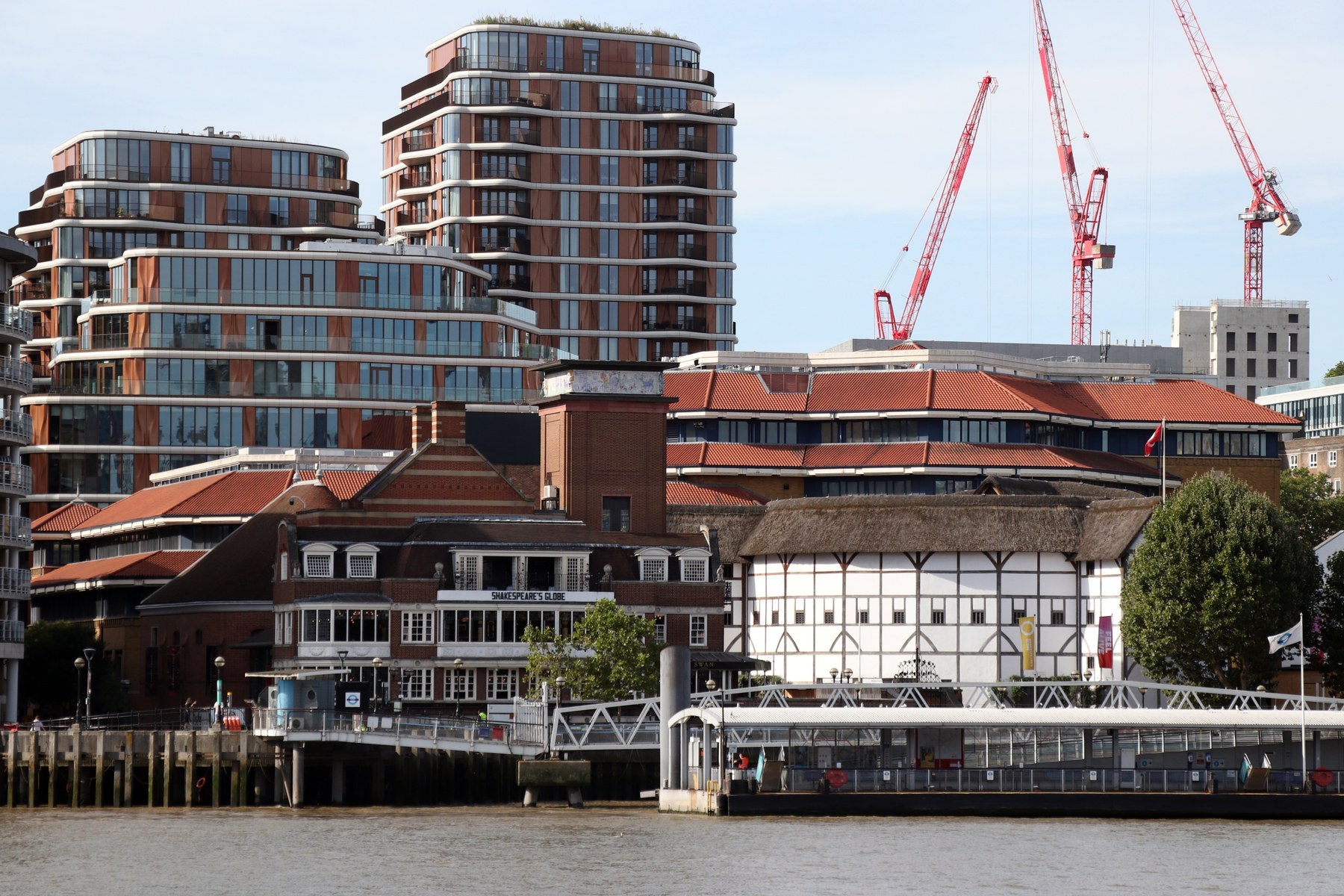
The Globe (1599). When the company’s Shoreditch playhouse, the Theatre, lost its lease, the Burbages dismantled it and ferried the timbers across the Thames to Bankside, where six company members — including Shakespeare, at a one-eighth (12.5%) share — financed the new playhouse. It opened in autumn 1599; the first plays of the new house included Henry V, Julius Caesar, and As You Like It.
The fire (29 June 1613). During a performance of Henry VIII (then titled All Is True), wadding from a stage cannon set the thatched roof alight; the Globe burned to the ground within the hour. One man’s breeches caught fire — he put them out with a bottle of ale — and nobody else was hurt. Two ballads about the fire were written by the next day.
The second Globe (1614). Rebuilt on the same site with a tiled roof, it served the company until the theatres were closed by Parliament in 1642.
Blackfriars (from 1608). The company also took over the indoor Blackfriars theatre — smaller, roofed, candlelit, with higher ticket prices. Shakespeare bought a share in it too. The late plays (Cymbeline, The Winter’s Tale, The Tempest) show the influence of the intimate indoor space: music, masques, spectacle.
After Shakespeare
Shakespeare died in 1616, but the King’s Men carried on — through the Jacobean and Caroline courts, publishing the First Folio in 1623 to preserve the plays they owned. When Parliament closed the theatres in September 1642, the company effectively ended; some of its members fought in the Civil War. The plays survived because the company survived long enough to print them.
Source notes
- Formation (1594) and the patent of 19 May 1603 naming the nine King’s Servants: standard company histories; the Globe named in the warrant (see Shakespeare Documented, Folger Shakespeare Library).
- Company structure (sharers, hired men, boy players): Andrew Gurr, The Shakespeare Company, 1594–1642 and the sources listed on the sources page.
- The Globe fire, 29 June 1613, and the ale-bottle anecdote: contemporary letters (notably Sir Henry Wotton’s) and the two ballads.
- Second Globe (1614) and theatre closure (1642): standard chronology; the closure was by Parliamentary ordinance of 2 September 1642.
- Image: the modern Globe reconstruction on Bankside — the original stood nearby (see the image credits on this page).
Limitations
- Company finances are reconstructed from scattered records (court payments, lawsuits, shares); exact profit splits are estimates.
- The naming of nine patentees in 1603 is documented; the internal politics of the company are not — who held power among the sharers is inference from outcomes.