People
Family, rivals, collaborators, and the company — the people in Shakespeare's orbit.
Family
Anne Hathaway (c. 1555–1623)
Shakespeare’s wife, married November 1582 when she was about 26 and he 18. Daughter of a prosperous Shottery farming family; her cottage survives as a museum.
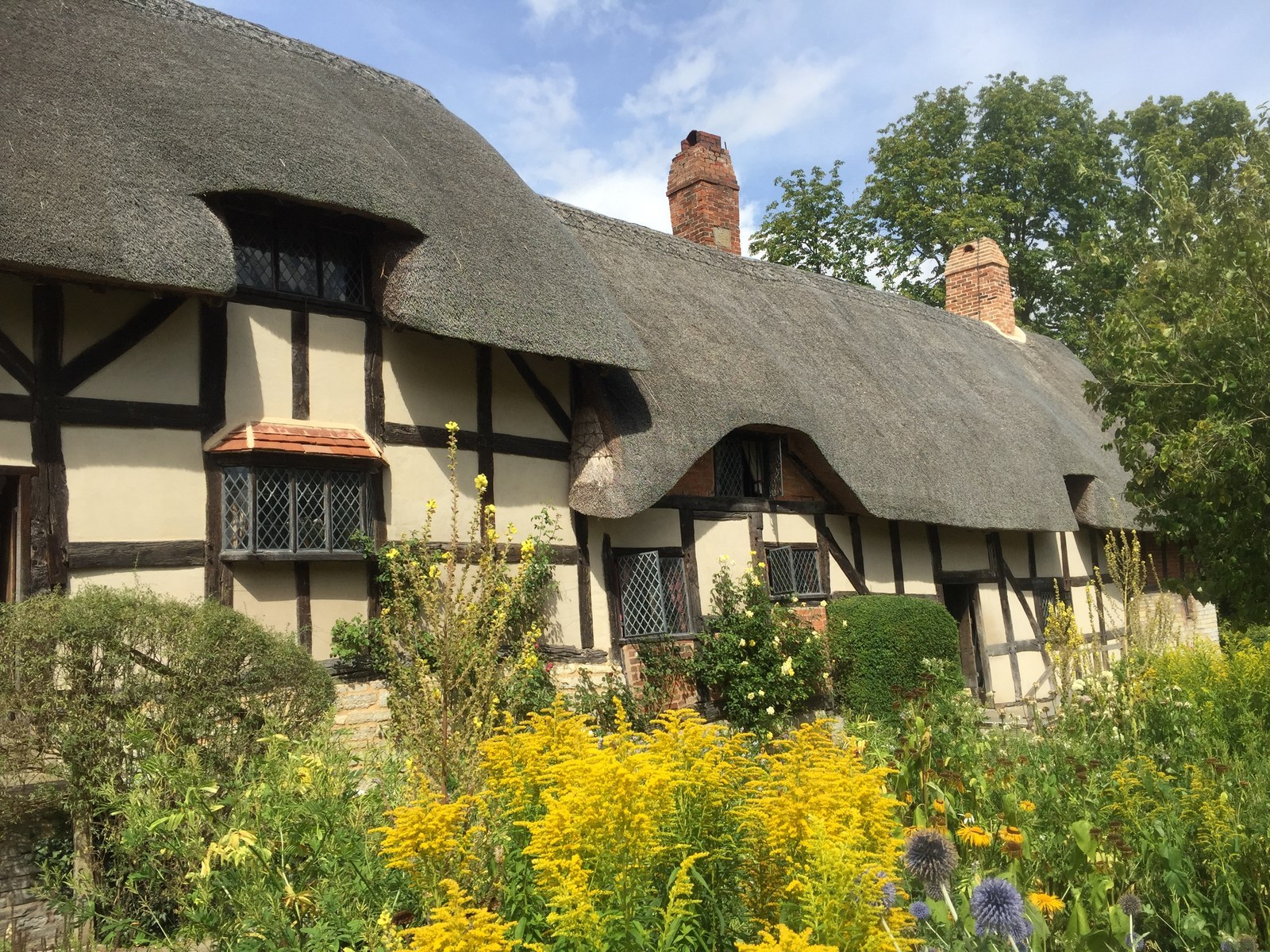
Almost nothing is documented about the marriage itself. The will’s “second best bed” bequest has been read as a slight and as a standard provision (the best bed was often reserved for guests, or already Anne’s by custom). She outlived him by seven years and is buried beside him at Holy Trinity.
John Shakespeare (c. 1531–1601)
William’s father: glover, wool dealer, alderman, and in 1568 bailiff (mayor) of Stratford. His fortunes collapsed in the late 1570s — debts, lawsuits, withdrawal from civic life. In 1596, with his son now wealthy, he was granted a coat of arms (motto: Non sanz droict, “not without right”), making the family officially gentle.
Mary Arden (c. 1537–1608)
William’s mother, daughter of a prosperous Wilmcote farming family. She brought land and status to the marriage. Her family’s Catholic sympathies are sometimes invoked in the debate over Shakespeare’s own religion — evidence: ambiguous.
Susanna, Hamnet, and Judith
Susanna (baptized 1583, d. 1649) married the Stratford physician John Hall; their daughter Elizabeth was Shakespeare’s last direct descendant (she died childless in 1670). Hamnet (baptized 1585, d. 1596) died at 11 — the loss shadows the late plays’ grieving fathers, by inference only. Judith (baptized 1585, d. 1662) married Thomas Quiney in 1616 in a scandal-tinged wedding (banns irregularities, a pregnant bride, and a fine). Shakespeare’s will pointedly ties her inheritance to conditions.
Rivals and fellow writers
Christopher Marlowe (1564–1593)
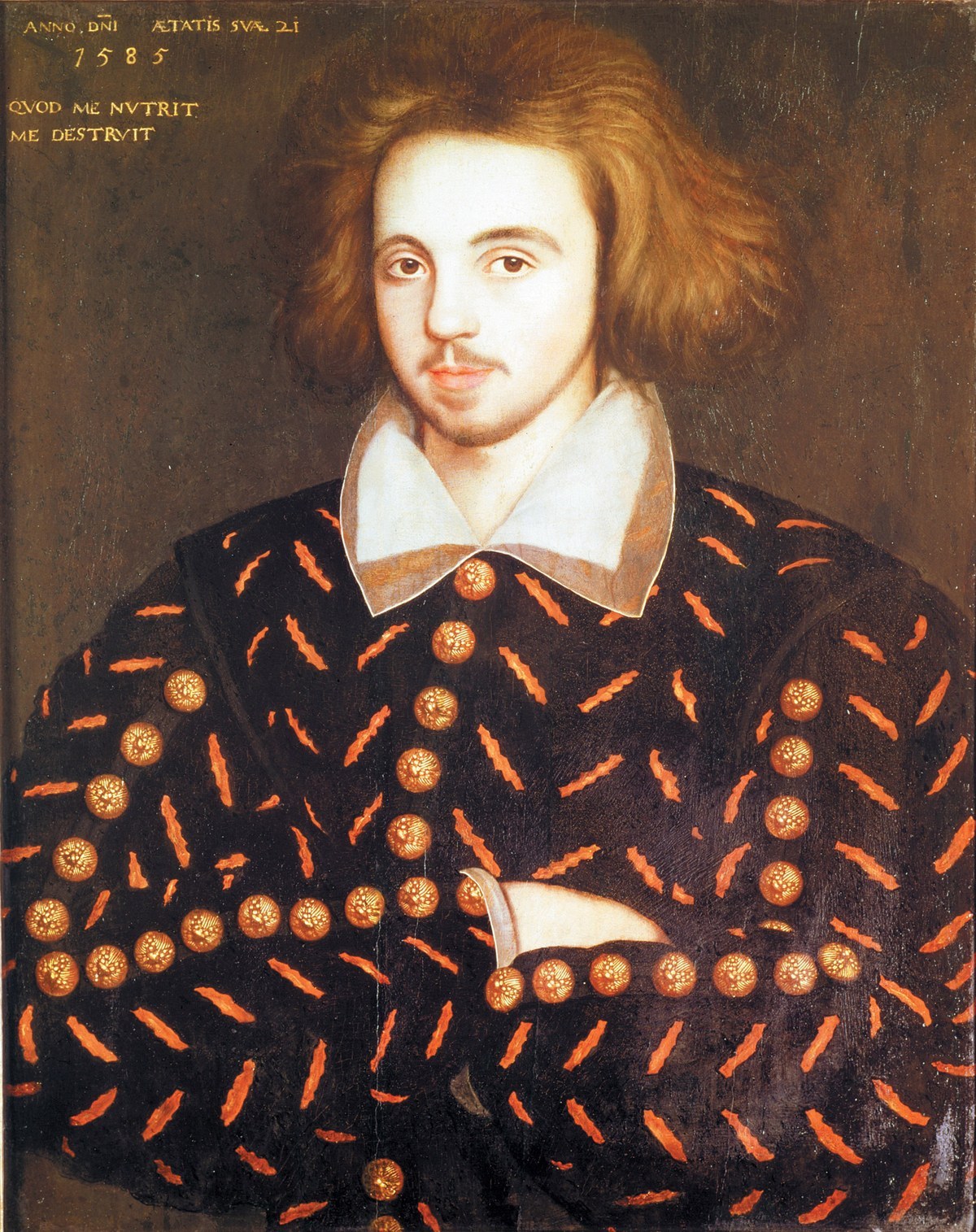
The brilliant, dangerous predecessor: Tamburlaine, Doctor Faustus, The Jew of Malta. The “mighty line” of Marlowe’s blank verse was the instrument Shakespeare learned on and then surpassed. Stabbed to death in a Deptford tavern brawl in May 1593, aged 29 — officially over the bill (“reckoning”), endlessly speculated about since (espionage, atheism charges, a staged escape). His early death is the hinge of the authorship fringe’s “Marlovian” theory: that he survived and wrote Shakespeare’s plays. No evidence supports it; the theory requires a vast silent conspiracy.
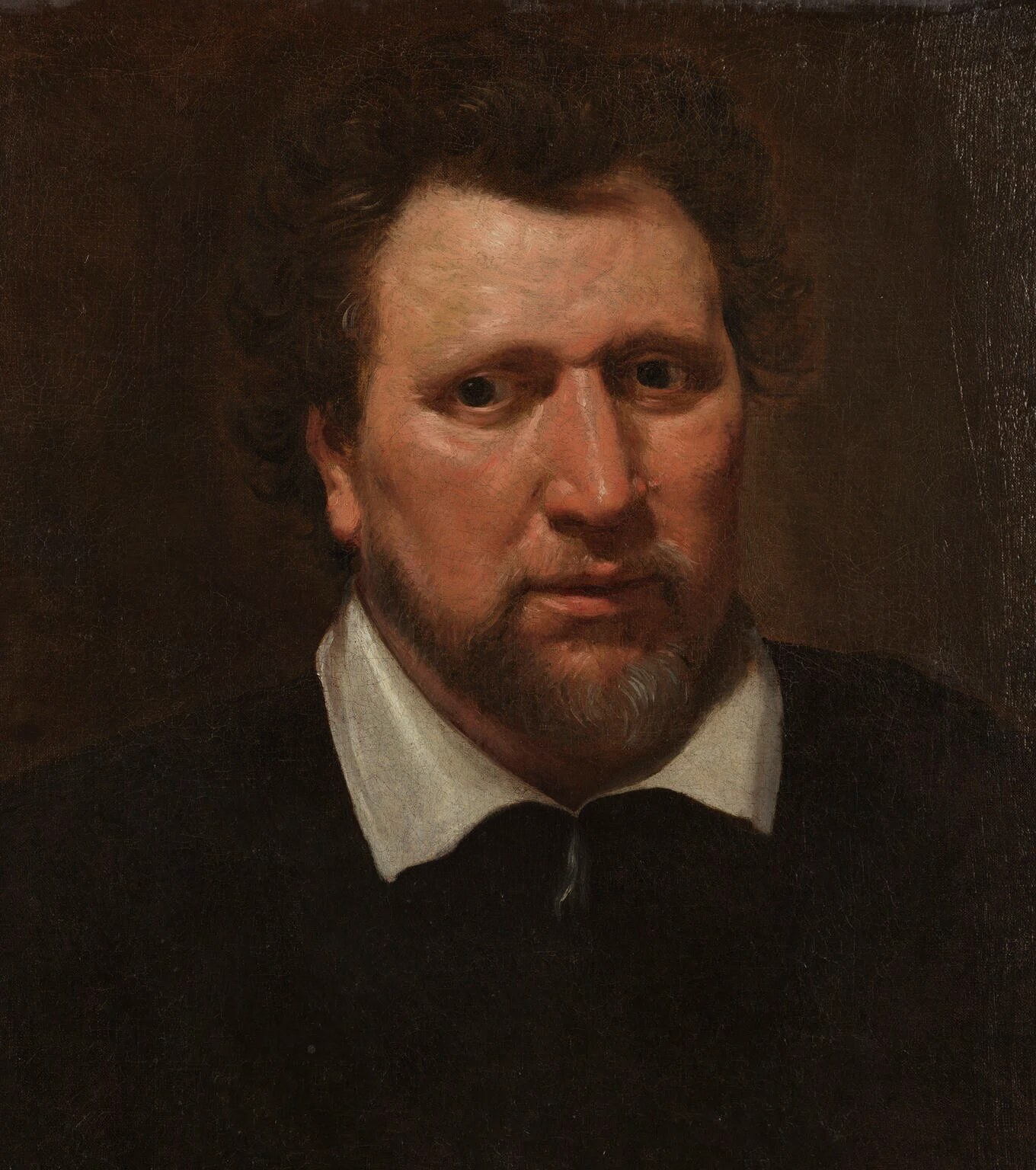
Ben Jonson (1572–1637)
Poet, playwright, classicist — and Shakespeare’s great friend-rival. Jonson mocked Shakespeare’s thin Latin and careless geography, then wrote the First Folio’s memorial verses: “He was not of an age, but for all time!” and the famous praise that Shakespeare never blotted a line — which, Jonson added elsewhere, he wished he had blotted a thousand. The most important contemporary witness to Shakespeare’s reputation.
Robert Greene (1558–1592)
University wit whose dying Groats-Worth of Wit gave us the “Shake-scene” insult — the first London reference to Shakespeare, and evidence of professional jealousy from the educated elite toward the grammar-school actor-playwright.
John Fletcher (1579–1625)
The younger collaborator: Henry VIII, The Two Noble Kinsmen, and the lost Cardenio are Shakespeare-and-Fletcher plays. Fletcher succeeded Shakespeare as the King’s Men’s house playwright.
The company
Richard Burbage (1567–1619)
The company’s star tragedian — the first Richard III, Hamlet, Othello, and Lear. The son of the Theatre’s builder James Burbage, he was to Shakespeare what a great actor is to a great role: the instrument the parts were written for. His death in 1619 was nationally mourned.
John Heminges (1566–1630) and Henry Condell (1576–1627)
Actors, sharers, and — decisively — the editors of the First Folio (1623). Their preface claims they publish the plays “as he wrote them,” rescuing 18 plays from oblivion. Without these two businessmen-actors, there is no Macbeth, no Tempest, no Twelfth Night as we know them.
Philip Henslowe (c. 1550–1616)
The rival impresario: owner of the Rose theatre and manager of the Admiral’s Men. His Diary — a meticulous account book — is the single richest documentary source on Elizabethan theatre economics. Shakespeare’s company competed with Henslowe’s for two decades.
Patrons and printers
Henry Wriothesley, Earl of Southampton (1573–1624)
Dedicatee of Venus and Adonis and Lucrece. Young, beautiful, literary — the poems’ dedications are warm enough to have generated four centuries of speculation, including the theory that he is the “fair youth” of the Sonnets. The documents show patronage; everything else is inference.
Richard Field (d. 1624)
The Stratford-born printer who printed Shakespeare’s two narrative poems. A hometown connection in the London book trade — and a reminder that Shakespeare moved in print as well as on stage.
Isaac Jaggard and Edward Blount (publishers of the First Folio)
Jaggard (printer) and Blount (bookseller) financed and produced the 1623 Folio — one of the great acts of literary preservation, undertaken as a commercial gamble.
Monarchs
Elizabeth I (1533–1603)
Shakespeare’s queen for the first half of his career. The Armada Portrait era: Protestant, theatrical, censorship-minded. The Lord Chamberlain’s Men played at court regularly; tradition (unverified) says Elizabeth asked for Falstaff in love — hence The Merry Wives of Windsor.
James I (1566–1625)
The new king took the company as his own in 1603 — the King’s Men. A learned, absolutist, witchcraft-obsessed monarch (Daemonologie, 1597): Macbeth’s witches and its flattery of Banquo’s line (James’s supposed ancestors) are widely read as playing to the new patron.
Source notes
- Family records: parish registers of Holy Trinity, Stratford-upon-Avon; Shakespeare’s will (1616).
- Greene’s “Shake-scene” (Groats-Worth of Wit, 1592); Jonson’s Folio verses (1623) and Timber remarks; Meres (1598) — quoted verbatim.
- Marlowe’s death: coroner’s inquest report (Deptford, 30 May 1593), discovered 1925.
- Southampton dedications: Venus and Adonis (1593), Lucrece (1594) title pages.
- Images: Jonson by van Blyenberch (c. 1617, NPG); alleged Marlowe portrait (Corpus Christi College, attribution disputed); Anne Hathaway’s Cottage (CC BY-SA 4.0) — see the image credits on this page.