The Novel
One book, two volumes, ten years apart — and the foundation of the modern novel.
The two parts
- Part I — El ingenioso hidalgo don Quixote de la Mancha — was published in Madrid in 1605. It ran through multiple editions within months and was translated, pirated, and imitated across Europe.
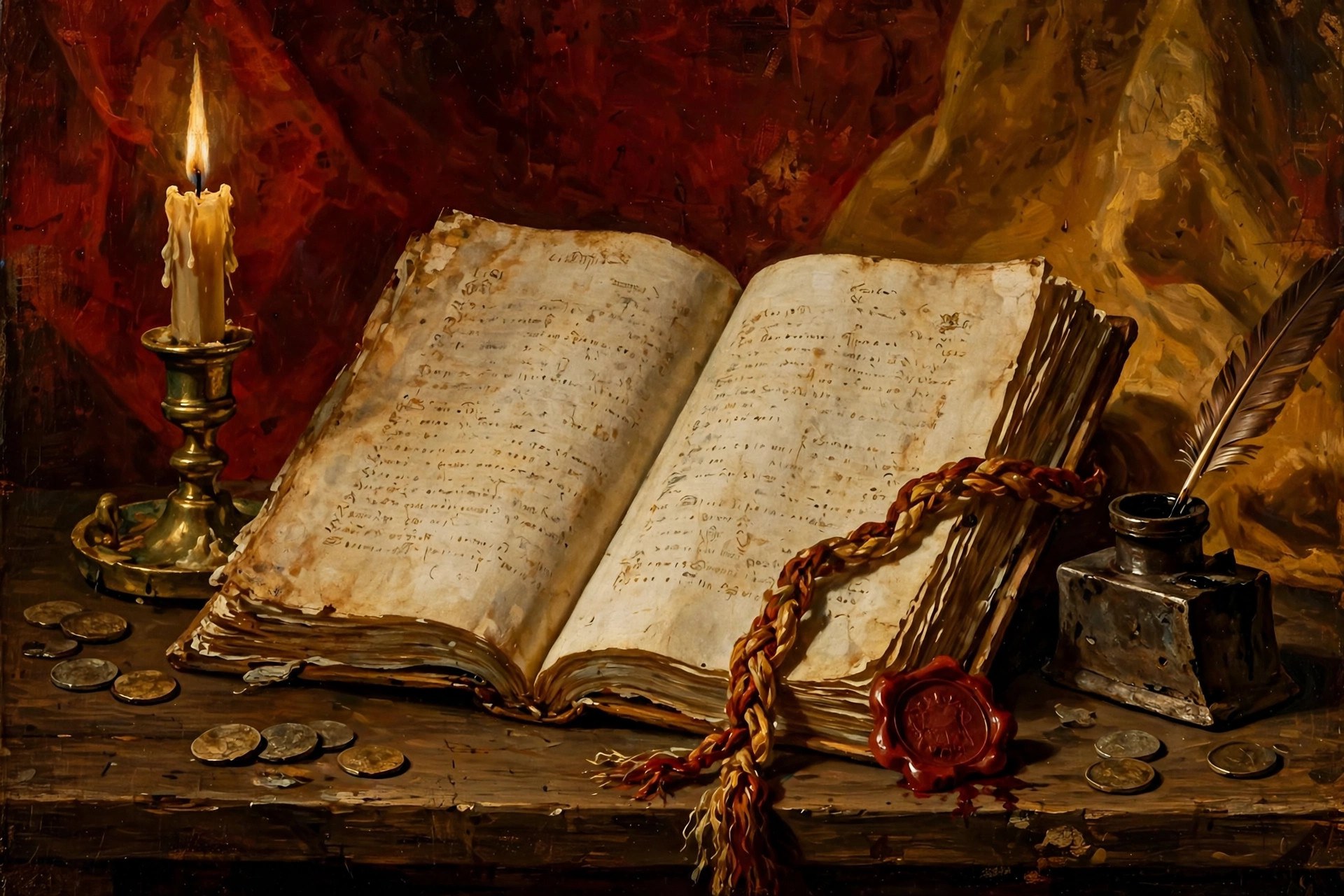
- Part II — Segunda parte del ingenioso caballero don Quixote de la Mancha — appeared in 1615. Between them, in 1614, a rival author writing as "Alonso Fernández de Avellaneda" published a spurious continuation; Cervantes answered it inside Part II itself, making the fake Quixote a running joke and the authentic one the only legal resident of his own story. See the manuscript.
Each part is 52–74 chapters of road, inn, conversation, and interpolated tale. The plot, such as it is: Don Quixote rides out, mistakes the world for a romance, suffers for it, and — in Part II — discovers that Part I has been published, so that everyone he meets has read about him.
What makes it "the first modern novel"
The claim rests on technique, not just age:
- A protagonist with an inner life. Quixote is not a hero with a trait but a consciousness with a theory — and the novel watches the theory collide with the world.
- Realism as a stage for romance. The inns, muleteers, shepherds, and bureaucrats are drawn from Spain as it was; the chivalric visions are drawn from books as they weren't. The friction is the form.
- Self-awareness. Characters discuss the book's authorship, its readers, its printing errors; Part II's characters have read Part I. Fiction about the making of fiction predates Cervantes in fragments, but never at this scale.
- Dialogue as engine. Sancho's proverbs against Quixote's rhetoric, one worldview in the mouth of each traveler — the novel thinks aloud.
Scholars broadly agree on the label; it is a consensus judgment, not a documented first. See methodology.
How the book was made
Cervantes wrote in haste, revised unevenly, and left famous inconsistencies (Sancho's donkey is stolen and reappears; the manuscript is found and lost and found again). He was inventing the novel as he went — the seams show, and that is part of the charm. The prologue to Part I apologizes for the book's lack of sonnets and learned citations, then gets on with it. The prologue to Part II takes revenge on Avellaneda with exquisite, smiling cruelty.
Reading it today
The standard English path is the public-domain John Ormsby translation (1885) — the source of every quotation on this site. Modern readers often prefer newer translations for flow, but Ormsby's remains the one most quotation-collections draw from, and it is the only one this site quotes verbatim. Start with Part One's guide or the ten-minute primer.
Source notes
- Publication history 1605/1615 and the Avellaneda continuation (1614): standard scholarly record; see sources.
- Structural description condensed from the Ormsby text (Project Gutenberg eBook #996).
- The "first modern novel" claim: scholarly consensus, labeled as such per methodology.