The Piano Sonatas
Thirty-two sonatas that Hans von Bülow called the piano's "New Testament." From brilliant showpieces to the transcendent last sonatas — composed across his entire career.
The early sonatas, Opp. 2–28 (1795–1801)
The first three (Op. 2, 1795), dedicated to Haydn, already show a young composer testing the form’s limits. Highlights of the early group:
- Op. 13 in C minor — “Pathétique” (1799). The nickname is authentic — Beethoven approved it. A slow introduction of tragic gravity, then one of his most famous themes.
- Op. 27 No. 2 in C-sharp minor — “Moonlight” (1801). The nickname was coined by the poet Ludwig Rellstab in 1832, five years after Beethoven’s death, comparing the first movement to moonlight on Lake Lucerne. Beethoven never used it. Dedicated to Giulietta Guicciardi.
- Op. 28 in D major — “Pastoral” (1801). A publisher’s nickname, not Beethoven’s — don’t confuse it with the Sixth Symphony.
The middle sonatas, Opp. 31–57 (1802–1806)
- Op. 31 No. 2 in D minor — “Tempest” (1802). Another posthumous nickname. When asked what it meant, Beethoven reportedly told his associate Schindler to “read Shakespeare’s Tempest” — reported via Schindler; treat with caution.
- Op. 53 in C major — “Waldstein” (1804). Dedicated to Count Waldstein, the Bonn patron. The finale’s sunrise opening is among the most thrilling pages in piano music.
- Op. 57 in F minor — “Appassionata” (1804–05). The nickname came from a publisher, but the passion is real — the most tempestuous of the middle sonatas.
The late sonatas, Opp. 81a–111 (1809–1822)
- Op. 81a — “Les Adieux” (1809–10). The only sonata whose programmatic titles (“Lebewohl,” “Abwesenheit,” “Wiedersehen”) are Beethoven’s own — written as Archduke Rudolph fled Napoleon’s 1809 bombardment of Vienna.
- Op. 106 in B-flat — “Hammerklavier” (1817–18). The longest and hardest: a 45-minute epic with a fugue finale. Beethoven knew it would challenge players — the dedication copy reads, in his hand, that it was “written for, and meant for, pianoforte players of the future” (reported inscription; widely cited).
- Op. 109, 110, 111 (1820–22). The last three: intimate, experimental, transcendent. Op. 111 ends not with fireworks but with variations dissolving into stillness — his final word for the piano.
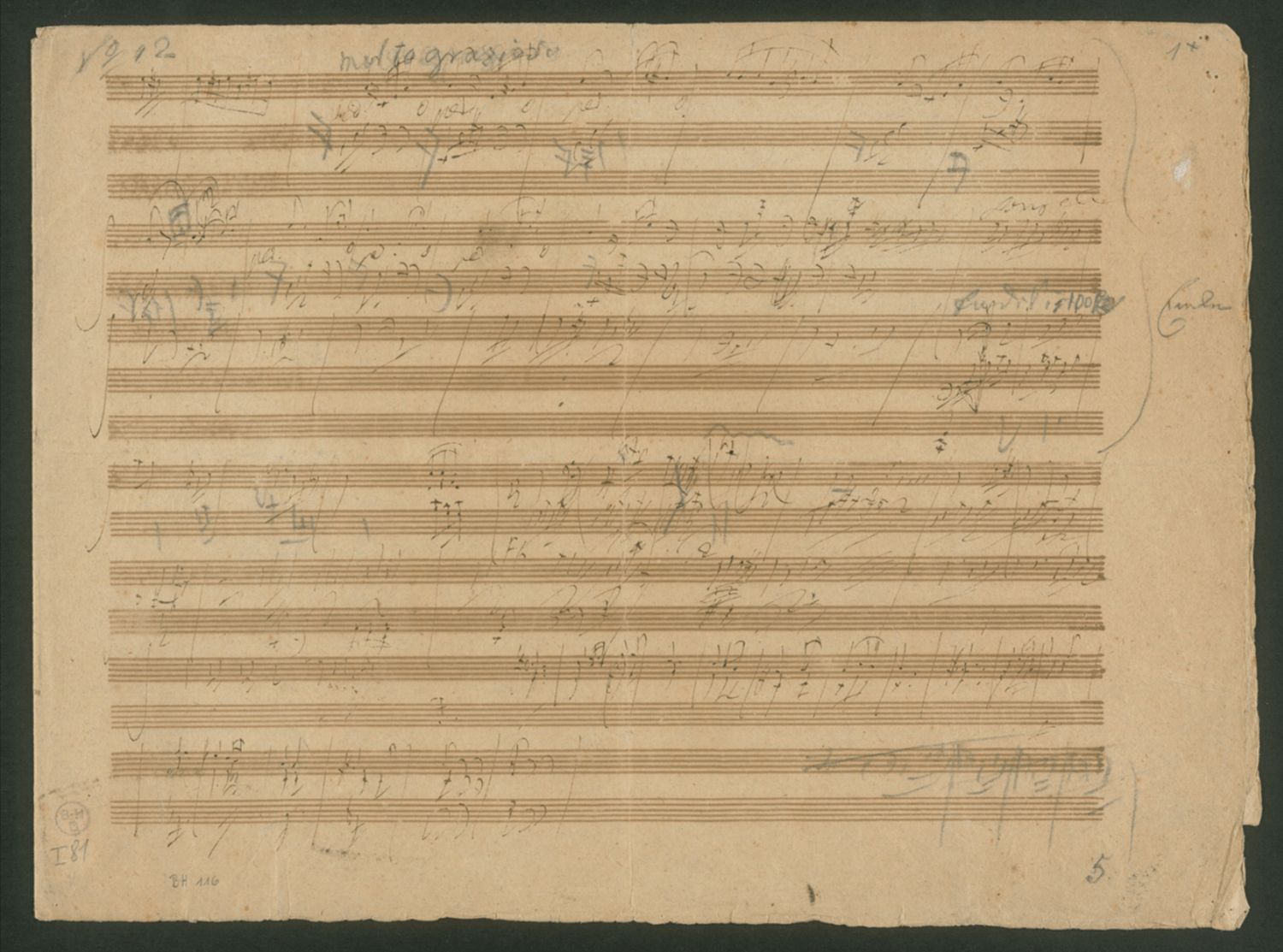
The manuscript on this page
The facsimile shown is Beethoven’s 1810 draft of Für Elise (Bagatelle in A minor, WoO 59) — not a sonata, but the most famous piano page he ever wrote, and a fine example of his working manuscripts: dense, corrected, urgent. The Beethoven-Haus Bonn holds the draft (BH 116).
Source notes
- Opus numbers, dates, and dedications follow the Kinsky–Halm catalogue.
- “Moonlight” nickname via Rellstab (1832): documented in Rellstab’s writings, posthumous to Beethoven — see mythology-vs-record.md.
- “Pathétique” title: contemporary publication carried the title with Beethoven’s approval.
- “Les Adieux” titles: Beethoven’s own German/French headings in the autograph.
- The “Tempest”/Shakespeare remark: reported by Schindler — flagged as unreliable source.
- Für Elise manuscript: Beethoven-Haus Bonn, BH 116 (1810 draft); image via Wikimedia Commons — see the image credits on this page.