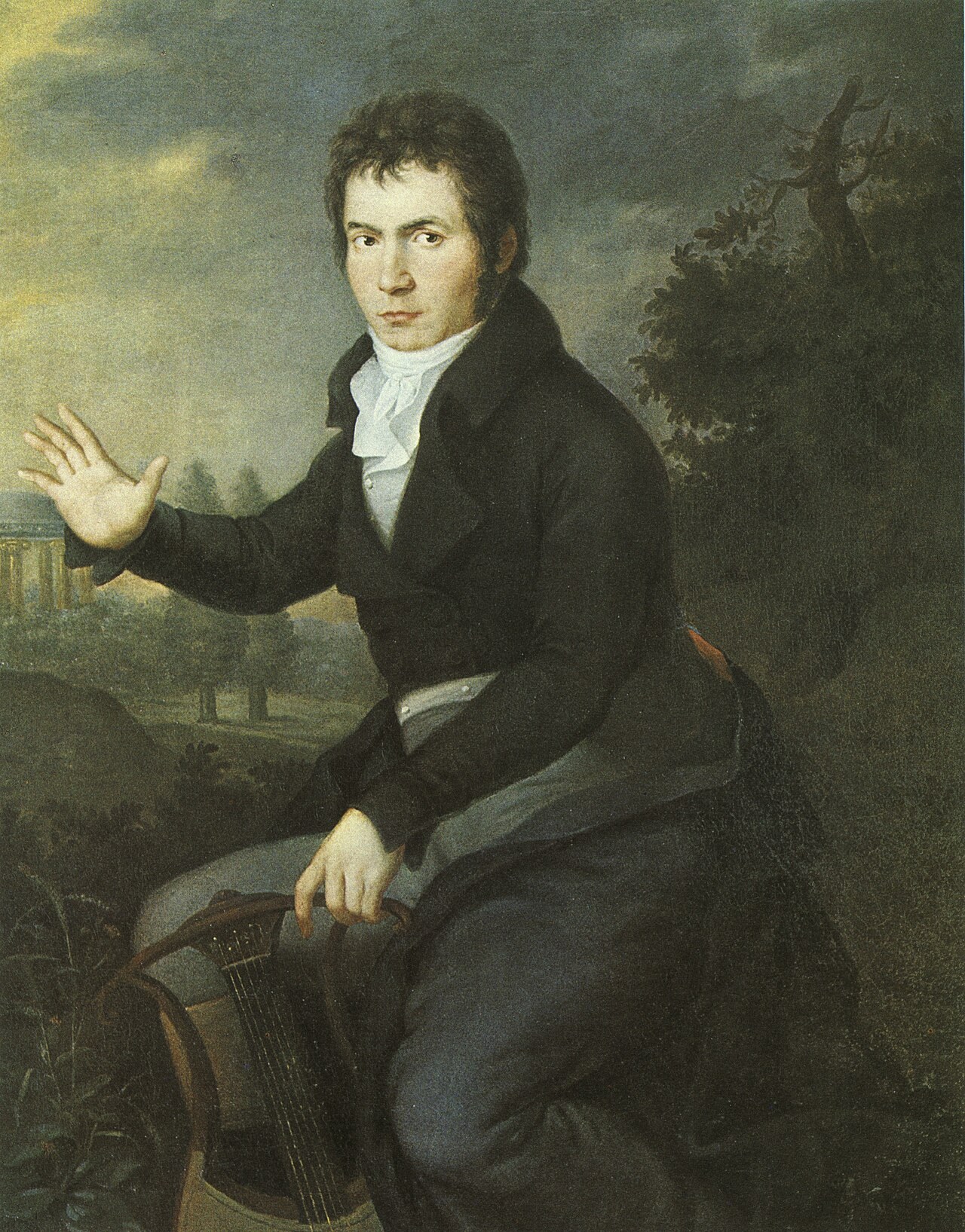
Eroica and Napoleon
The symphony that was going to be called "Bonaparte" — and the most famous torn-up title page in music history.
The plan
In 1803–04 Beethoven composed his Third Symphony, Op. 55, with Napoleon Bonaparte in mind — the general of the Revolution, the embodiment of the heroic ideals Beethoven absorbed from the Enlightenment: liberty, equality, the citizen freed from thrones. Sketchbooks and correspondence show the dedication taking shape: the symphony was to be titled “Bonaparte.”
The withdrawal
The famous account comes from Ferdinand Ries, Beethoven’s pupil and secretary, in the Wegeler–Ries memoirs (1838):
Ries reported that when news reached Vienna that Napoleon had crowned himself Emperor (May 1804), Beethoven flew into a rage — “So he is no more than a common mortal! Now he too will tread underfoot all the rights of man!” — and tore the title page in two.
Flag: single-source. Ries is a better witness than Schindler, and the circumstantial evidence supports him: the symphony was published in 1806 dedicated to Prince Lobkowitz, with the Italian subtitle “Sinfonia Eroica, composta per festeggiare il sovvenire di un grand Uomo” — “Heroic Symphony, composed to celebrate the memory of a great man.” “Memory” — past tense. The dedication had been withdrawn and the hero redefined as an ideal, not a man.
What the music says
Whatever the politics, the Eroica is a revolution in sound: twice the length of any prior symphony, a funeral march (Marcia funebre) as its slow movement, a finale of variations on a theme Beethoven had already used twice (in the ballet Prometheus and the Eroica Variations Op. 35). It premiered privately at Lobkowitz’s palace in 1804 and publicly on 7 April 1805. Early audiences were bewildered — one famously called it overlong; Beethoven’s supporters knew they’d heard the future.
The politics, honestly
Beethoven’s republican sympathies are well documented (he sketched a Tenth Symphony setting of Schiller’s Ode to Joy — the freedom poem — as early as the 1790s). But he also accepted aristocratic patronage all his life and later wrote for royalty without blushing. The Napoleon episode isn’t a simple political parable — it’s an artist discovering that heroes disappoint, and redirecting the dedication to the idea instead.
Source notes
- Composition 1803–04; Lobkowitz palace private premiere 1804; public premiere 7 April 1805; publication 1806 (dedicated to Lobkowitz): Kinsky–Halm catalogue and contemporary records.
- Ries’s account: Wegeler–Ries, Biographische Notizen (1838) — single source, credible but uncorroborated; flagged in-text.
- The “great man” subtitle: printed in the 1806 first edition.
- Napoleon crowned emperor: 18 May 1804 (proclaimed); crowned 2 December 1804 — the news reaching Vienna in 1804 is consistent with Ries’s timing.