People
The family that shaped him, the teachers he fought, the patrons who paid, the beloved he never named, and the nephew he nearly destroyed.
Johann van Beethoven (c. 1740–1792) — father
Court tenor at Bonn; a hard-drinking, ambitious man who drilled the young Ludwig as a prodigy and shaved years off his age for concert bills. Beethoven’s complicated feelings about him surface in the Heiligenstadt Testament’s blank space where brother Johann’s name should go — scholars have read the father’s ghost in it.
Maria Magdalena Keverich (1746–1787) — mother
Gentle, by all accounts; her death in 1787 (when Beethoven was 16) devastated him and forced him to help support the family. He called her his “best friend” in a letter to Joseph von Schaden (1787) — documented.
Christian Gottlob Neefe (1748–1798) — first real teacher
The Bonn court organist who taught Beethoven Bach, gave him his first publications, and wrote the famous 1783 magazine notice praising the eleven-year-old (really twelve). The foundation of everything.
Count Ferdinand von Waldstein (1762–1823) — Bonn patron
Young aristocrat who recognized the talent early, funded the Vienna move, and received the dedication of the Waldstein Sonata (Op. 53). His 1792 farewell inscription in Beethoven’s album is famous: “Mozart’s genius is still mourning… With the help of assiduous labour you shall receive Mozart’s spirit from Haydn’s hands.”
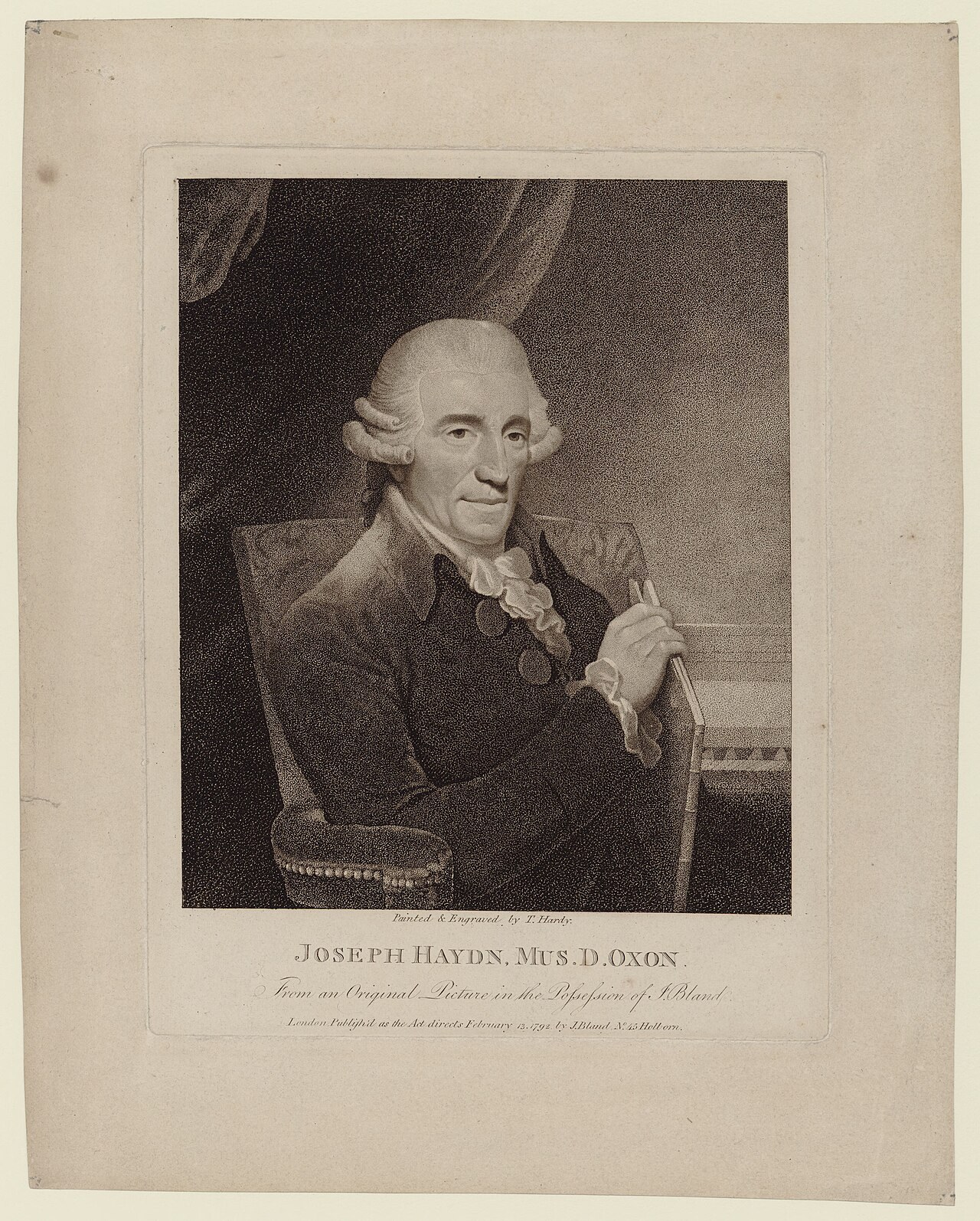
Joseph Haydn (1732–1809) — teacher
Beethoven arrived in Vienna in 1792 to study with the most famous composer alive. It went badly: Beethoven suspected Haydn of neglect and secretly took lessons elsewhere. Haydn, with some justice, later listed him among his pupils — Beethoven bristled. The truth: he learned enormously, and resented the debt. (Portrait: Thomas Hardy’s 1792 painting.)
Wolfgang Amadeus Mozart (1756–1791) — the shadow
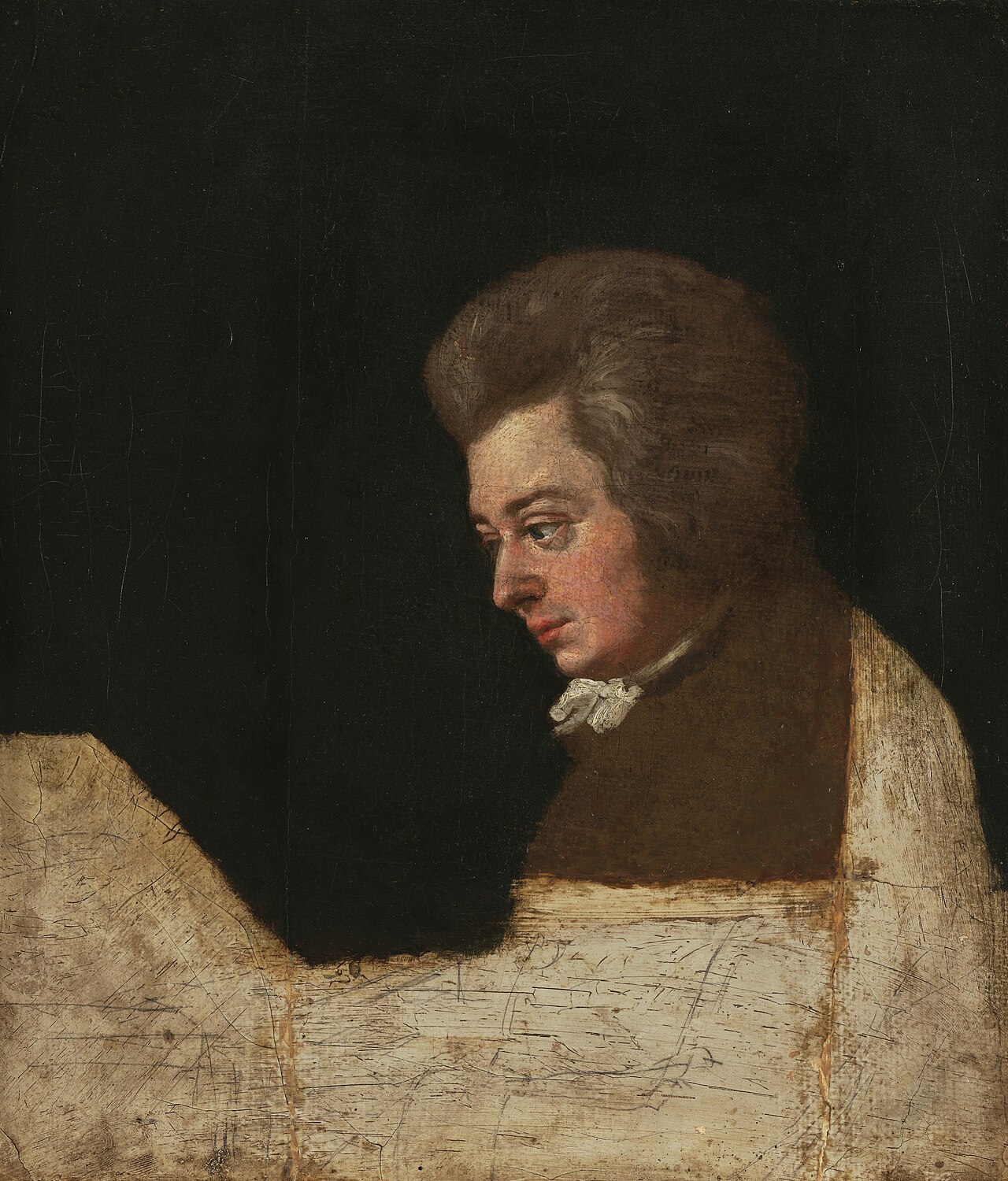
Beethoven’s Vienna trip of 1787 may have included a meeting with Mozart — no contemporary evidence exists; see Mythology vs. Record. What is certain: Mozart’s music was the model Beethoven measured himself against, and Waldstein’s farewell explicitly set Mozart’s mantle on him.
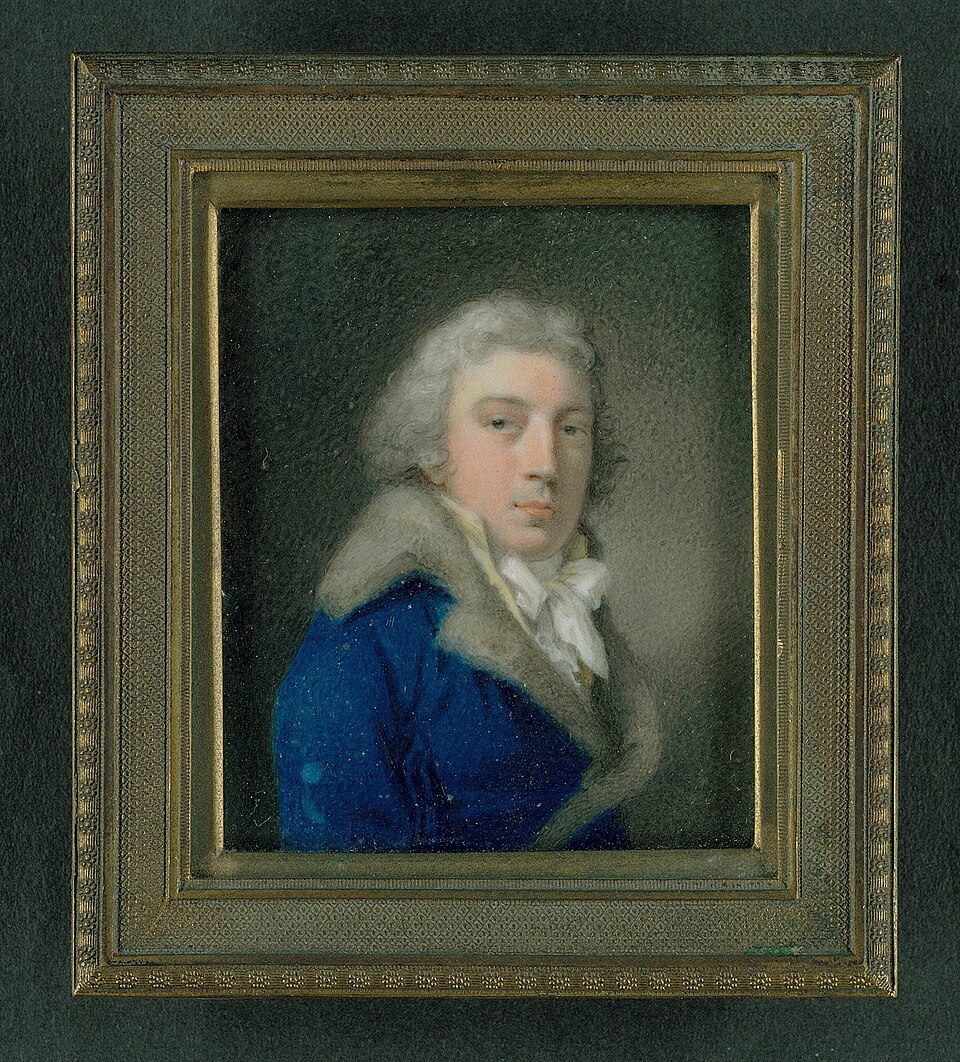
Prince Karl von Lichnowsky (1756–1814) — patron
The most generous early patron: an annuity, a quartet of his own to play in, and the dedication of the Op. 1 trios and the Pathétique. The relationship broke spectacularly in 1806 (the famous incident — reported — of Beethoven refusing to play for French officers at Lichnowsky’s estate). Yet the Testament thanks “Prince Lichnowsky” warmly.
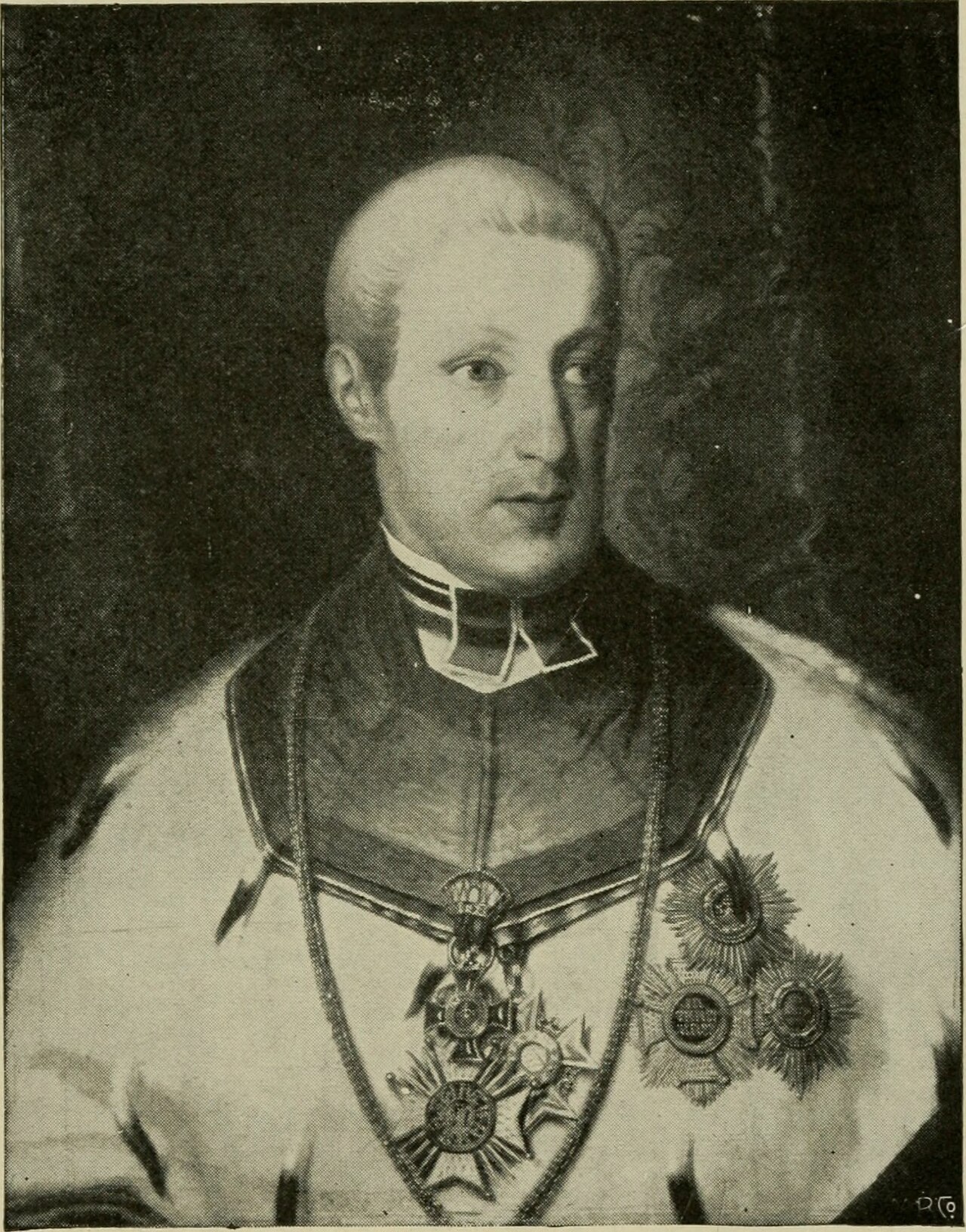
Archduke Rudolph of Austria (1788–1831) — pupil and patron
The Emperor’s youngest brother; Beethoven’s piano pupil, friend, and most important patron. Dedicatee of the Emperor Concerto, the Hammerklavier, the Missa Solemnis, and more — plus co-guarantor of the 1809 annuity. The longest and most loyal of Beethoven’s aristocratic relationships.
Count Andreas Razumovsky (1752–1836) — patron
Russian ambassador in Vienna; commissioned the three Op. 59 quartets (1806) and asked for Russian themes in them. His palace orchestra gave Beethoven a laboratory for orchestral sound.
Prince Joseph Franz von Lobkowitz (1772–1816) — patron
Dedicatee of the Eroica, the Fifth, the Sixth, and the Op. 18 quartets; his palace hosted the Eroica’s premiere. His finances collapsed in the Napoleonic wars, straining the 1809 annuity.
Franz Gerhard Wegeler (1765–1848) — friend
Bonn childhood friend, later his doctor in Koblenz; recipient of the great confessional letters (1801) and, with Ferdinand Ries, author of the first biographical memoir (1838). One of the few people Beethoven trusted completely.
Ferdinand Ries (1784–1838) — pupil
Bonn friend’s son, Beethoven’s piano pupil and secretary in Vienna; later a composer in London. His memoirs (with Wegeler, 1838) are a key source — including the Napoleon-dedication story. Generally more reliable than Schindler.
Giulietta Guicciardi (1782–1856) — dedicatee
Young piano pupil; dedicatee of the Moonlight Sonata (1801). Beethoven admitted to Wegeler (November 1801) that he was in love — “for the first time,” he wrote — with “a dear charming girl who loves me and whom I love.” The identification with Guicciardi is traditional but not proven by the letter itself.
The Immortal Beloved — unidentified
Recipient of the unsent July 1812 love letter; identity never proven. Antonie Brentano is the leading scholarly candidate; Josephine Brunsvik another. See Mythology vs. Record.
Karl van Beethoven (1806–1858) — nephew
Son of brother Caspar Carl; Beethoven won custody in 1820 after a five-year legal war with the boy’s mother Johanna, then smothered him with impossible expectations. Karl attempted suicide in July 1826. The episode is the darkest in Beethoven’s biography — love expressed as control, ending in catastrophe.
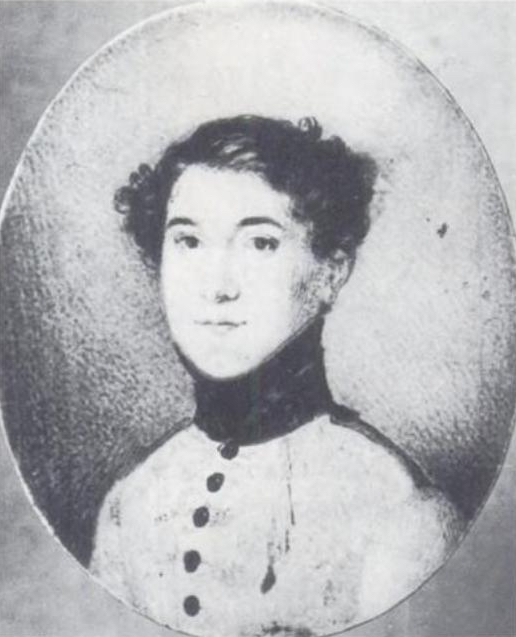
Anton Schindler (1795–1864) — secretary and biographer
Beethoven’s unpaid secretary in the 1820s and his first major biographer (1840). Indispensable — and untrustworthy: modern research proved he forged entries in the conversation books and embellished anecdotes. Every Schindler story on this site carries a flag.
Johann Nepomuk Mälzel (1772–1838) — inventor
Inventor of the metronome; friend, collaborator (the Wellington’s Victory piece, the ear trumpets), and later bitter litigant over money. Their quarrel ended in court.
Source notes
- Family dates and the 1783 Neefe notice: documented in Bonn records and the Beethoven-Haus Bonn archives.
- Waldstein’s 1792 album inscription: quoted in standard biographies from the surviving album leaf.
- Patrons, annuity (1809), and dedications: Kinsky–Halm catalogue and correspondence (Brandenburg edition).
- Wegeler–Ries Biographische Notizen (1838): source for the Napoleon story and early anecdotes.
- Schindler’s forgeries in the conversation books: established by modern scholarship (notably Peter Stadlen’s research).
- Karl custody case (1815–1820) and suicide attempt (July 1826): court records and family correspondence.
- Giulietta Guicciardi identification: traditional; the 1801 Wegeler letter does not name her — flagged.