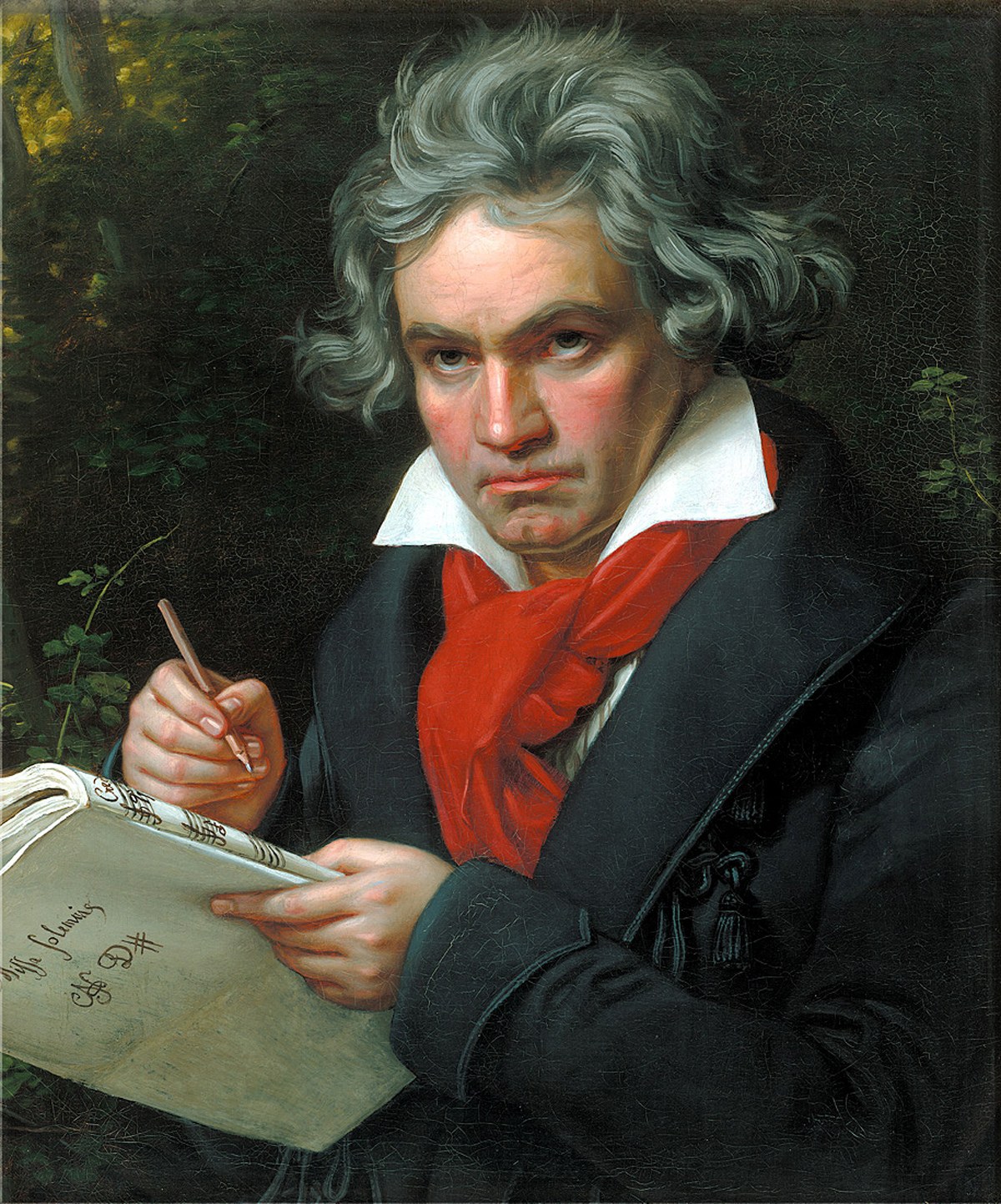
Ludwig van Beethoven, in Reference
Composer (baptized 17 December 1770, Bonn — died 26 March 1827, Vienna). The central figure of the turn from Classical to Romantic music, who kept composing — including the Ninth Symphony — after deafness took his hearing. This site is a neutral reference: documented facts with citations, verbatim quotations from letters with sources, and honest flags wherever the evidence runs thin.
Where to begin
- New to the subject? Start with Start Here — a five-minute orientation.
- The life in sequence: Biography and the Timeline.
- The music: The Nine Symphonies, Piano Sonatas, String Quartets, and Musical Innovations.
- The deafness: The Deafness Story — onset around 1798, the Heiligenstadt Testament of 1802 (quoted verbatim), and how he kept working.
- In his own words: Sayings & Letters collects quotations verified against published letters, plus reported and misattributed lines, each labeled.
- The people around him: People — Haydn, Mozart, patrons, the Immortal Beloved, nephew Karl.
- Terms defined: Glossary — sonata form, fugue, scherzo, and the rest.
- Myth vs. evidence: Mythology vs. Record tests the famous Beethoven stories.
- Go deeper: nine researched deep dives — Bonn Childhood, The Vienna Years, Eroica and Napoleon, Fidelio, Missa Solemnis, The Ninth and Ode to Joy, The Late Quartets, Death and Funeral, and Beethoven in Pop Culture.
- How this site was made: Methodology and Sources.
Why this site is careful
Beethoven is one of the most mythologized figures in music: invented last words, invented encounters, invented explanations of his music. His early biographer Anton Schindler fabricated or embellished episodes that are still repeated. Every page here ends with Source notes. Dates use documented evidence — including the honest note that Beethoven’s exact birth date is not recorded (he was baptized 17 December 1770; 16 December is traditional, not documented). Uncertain claims are labeled as uncertain. Quotations come from published letters or are explicitly flagged as reported.
What the record establishes
- Baptized 17 December 1770 in Bonn; died 26 March 1827 in Vienna.
- Moved to Vienna in 1792 to study with Haydn; stayed for the rest of his life.
- Hearing loss began around 1798; by the 1820s he was functionally deaf, communicating through conversation books.
- The Heiligenstadt Testament (6 October 1802) documents his despair — and his resolve to live for his art.
- Wrote 9 symphonies, 32 piano sonatas, 16 string quartets, 5 piano concertos, one opera (Fidelio), the Missa Solemnis, and the Ode to Joy finale of the Ninth — composed while deaf.
- The Eroica (Symphony No. 3) was first intended for Napoleon; the dedication was withdrawn after Napoleon crowned himself emperor — an account reported by his pupil Ferdinand Ries.
The animated stream
A separate project — a YouTube live channel featuring an animated, dramatized Beethoven character from the Vizlings app — is documented on the Stream page. That page describes the character as AI-generated dramatization art, not a historical depiction, and currently embeds a temporary owner-supplied mockup video, clearly labeled as a placeholder rather than a live broadcast. The character is introduced on Meet the Character. Downloadable character art lives on the Social Pack page.
Source notes
- Biographical facts summarized here are documented in biography.md and timeline.md (Source notes there cite the Beethoven-Haus Bonn, published letter editions, and standard biographical scholarship).
- Quote policy: only quotations traceable to published letters or documents are treated as verified; see sayings.md and methodology.md.
- Images: historical portraits, manuscripts, and photographs are public-domain or Creative Commons images from Wikimedia Commons; generated character art is labeled as dramatization. See the image credits on this page for each file’s source and rights note.