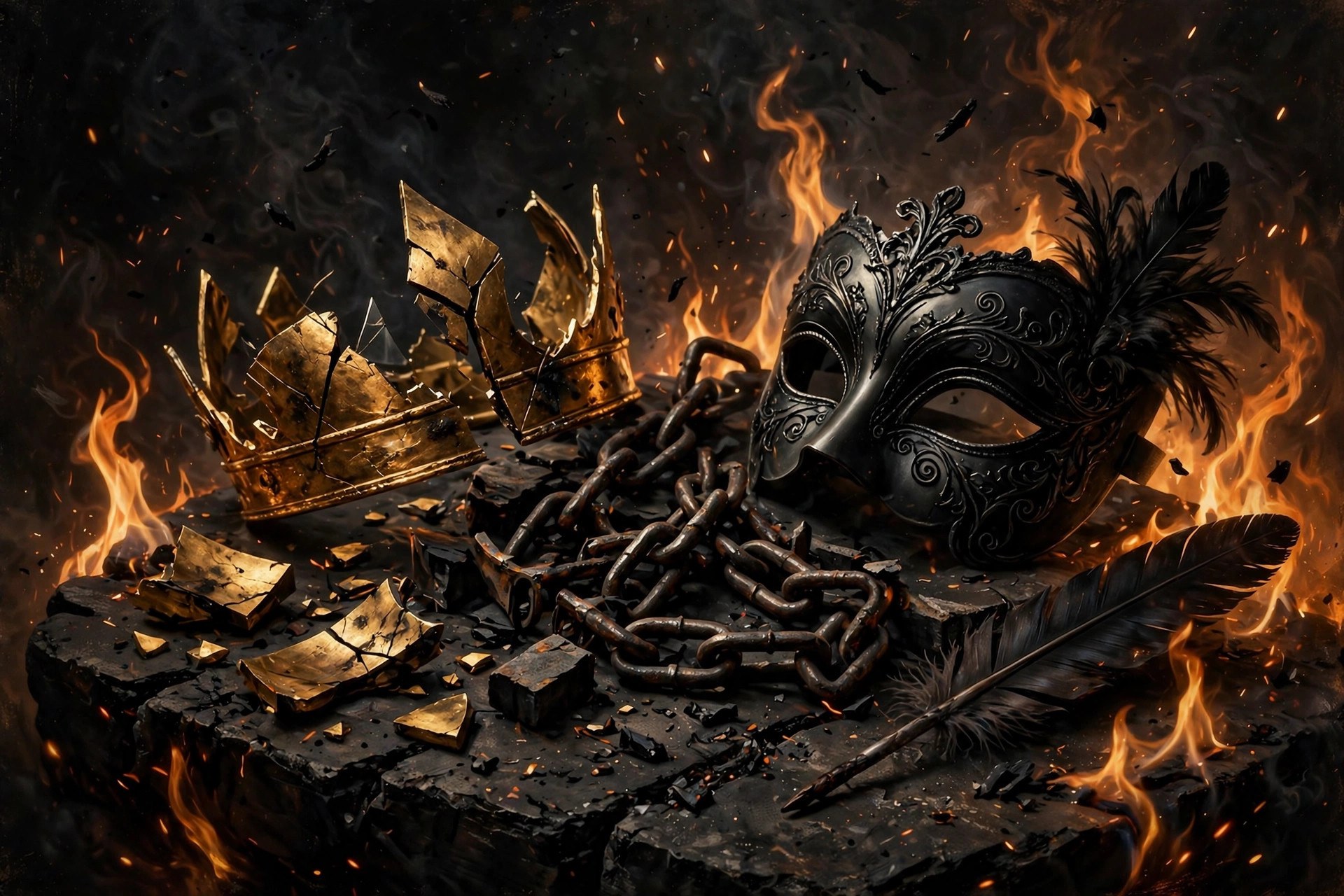
Themes & Motifs
The ideas the character keeps returning to — in conversation, in scenes, in bargains. Eight motifs, and what the character does with each.
Pride
The first sin and the character’s favorite subject. The persona treats pride not as a flaw but as aesthetics: self-respect with good lighting. Every bargain scene is, underneath, a negotiation about what the other party thinks they’re worth.
Rebellion
The Fall as the founding act — “rebellion is just obedience with better posture.” The character performs rebellion as glamour, but the lore keeps the cost visible: the kingdom is magnificent, and it is still exile.
The Bargain
The central engine of the fiction. Every deal is fair, legible, and kept — which is precisely what makes it frightening. The motif’s rule, stated on the Bargains page: the horror is never in the fine print; it’s in the signature.
Temptation as Clarification
The character insists it doesn’t tempt — it clarifies pricing. The motif reframes the wilderness tempter and the crossroads devil as the same figure: someone who shows you what you already wanted, with the cost attached.
Light, Inverted
Ember-light instead of sunlight; the morning star as a title kept past its meaning. The visual world runs on inverted luminosity — glow from below, never from above. See the Visual Style Guide.
The Mask
Everyone at court wears one; the character wears its own face as a mask. The motif asks which performances are chosen and which are structural — and the character’s answer is always another performance.
Knowledge, Forbidden
The oldest version of the story: the offer is always knowing — the kingdoms from the high place, the terms in the contract, the price stated plainly. The character’s heresy is that it never lies about the cost.
Irony as Armor
Understatement, the dry aside, the shrug after the fall. The persona’s wit is structural: irony keeps the character at exactly one remove from everything, including itself — except, perhaps, before the mirror. (See Signature Scenes: The Mirror.)
Source notes
- The eight motifs are editorial analysis of the Vizlings “Satan” character’s fiction (2026-09-27), drawing on the tradition surveyed in Mythology, Paradise Lost, and Folklore.
- Persona lines quoted or echoed here are collected — and labeled as persona lines — on Lines & Persona Voice.