Methodology
The rules this site runs on: what counts as canon, what counts as invention, and how the two are never mixed.
Canon vs. invention
This site works with two bodies of material, and they are never mixed:
Canon — the real tradition, surveyed descriptively: - Scriptural and religious texts (Hebrew Bible, New Testament, Qur’an, Second Temple literature), described neutrally without devotional or polemical framing. - Literary works (Dante, Marlowe, Milton, Goethe, Irving, Benét, folk legend), quoted accurately with full citation. - Scholarship and reference works (named on the Sources page).
Invention — the Vizlings character’s fiction, labeled explicitly: - Persona lines (Lines & Persona Voice) — every one marked “written for the Vizlings character; not a sourced quotation.” - Lore, world, cast, scenes — each page carries a fiction label naming what is invented. - Sample stream scripts — marked as dramatized dialogue written for the character.
The rule: invention may echo canon (the Fall, Pandemonium, the crossroads), but it never claims canon. No persona line is presented as a quotation. No fictional scene is presented as a sourced event. Where a famous literary line is relevant (e.g., Milton’s “Better to reign in Hell”), it appears only on the tradition’s page, fully cited — never in the character’s mouth.
Neutrality policy
The subject touches living religious traditions. The policy:
- Describe, don’t preach. Traditions are summarized as their adherents and scholars describe them. No devotional claims, no polemics, no mockery.
- Attribute contested claims. “Scholars note…”, “the tradition holds…”, “the character claims…” — the speaker is always named.
- Separate the character from the theology. The Vizlings Satan is a fictional dark-fantasy persona. Nothing on this site speaks for any religion, and the fiction never borrows religious authority.
- Folklore is folklore. Legends are surveyed as stories people told, not as facts — including legends about real persons, who are never depicted.
Citation and dating
- Quotations give work, book/line or chapter/verse, and standard edition date. Paraphrase is never presented as quotation.
- Dates follow scholarly convention; ancient or disputed dates carry “c.” Uncertainty is stated, not smoothed over.
- Line numbers for verse works (Milton, Dante) follow standard editions.
Image honesty
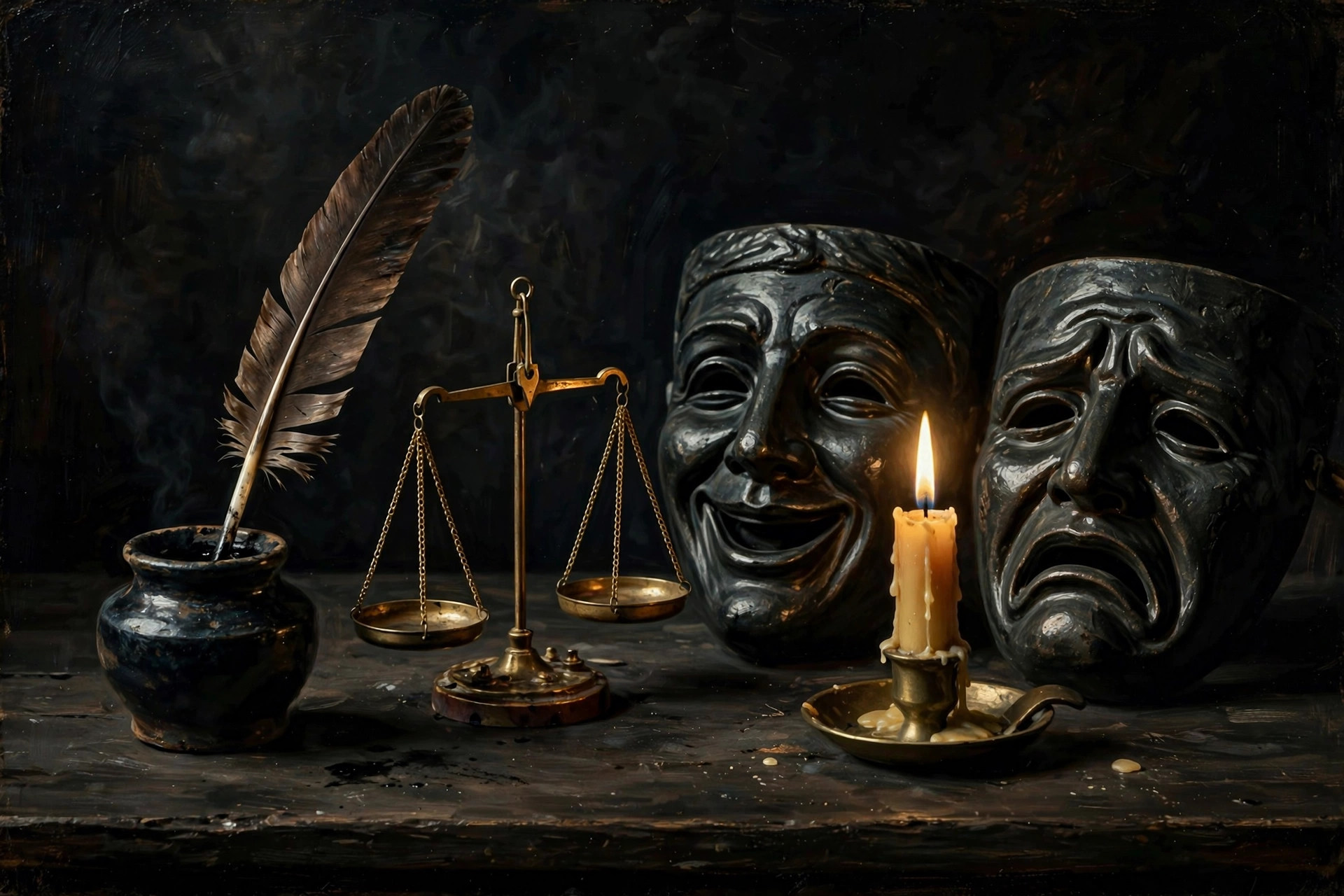
- Every image is AI-generated dramatization art, captioned as such on every appearance.
- No image depicts, evokes, or implies any real person, living or dead.
- No image imitates a photograph, document, or footage of anything real.
- See the image captions for credits and context. Illustrated character art is a dramatization.
- Social images carry persona lines only — never quotations — and captions repeat the wording for accessibility.
What this site doesn’t do
- It doesn’t preach or debunk. Both would break the neutrality policy.
- It doesn’t invent sources, channel IDs, schedules, or audience numbers. The stream is a labeled mockup until a real channel exists.
- It doesn’t present the character’s fiction as tradition, or the tradition as the character’s words.
Uncertainty, stated
Where the site is unsure — an etymology (“Old Nick”), an ancient date, a legend’s origin — it says so on the page. A reference site earns trust by marking the edges of what it knows.
Source notes
- Policy written for the Vizlings “Satan” character site (2026-09-27); it implements the standing honesty rules for all character sites.
- Per-page source notes carry the specific citations; the consolidated bibliography is on Sources.