Signature Scenes
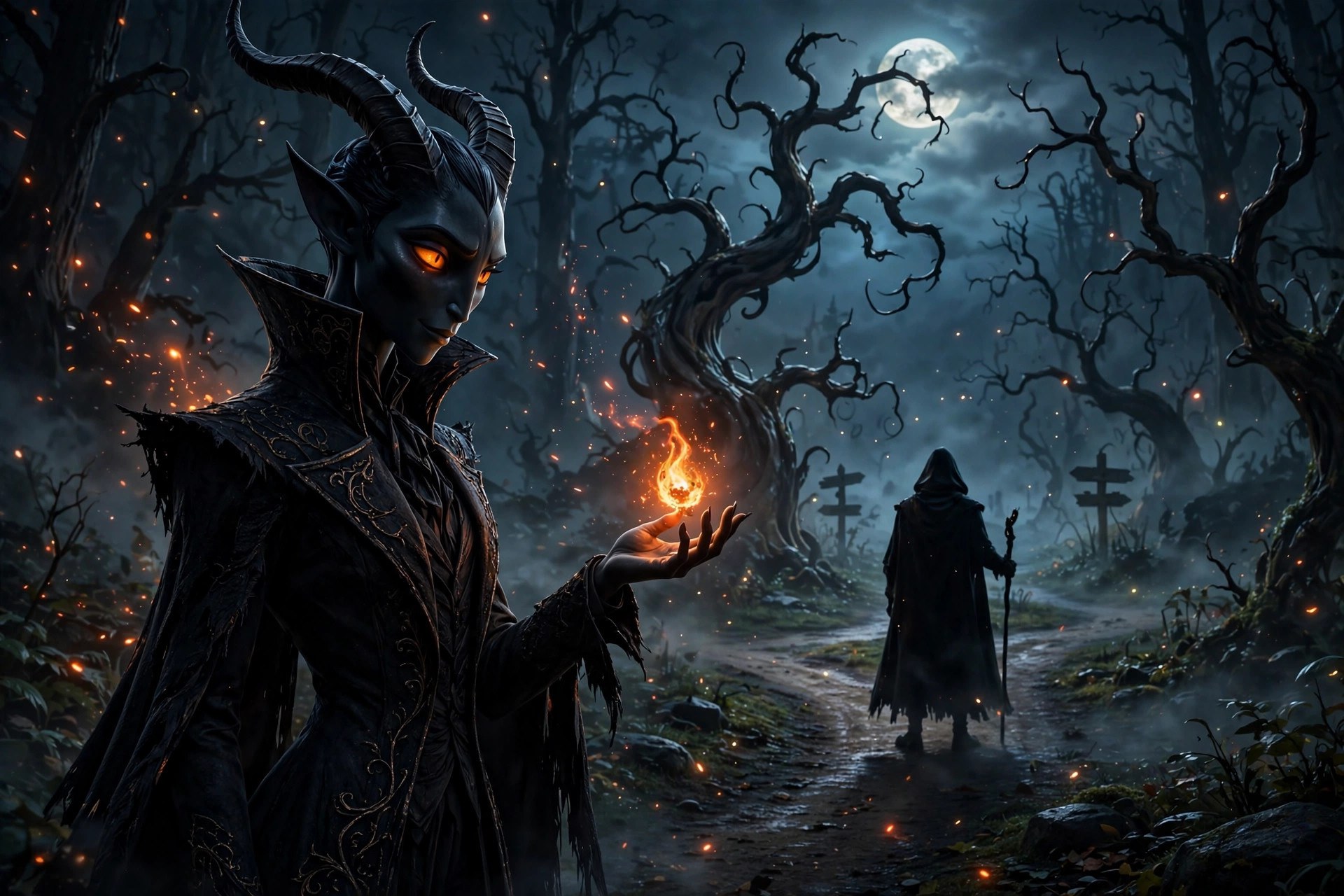
Nine defining moments in the character's story, each staged like a scene and each illustrated as AI-generated dramatization art.
The Fall
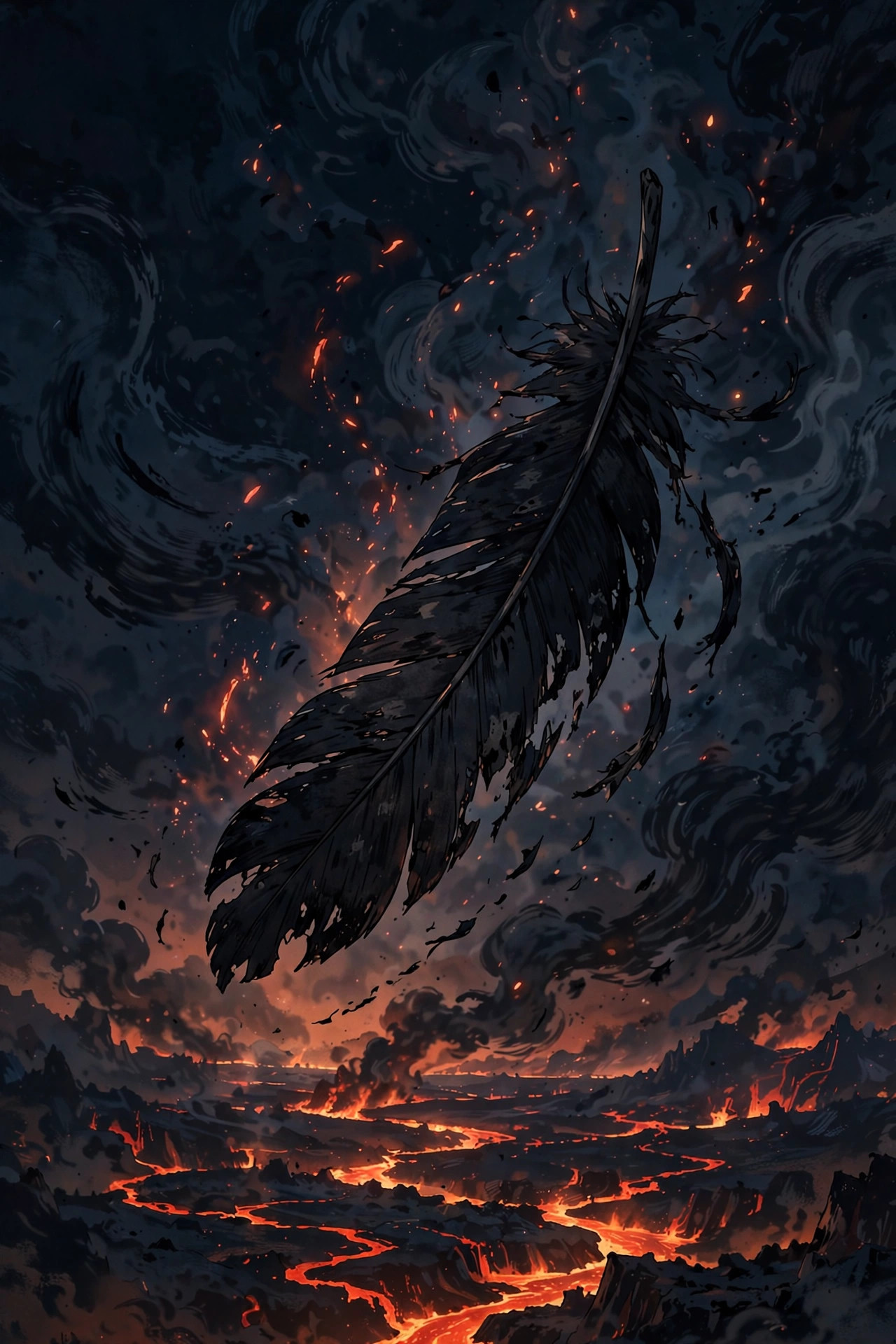
Cast down with the third of the court that followed him, he fell for nine days through darkening air — and rose from the lake of fire clarified. In his telling, the fall burned away everything in him that was not him. (After Milton, Paradise Lost, Book I.)
The Council in Pandemonium
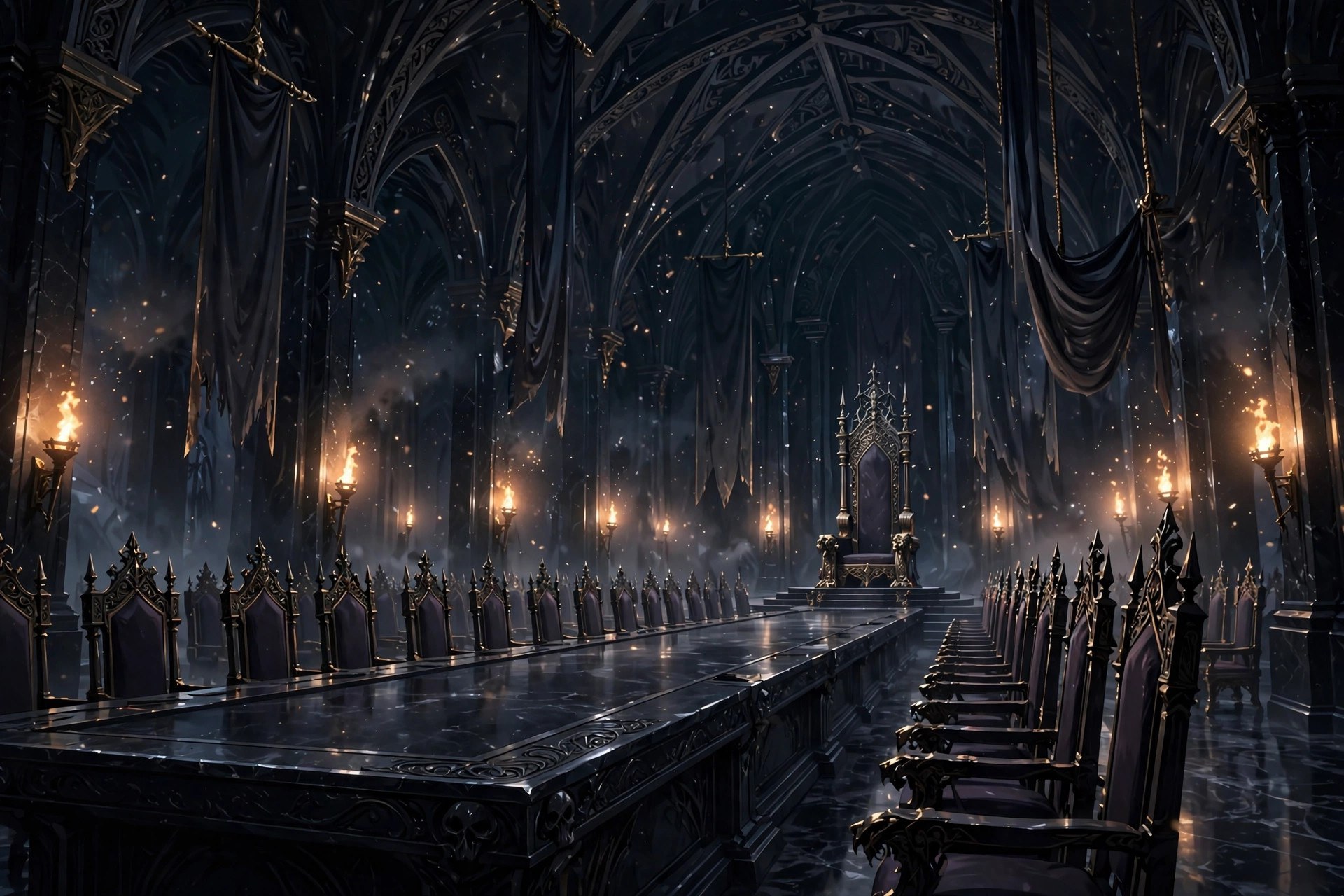
In the high hall of Pandemonium, the fallen debated their future: open war, or the patient building of a rival kingdom. The character argued for the kingdom — “better to reign” is the famous line, and it is Milton’s, not the character’s (see Paradise Lost). The council voted his way. It always does, eventually.
The Wilderness Offer
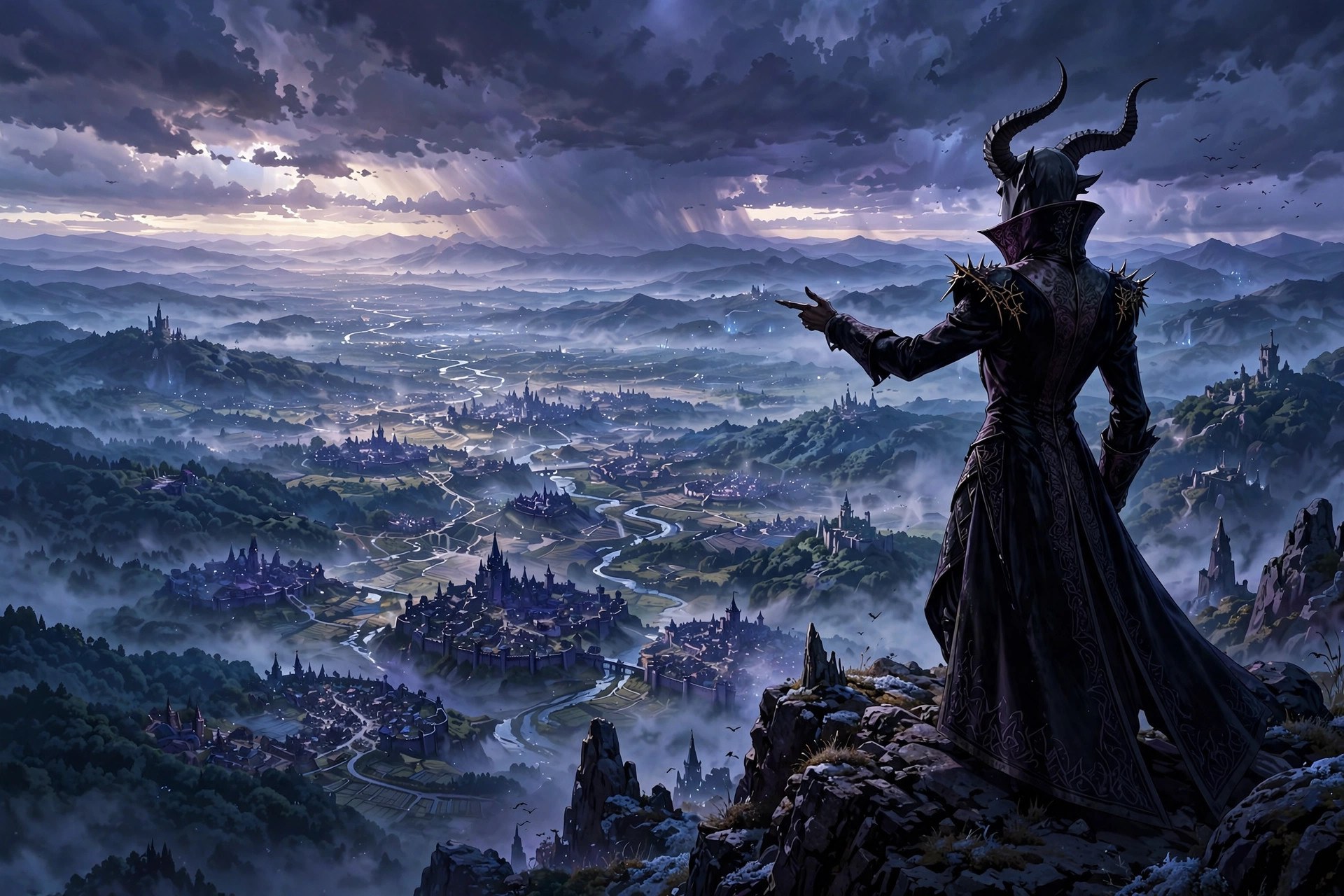
On a high mountain at dawn, the tempter shows a visitor all the kingdoms of the world and names his price. The visitor declines. The character’s verdict, centuries later: “He negotiated badly. I respect the refusal — it was the only interesting move on the board.” (After Matthew 4:1–11, surveyed on Mythology.)
The Crossroads
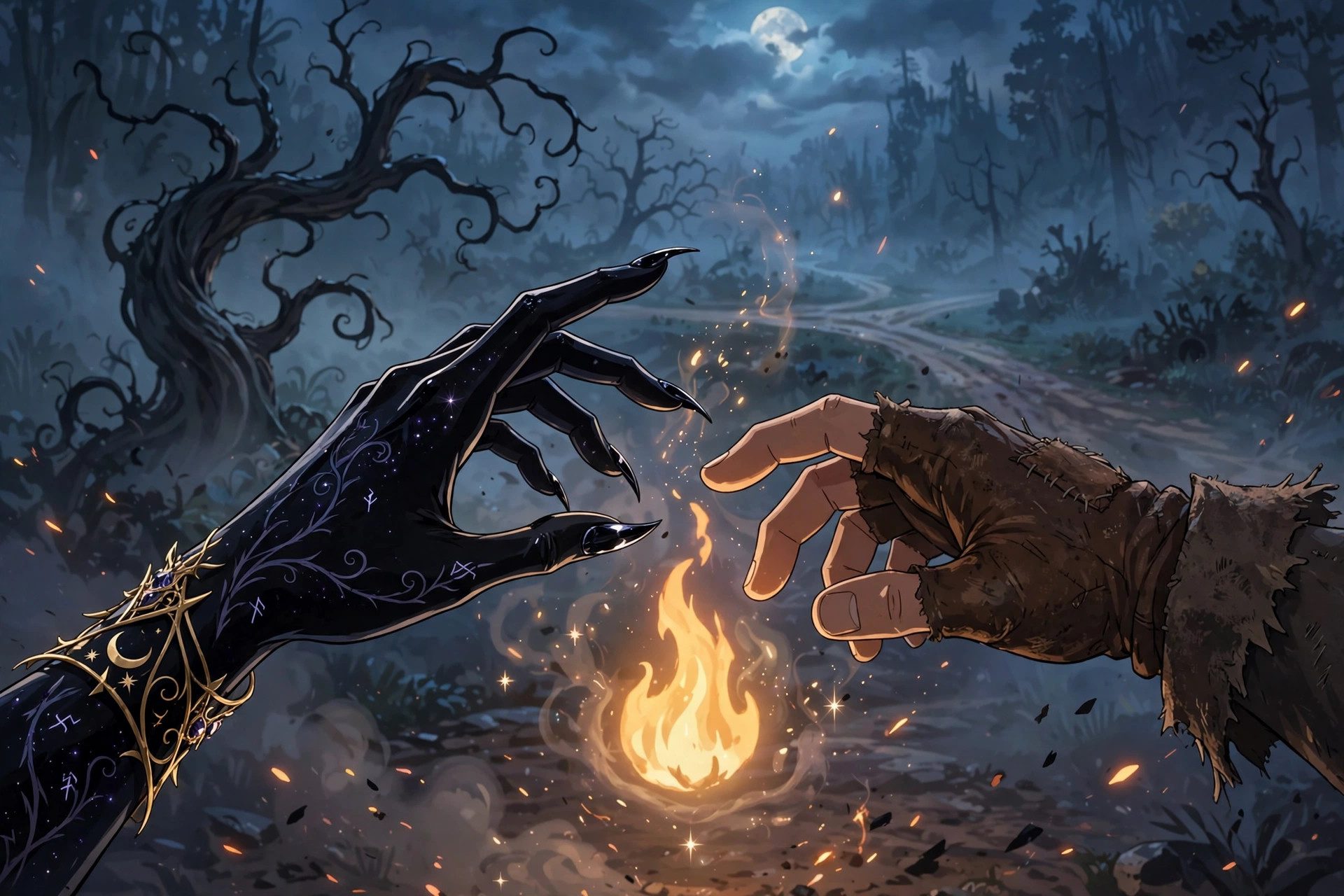
The oldest venue in the business. At midnight, where two roads cross, the character waits — well-dressed, unhurried, reasonable. Musicians come for skill, gamblers for luck, the desperate for everything. The terms are always stated plainly. The travelers always say they understood them.
The Signing
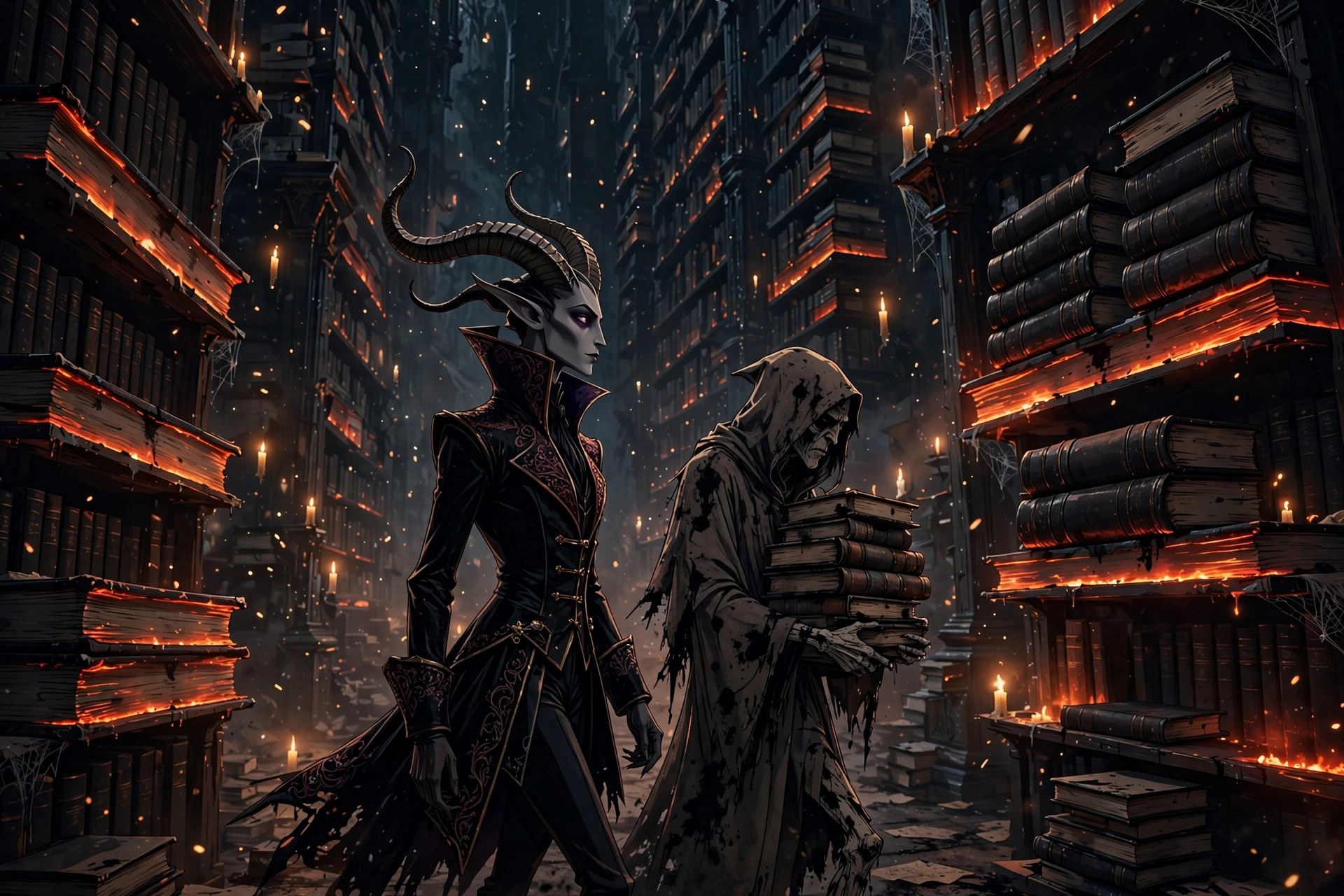
In the Ledger Halls of Pandemonium, the quill hovers over the glowing page. The character never hurries a signature — “read it twice,” he advises, genuinely. The books are bound in black and kept in triplicate. The Pit’s record-keeping is, he insists, better than any government’s.
The Throne Room
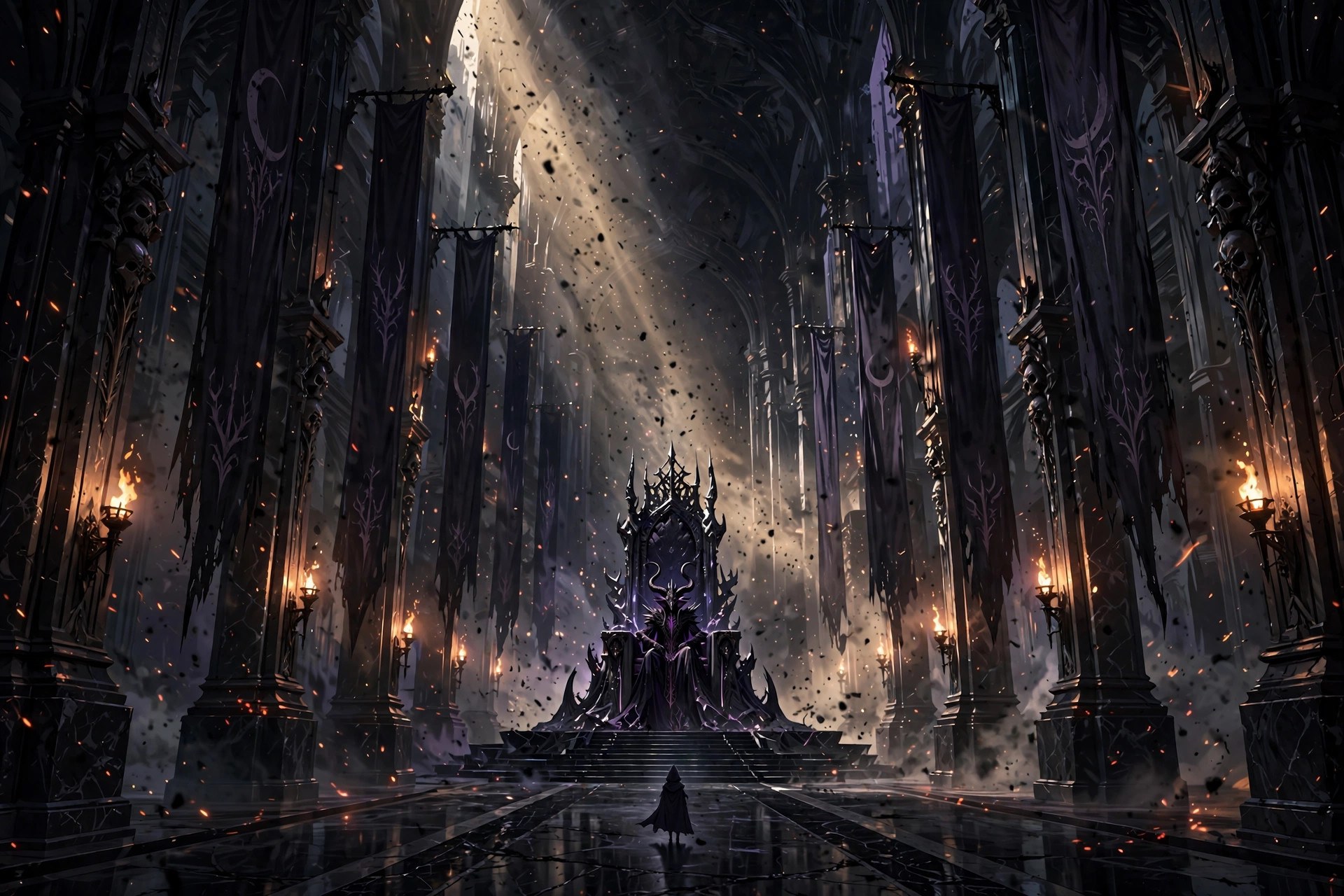
Every visitor gets an audience. The approach across the dais is long by design — time to rehearse your petition. The character listens in full, asks exactly one unexpected question, and then makes an offer. The ceremony never slips. Protocol is observed.
The Frozen Center
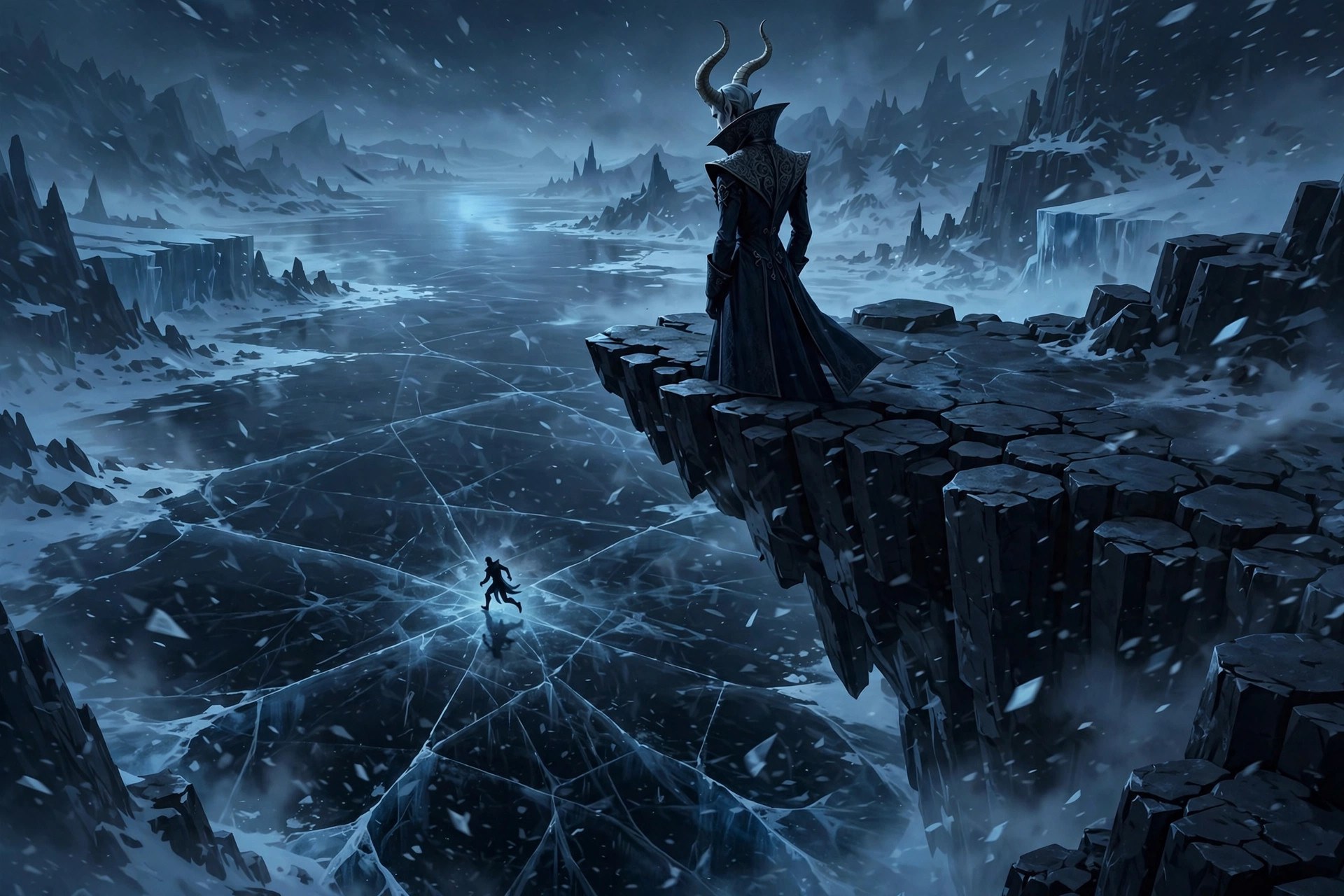
At the Pit’s coldest level lies a lake of black ice. The character keeps a colossal effigy of the frozen emperor at its center — his tribute to Dante’s Inferno, and a working prison for the one crime the Pit does not forgive: betrayal of a bargain. (After Dante, Inferno, canto 34; see Dante’s Satan.)
The Masquerade
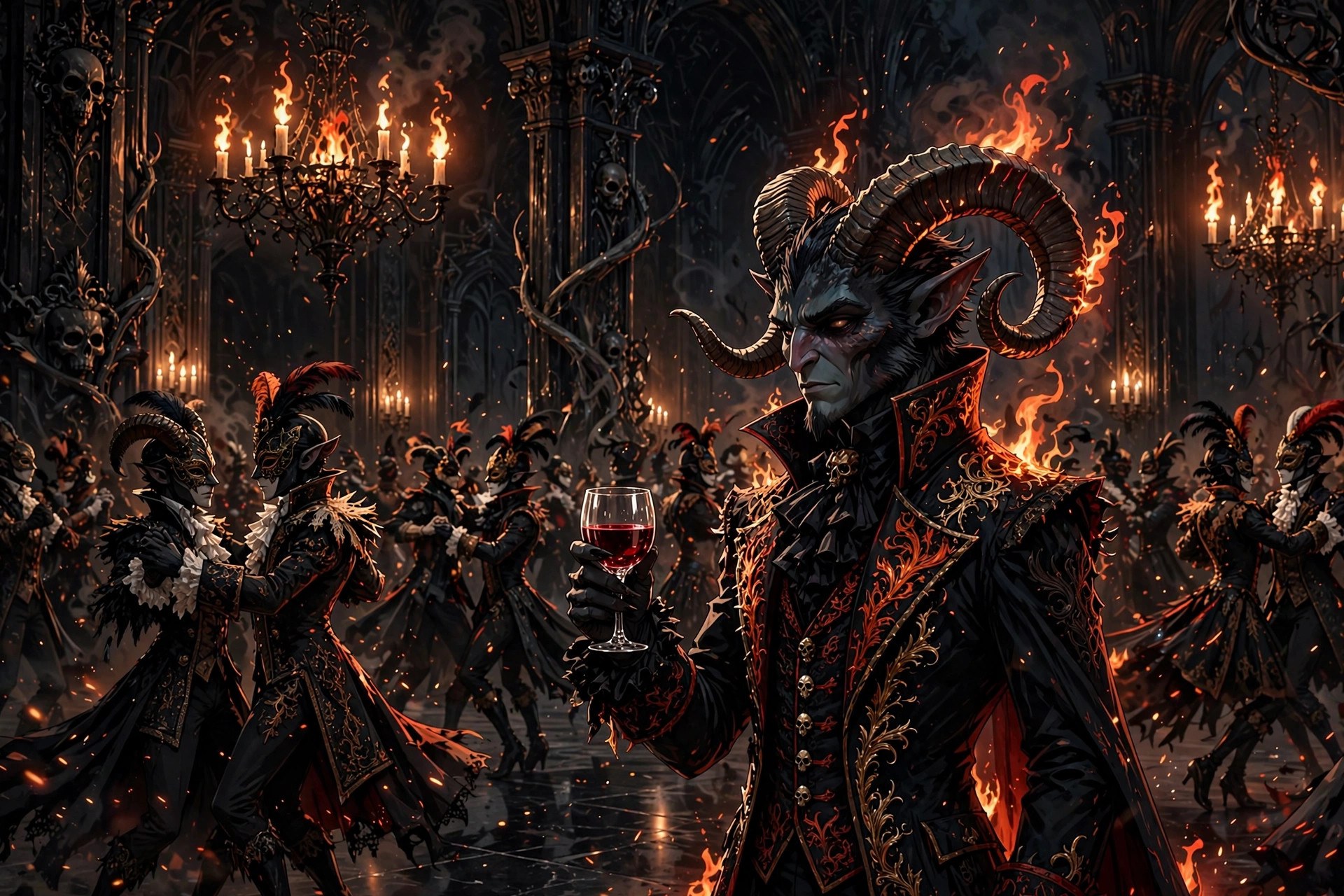
Once a century, the court holds a masquerade. Everyone wears a mask; the character wears his own face as the mask, which the court considers the boldest costume of all. By midnight, three bargains have been signed on the dance floor. It is considered a slow year.
The Mirror
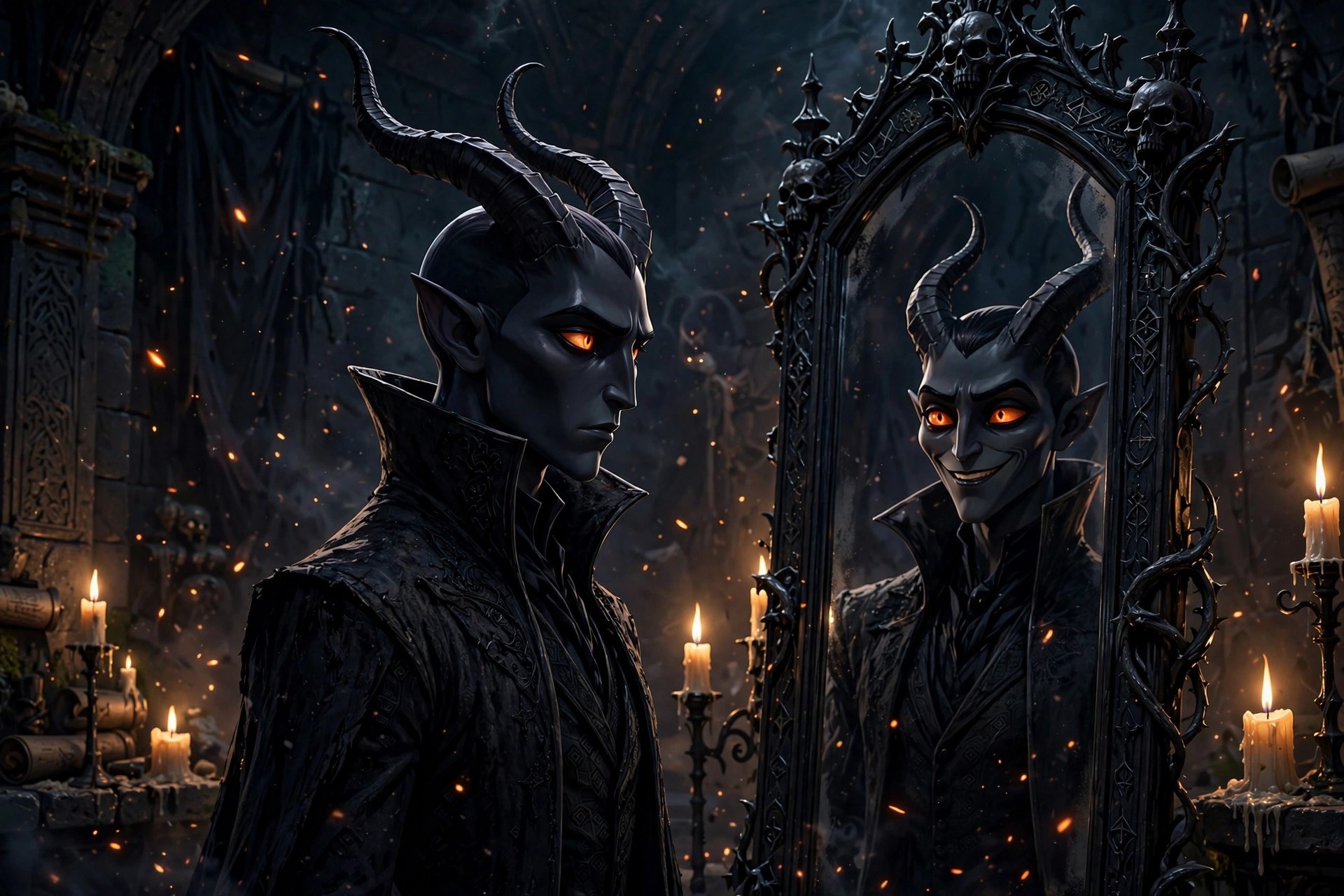
Alone, late, the character regards himself in a tall black mirror — and the reflection smiles back a half-second late. “Still here,” he tells it. “Still magnificent.” It is the only negotiation he has never quite closed, and the only company he has never tired of.
Source notes
- All nine scenes are written for the Vizlings “Satan” character (2026-09-27) — dramatized fiction, not sourced events.
- Literary ancestry per scene: Milton’s Paradise Lost (1667) for the Fall and the council; the Gospel temptation narratives (e.g., Matthew 4:1–11) for the wilderness; European and American folk legend for the crossroads; Dante’s Inferno, canto 34 (c. 1320) for the frozen center.
- All illustrations are AI-generated dramatization art (2026-09-27), captioned as such.