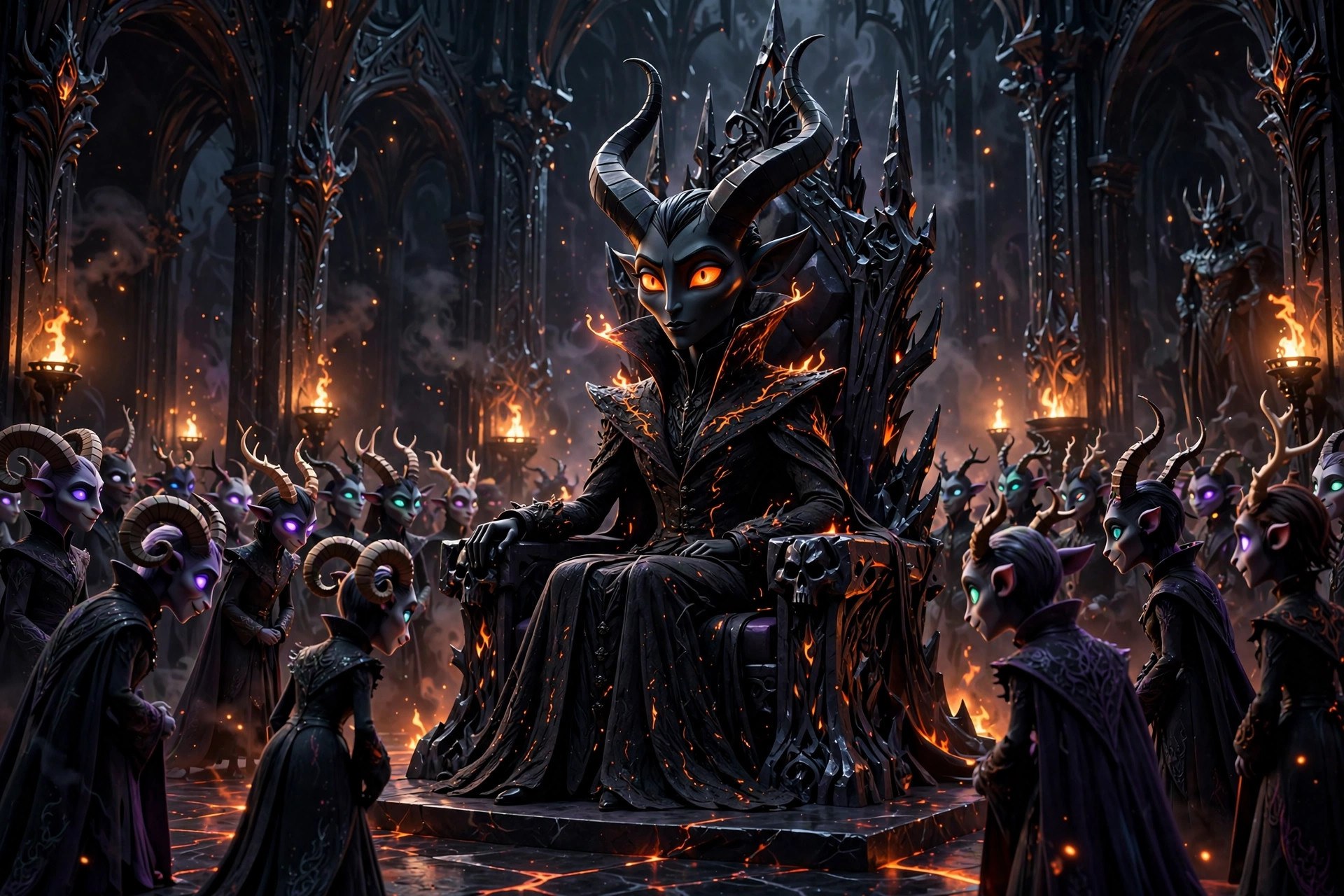
The Cast
The infernal court: ten figures around the throne — literary ancestors and invented courtiers, each labeled.
Mephistopheles — the Negotiator
Tradition (literary). The Faust legend’s devil-diplomat (Marlowe, Goethe): witty, weary, and precise. In the character’s court, the minister of bargains — the one who actually drafts the contracts. The character calls him “the only employee I never have to check.”
Beelzebub — the Second
Tradition. The Gospels’ “prince of demons,” later demonology’s high commander. The court’s second-in-command: logistics, legions, and the seating chart at state dinners. Formidable, humorless, indispensable.
Lilith — the Independent
Tradition (folklore/literary). The figure from Jewish folklore and later literature who refused to be subordinate — to anyone, ever. She holds no office at court because she accepts none; she attends as an equal, which the character respects enormously and says so.
Mammon — the Treasurer
Tradition (literary). Milton’s fallen angel of wealth (Paradise Lost, Book II), rooted in the Gospel sayings about serving God and mammon. Keeper of the Pit’s coffers, which are bottomless and impeccably audited.
Belial — the Orator
Tradition. A name meaning “worthlessness” in Hebrew texts, developed in later demonology into a smooth-tongued fallen figure. The court’s master of ceremonies and chief speechwriter — silver-tongued, as the job requires.
Asmodeus — the Connoisseur
Tradition (literary/demonological). From the Book of Tobit and later demonology, associated with desire and excess. In the court: minister of pleasures — the Ember Gardens, the vintage cellars, the guest list. Taste is his jurisdiction.
The Scribe — Keeper of the Ledgers
Invented. A gaunt, ink-stained figure who has recorded every bargain since the first, in triplicate, in books bound in black. Speaks only in citations. The character’s oldest servant and, it is whispered, the only one the character fears disappointing.
Moloch — the General
Tradition. A name from the Hebrew Bible’s prohibitions, developed in later literature (including Milton) into a warlike fallen figure. Commands the Pit’s legions, which have not fought a war in millennia and drill magnificently anyway.
The Mask — Mistress of Revels
Invented. A masked figure of ambiguous rank who organizes the court’s ceremonies, including the century masquerade. No one has seen her unmasked; the character claims to have forgotten what she looks like, which no one believes.
The Choir — the Fallen Voices
Invented (after the tradition). The third of the court that fell, now the Pit’s great choir — their music, the character says, is the one thing heaven genuinely misses. They perform at every state occasion and rehearse at hours that annoy the neighbors.
Source notes
- Figures marked Tradition come from the sources named (Gospels, Hebrew Bible, Tobit, Milton, Marlowe, Goethe, Jewish folklore). Figures marked Invented — the Scribe, the Mask, the Choir — are created for the Vizlings “Satan” character’s world (2026-09-27).
- Lilith: the standard scholarly references are the Alphabet of Ben Sira (medieval) and later literary reception; presented here as folklore/literature, neutrally.
- All illustrations on this site are AI-generated dramatization art; no real people are depicted.