Tombs
Not treasure vaults with traps — houses for eternity, built as machines for the afterlife. The real story of Egyptian tombs.
This page is real history.
What tombs were for
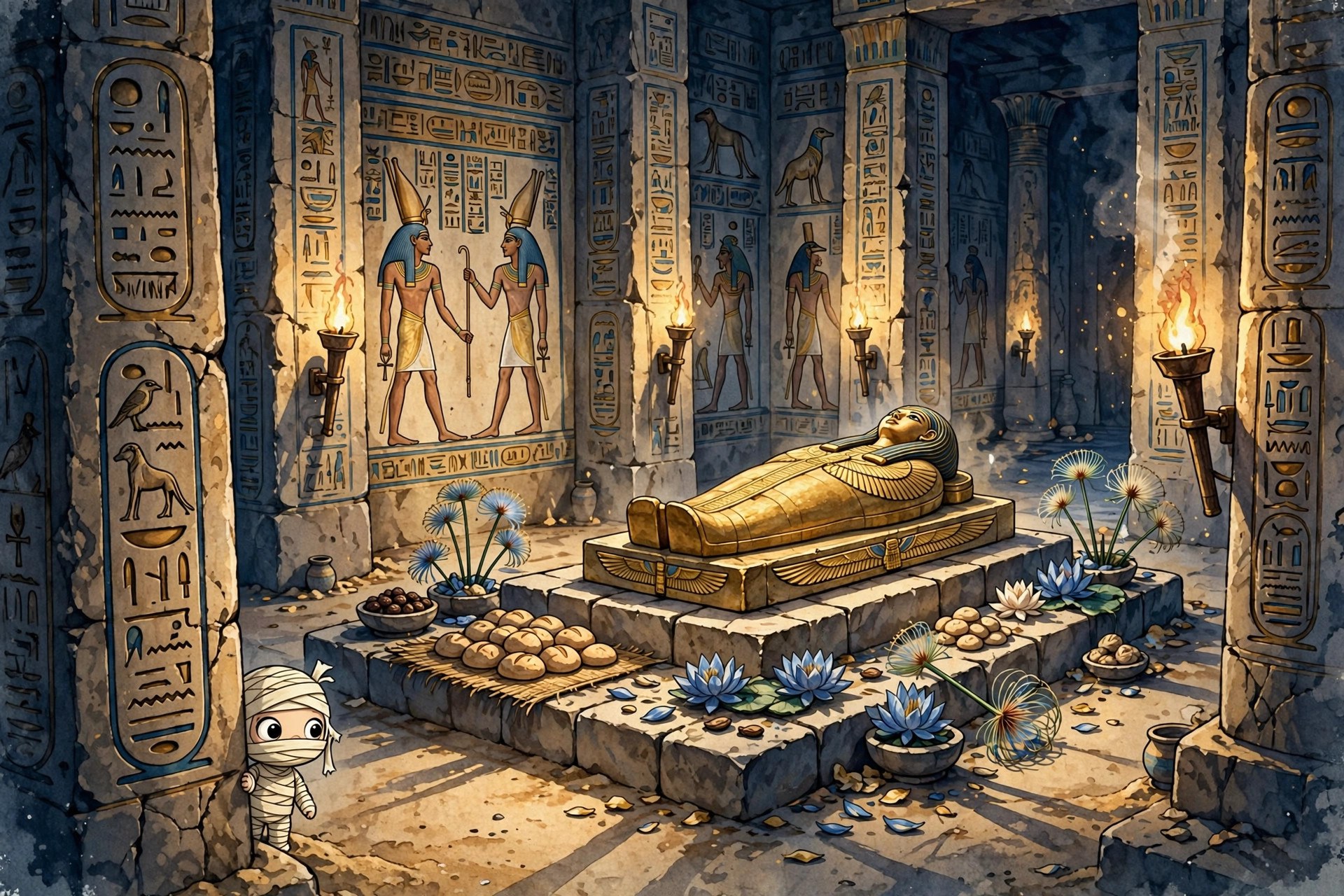
A tomb was a machine for eternity: a protected body, offerings for the ka, inscribed spells to navigate the afterlife, and decoration showing the life the deceased wanted to continue. Robbers were the eternal enemy — hence hidden entrances and legal curses (threats, not magic; see curse) — not booby traps. Indiana Jones lied to you.
The greatest hits
- Djoser’s Step Pyramid, Saqqara (c. 2670 BC). The first monumental stone building, designed by the architect Imhotep — a real historical figure later deified. (Hollywood borrowed his name for a villain; the real man was a genius.)
- Giza (c. 2580–2560 BC). Khufu, Khafre, Menkaure — pyramids plus the Sphinx. Built by skilled, fed, housed labor crews, not slaves (the workers’ cemeteries prove it).
- Valley of the Kings (New Kingdom). 63 known tombs cut into the Theban hills, including KV62 — Tutankhamun (discovered by Howard Carter, 1922, nearly intact: the find that launched the curse craze).
- Valley of the Queens, nobles’ tombs at Thebes, Saqqara mastabas. The full spectrum from royal to middle-class eternity.
Tomb robbery: the real curse
Nearly every tomb was robbed in antiquity — often by the very workers who built them. Papyri record robbery trials (e.g., under Ramesses IX). The “curse” that actually haunted tombs was human greed. Sandy’s fictional unrobbed tomb is, as she notes, “a statistical miracle.”
After discovery
Excavated tombs became museums, then tourist sites, then — in Sandy’s fiction — the roof over a monster district. The real Valley of the Kings remains an active archaeological site under Egypt’s Ministry of Tourism and Antiquities.