Timeline
The reign in dated events. Every date carries a certainty label — Certain (multiple contemporary records), Documented (primary-source attested), Conventional (the standard dating scholars use), or Disputed.
Certain multiple contemporary records agree · Documented attested in a primary source · Conventional the standard scholarly dating · Disputed historians disagree or the evidence is thin
5 September 1638 — Birth at Saint-Germain-en-Laye Certain
Louis-Dieudonné is born to Louis XIII and Anne of Austria after twenty-two years of childless marriage.
14 May 1643 — Accession Certain
Louis XIII dies; the four-year-old Louis becomes king. Anne of Austria becomes regent (19 May 1643).
19 May 1643 — Rocroi Certain
Five days into the reign, the Duke of Enghien (the future Grand Condé) annihilates the Spanish army at Rocroi — the regency’s founding victory.
1648–1653 — The Fronde Conventional
Revolt of the Parlement (1648–49) then of the princes (1650–53). The court flees Paris twice; the royal family flees on the night of 9–10 February 1651. See the Fronde.
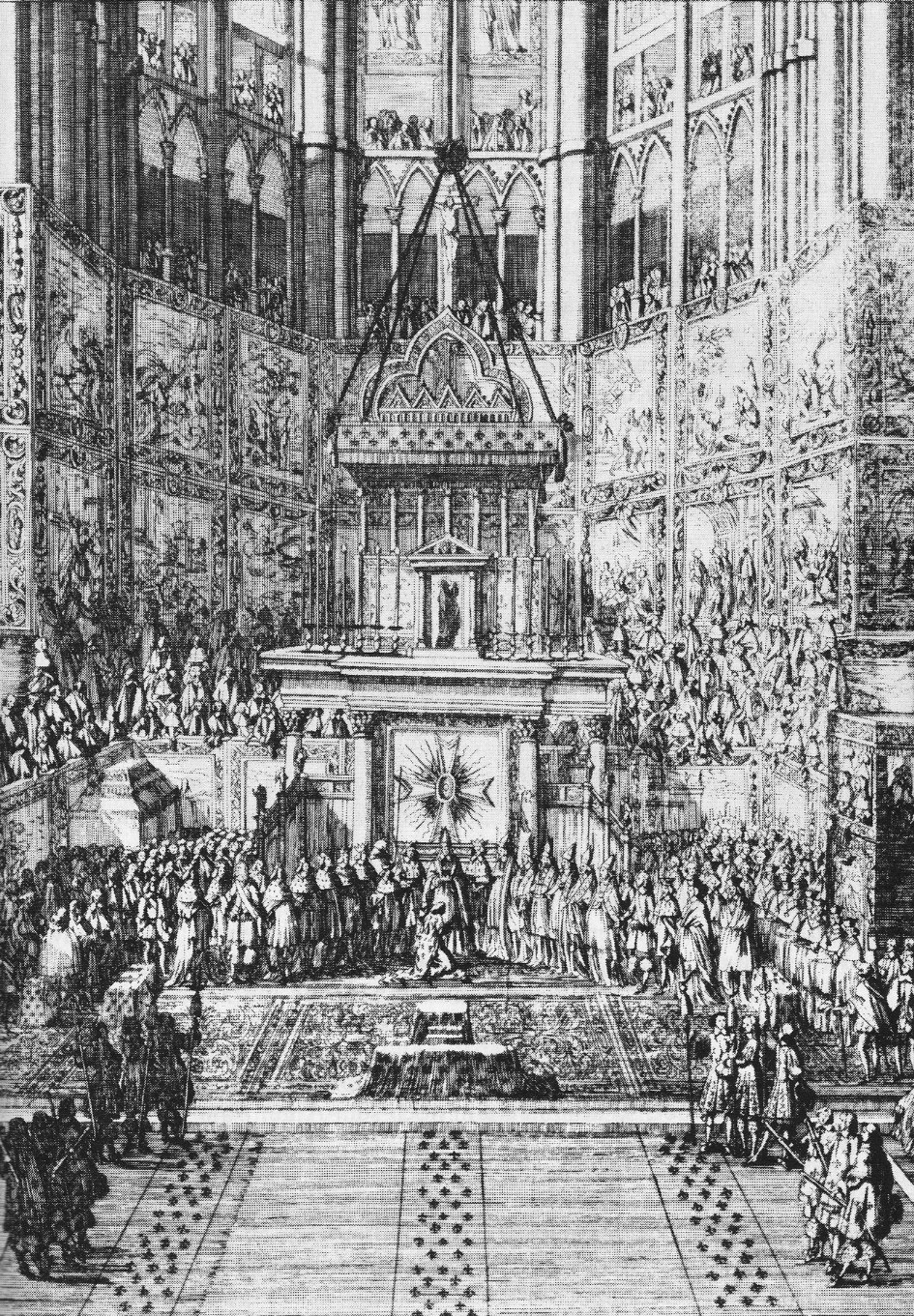
7 June 1654 — Coronation at Reims Certain
Louis is anointed and crowned in Reims Cathedral.
7 November 1659 — Treaty of the Pyrenees Certain
Peace with Spain ends twenty-four years of war; Louis is to marry the Spanish infanta Maria Theresa.
9 June 1660 — Marriage to Maria Theresa Certain
The wedding at Saint-Jean-de-Luz seals the Pyrenean peace.
9 March 1661 — Mazarin’s death; personal rule begins Certain
Louis announces he will be his own first minister. The personal reign starts here.
5 September 1661 — Fouquet arrested Certain
The superintendent of finances is arrested at Nantes; Colbert takes charge. A warning to the grandees.
1667–1668 — War of Devolution Certain
France seizes towns in the Spanish Netherlands; the Treaty of Aix-la-Chapelle (1668) confirms most gains.
1672–1678 — The Dutch War Certain
The crossing of the Rhine (June 1672), the long grind, and the Treaty of Nijmegen (1678–79): France’s apogee. See the Dutch War.
1682 — The court moves to Versailles Conventional
The king installs court and government at Versailles permanently (the conventional date; the move was gradual).
1684 — The Hall of Mirrors completed Conventional
The Galerie des Glaces, the palace’s ceremonial heart, is finished.
1683 — Death of Maria Theresa; secret marriage to Maintenon Documented / Disputed
Maria Theresa dies 30 July 1683 (documented). Louis’s morganatic marriage to Madame de Maintenon follows — conventionally winter 1683–84, but the exact date is not documented (disputed).
18/22 October 1685 — Revocation of the Edict of Nantes Certain
The Edict of Fontainebleau, signed 18 October and registered 22 October, bans Protestantism in France. See the Revocation.
1688–1697 — War of the League of Augsburg Certain
Nine years of war against a European coalition; ended by the Treaty of Ryswick (1697).
16 November 1700 — “Il n’y a plus de Pyrénées” Documented
Louis accepts Charles II of Spain’s will naming his grandson Philip of Anjou heir to Spain; Voltaire (Siècle de Louis XIV, ch. 28) reports the king’s remark. The phrasing is Voltaire’s report, not a court record.
1701–1714 — War of the Spanish Succession Certain
Blenheim (1704), Ramillies (1706), Oudenarde (1708), Malplaquet (1709), Denain (1712); Utrecht (1713), Rastatt and Baden (1714). Philip V keeps Spain, renounces France. See the Spanish Succession.
1701 — The Rigaud portrait Certain
Hyacinthe Rigaud paints the state portrait in coronation robes (Louvre, INV 7492) — the image that defined the Sun King for posterity. See art and propaganda.
1711–1712 — The succession collapses Certain
The Grand Dauphin (14 April 1711), the Duke and Duchess of Burgundy (February 1712), and the Duke of Brittany (March 1712) die. The heir is a five-year-old great-grandson.
1 September 1715 — Death at Versailles Certain
Louis XIV dies of gangrene in the leg, aged 76, after 72 years and 110 days on the throne. The regency passes to Philippe, Duke of Orléans.
Source notes
- Dates follow the standard documentary record; the certainty badges implement the policy in methodology.md (2026-09-26).
- 14 May 1643 accession; 5 September 1638 birth; 1 September 1715 death — all certain.
- The Versailles “move” of 1682 and Hall of Mirrors completion of 1684 are conventional datings of gradual processes.
- The Maintenon marriage date is disputed/undocumented; Maria Theresa’s death (30 July 1683) is documented.