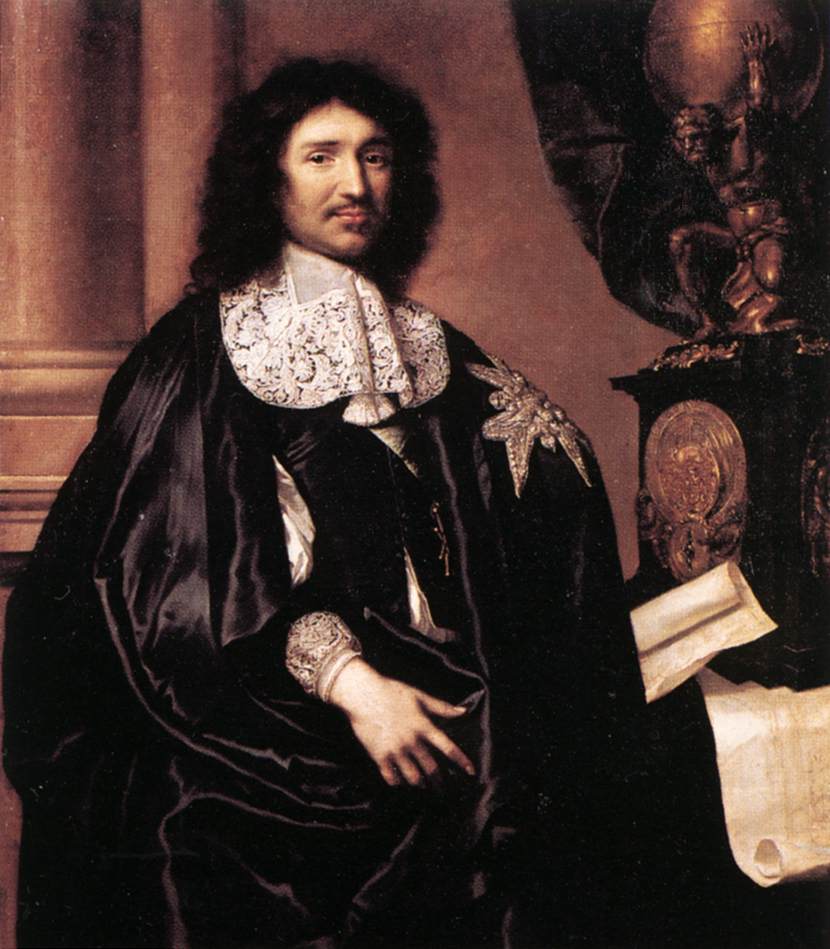
Colbert and the Finances
Jean-Baptiste Colbert (1619–1683) took a ruined treasury and built the economic machine of the great reign. Then the king spent it on war.
The ruin he inherited
When Colbert took effective charge of the finances after Fouquet’s fall (1661), the treasury was empty, the tax system was farmed out to financiers, and the debt was unmeasured. Fouquet — brilliant, corrupt, and dangerously magnificent at Vaux-le-Vicomte — was arrested on 5 September 1661, tried, and imprisoned for life. The message: the king’s money was the king’s.
What Colbert built
- Fiscal order: the taille was regularized, the tax farms reformed, expenditure controlled; for a few years in the late 1660s the budget nearly balanced — the only time in the reign.
- The navy: from a handful of hulls to a fleet that could face England and Holland; the arsenals of Brest, Rochefort, and Toulon.
- Industry: state-sponsored manufactures — the Gobelins (tapestries), Saint-Gobain (mirrors for the Hall of Mirrors itself), lace, silk, the merchant marine companies.
- The doctrine: later called mercantilism or Colbertism — bullion, favorable balances, protected industry, colonies as suppliers. The Code of commerce (1673) and the marine ordinance (1681) codified it.
- The cultural budget: the academies, the Observatory (1667), the Gobelins as an art factory — Colbert understood that prestige was an asset.
The wars ate it
The Dutch War (1672–78) broke the balance; the Nine Years’ War (1688–97) broke the system. Colbert died in 1683 — the same year as the queen — exhausted and, by some accounts, out of favor as the king turned to Louvois and to war. His successors manipulated the currency, sold offices wholesale, and borrowed at ruinous rates. By 1715 the debt was staggering (contemporary estimates vary and are flagged as such), the peasantry was crushed by the taille and the capitation, and the Controller-General Desmarets was reduced to expedients.
The verdict
Colbert’s achievement was real and structural: the navy, the manufactures, the administrative order lasted. But it was an achievement inside a system that could not say no to the king’s wars — and the king’s wars were the point. The finances of the reign are the story of a brilliant administrator building a machine that his master used to bankrupt the kingdom.
Source notes
- Colbert 1619–1683; Fouquet arrested 5 September 1661; fiscal reforms, navy, manufactures, and ordinances per the standard record (2026-09-26).
- Debt figures for 1715 vary by source and are not quoted as a single number — flagged as estimates.