The "Mémoires" Question: Did He Write Them?
The texts published as the Mémoires of Louis XIV are the reign's most intimate political document — and the king did not, in any simple sense, write them.
What they are
The Mémoires pour l’instruction du Dauphin are a set of political reflections and narrative accounts, addressed to Louis’s heir, covering the years 1661, 1666, and 1667, with incomplete accounts of 1662 and 1668 — less than five years of a reign that lasted seventy-two. They mix narrative (“what I did”) with precept (“what a king should do”), returning obsessively to gloire, work, and the dangers of ministers.
Who wrote them
It was never a secret that the king did not hold the pen alone. The texts were produced collaboratively:
- the king supplied brief notes and dictation from 1666 onward, once the project became systematic;
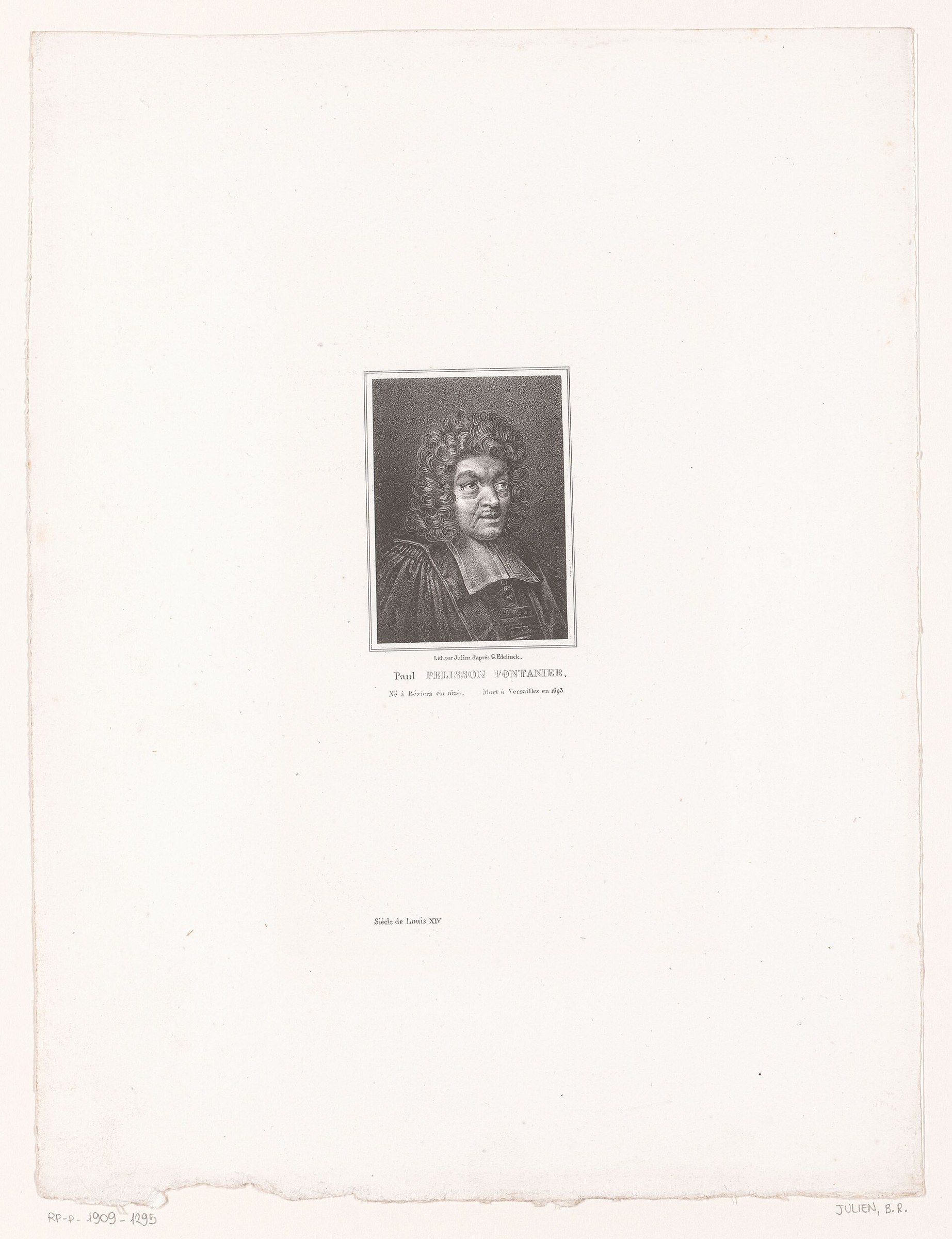
- Octave de Périgny (until his death in 1670) and then Paul Pellisson-Fontanier developed the notes into finished prose, working with the king;
- the original impulse came from Colbert, who wanted the reign chronicled.
Nineteenth-century scholarship (Dreyss 1859–60, Marcou) unraveled the layers; Edmon Esmonin (1927) pushed skepticism to its extreme: “we cannot, in any case, argue that these texts contain the exact thoughts or even Louis XIV’s style… it is a grave mistake to give these documents the simple title of Mémoires de Louis XIV.”
What historians now think
The pendulum has swung back partway. Modern scholars (Goubert’s edition, 1992; Hall Bjornstad, 2012) treat the Mémoires as a collaborative political testament: not the king’s unmediated voice, but a text he commissioned, directed, corrected, and owned — the authorized statement of his kingship’s principles. The famous passages on work, on ministers, on glory are Louisian in doctrine even where Pellisson’s is the prose.
The project was abandoned around 1672 — the Dutch War’s outbreak; the king, it seems, preferred making history to writing it. The Dauphin, who died in 1711, may never even have read them.
Why it matters
The Mémoires are the closest thing to Louis XIV’s political theory in his own (directed) words. Read with the authorship question in mind, they are more revealing, not less: they show what the king wanted his heir — and posterity — to believe about his reign.
Source notes
- Coverage (1661, 1666–68, incomplete 1662) and abandonment c. 1672: per Dreyss and Bjornstad (2012) (2026-09-26).
- Périgny (d. 1670), Pellisson, and Colbert’s initiating role: per the standard textual scholarship summarized in the byarcadia.org survey of the debate.
- Esmonin’s 1927 verdict quoted from Revue d’histoire moderne 2/12.