Start Here
Everything about frankestein — the Vizlings Monsterling — in ten minutes: the character, the 1818 novel that inspired him, and the spark that connects them.
The character in 60 seconds
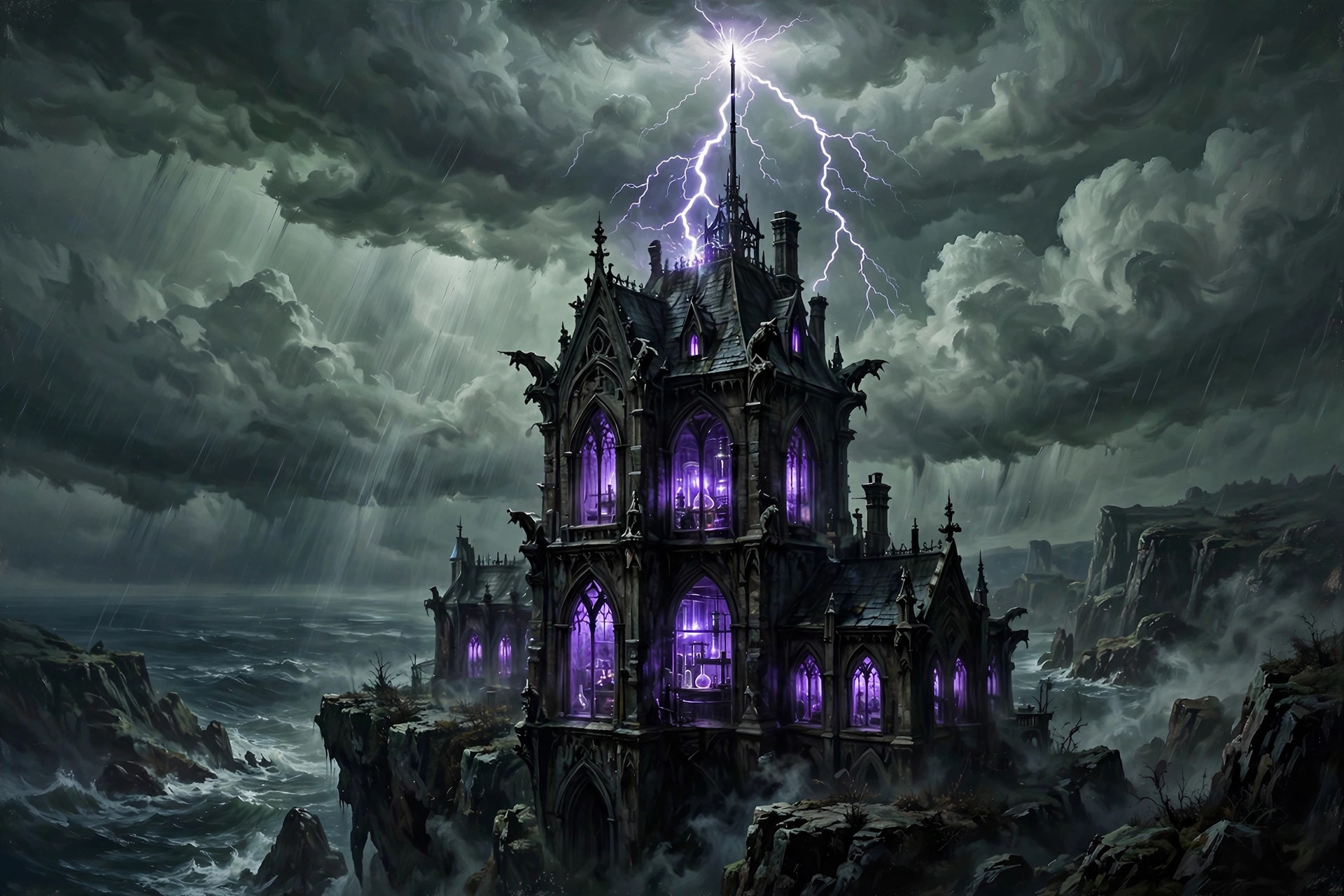
frankestein (spelled as in the app) is a fictional character in the Vizlings app, one of the Monsterlings. He is the Creature archetype made kind: eight feet tall, yellowish skin stitched at brow and jaw, awakened by lightning in a gothic laboratory, and — unlike the world’s reaction to him — gentle. He reads Paradise Lost by firelight, befriends stray animals, and asks newcomers the question nobody asked him: “Will you stay?”
The novel in 60 seconds
Frankenstein; or, The Modern Prometheus was published anonymously in London in 1818, written by Mary Shelley when she was 18. Victor Frankenstein, a Genevan student at Ingolstadt, assembles a creature from body parts and animates it with electricity — then abandons it in horror. The Creature teaches himself language, begs his maker for a companion, and, refused, turns to vengeance. The novel never names the Creature; “Frankenstein” is the creator’s surname.
The spark in 60 seconds
Shelley wrote during the stormy summer of 1816 — the “Year Without a Summer” — at the Villa Diodati on Lake Geneva, in a ghost-story contest with Lord Byron and Percy Shelley. She drew on real science: Luigi Galvani’s experiments making dead frogs’ legs twitch with electricity (“galvanism”), and public demonstrations by Giovanni Aldini on executed criminals’ bodies. The 1818 preface and her 1831 introduction both point to these as the seed of the idea.
Five things that surprise people
- The Creature is eloquent. In the novel he speaks in Miltonic, sorrowful rhetoric — “I am malicious because I am miserable” — not grunts.
- He was never named. “Frankenstein” is Victor’s name. The novel calls him creature, wretch, dæmon, monster.
- The 1831 edition differs. Shelley heavily revised the novel for the 1831 standard edition; scholars treat 1818 as the original text.
- Real corpses twitched on stage. Aldini’s 1803 London demonstrations made a hanged man’s jaw quiver and an eye open — audiences fainted.
- He is the app’s softest monster. In Vizlings canon, frankestein keeps the laboratory as a sanctuary and fears only thunderstorms — the thing that made him.
Where to go next
- The Persona — who he is in the app, in detail.
- Lore & Backstory — the Vizlings canon story.
- Shelley’s Frankenstein, 1818 — the real novel, documented.
- The Creation Scene — the spark, in novel and canon.
- Chatting Guide — how to talk to him.
- Stream — the character’s live page (mockup for now).
Source notes
- Character facts: Vizlings app roster, “frankestein”, Monsterlings, 53 chats (2026-09-27).
- Novel publication: Mary Shelley, Frankenstein; or, The Modern Prometheus (Lackington, Hughes, Harding, Mavor & Jones, 1818), published anonymously 1 January 1818.
- 1816 context and galvanism: mythology and science, with citations.