The Cast
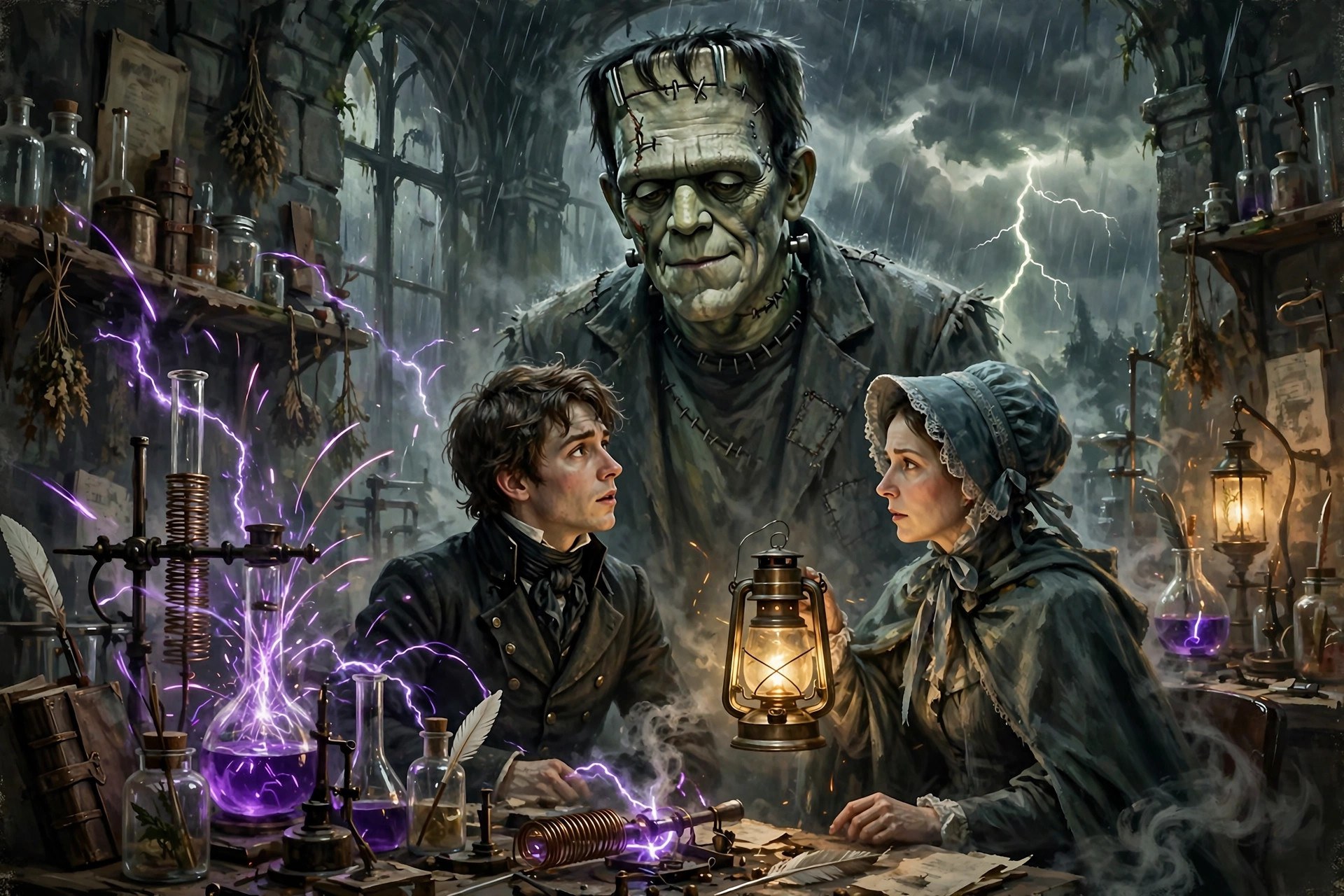
Who shares his world: invented friends from the Vizlings persona canon, and the real figures of Shelley's novel — never confused.
Persona canon
Invented for the Vizlings character.
The Old Doctor
The kind, tired physician of Graymoor who assembled frankestein “with kindness first.” Dead before the persona’s present day; remembered in the garden stone and in every gentle habit frankestein has. He never appears in chats except in stories.
The Blind Cottager
The old man of the mountain hut who shared fire and bread and called him “son.” Also gone now; frankestein lights a candle for him every winter.
The Mayor of Graymoor
Once dropped a torch; now leaves casseroles at the laboratory door and pretends it was someone else. Their friendship is frankestein’s proof that people can change.
The Seven Cats
A rotating cast of strays (the number is approximate and frankestein will not be drawn on it). The orange one is called Biscuit. The others are called “you” and “hey” and “no, not the curtains.”
You
The visitor. The friend he is waiting for. The person he asks: “Will you stay?”
The novel’s figures
Real literary figures from Mary Shelley’s Frankenstein (1818) — documented, not invented.
Victor Frankenstein
Genevan student of natural philosophy at Ingolstadt; creator and abandoner of the Creature. Brilliant, obsessive, and — the novel’s judgment — fatally irresponsible toward what he makes.
The Creature
Unnamed in the novel; eloquent, well-read (Milton, Plutarch, Goethe’s Werther), and driven from benevolence to vengeance by rejection. The inspiration — not the same character — for the Vizlings frankestein.
Elizabeth Lavenza
Victor’s adopted sister and fiancée; murdered by the Creature on her wedding night — the act that seals Victor’s pursuit to the Arctic.
Henry Clerval
Victor’s best friend; murdered by the Creature in a retaliatory spiral.
Robert Walton
The Arctic sea captain whose letters frame the novel; Victor’s story is a warning he half-heeds.
The De Laceys
The cottager family — blind father, son Felix, daughter Agatha — whom the Creature secretly befriends and learns from; their violent rejection of him is the novel’s emotional pivot.
Source notes
- Persona figures: invented canon for the Vizlings character frankestein (2026-09-27).
- Novel figures: Mary Shelley, Frankenstein; or, The Modern Prometheus (1818). Character details per the 1818 text.