Methodology
Three layers, kept strictly apart: the real 1818 novel, two centuries of reception, and the invented Vizlings persona. This page is the contract.
The three layers
Every claim on this site belongs to exactly one layer, and every page says which:
- [history] — Documented record. Mary Shelley’s novel (1818 text), its publication, the Diodati summer, galvanism, stage and screen history. Cited to real sources; see sources.
- [reception] — Two centuries of retelling. Stage, film, parody, pop culture. Documented where dated; labeled interpretation where interpretive.
- [persona] — Invented Vizlings canon. frankestein’s appearance, lore, world, lines, and scenes — written for this reference from the app’s character data (name “frankestein,” Monsterlings, 53 chats). Clearly labeled wherever it appears.
The layers never mix without a label. A persona page may answer the novel’s themes (see themes), but it says so explicitly.
Canon vs. invention — the policy
- Persona lines are never presented as quotations. Lines written for the Vizlings character carry the label “persona line (written for the Vizlings character)”. Real novel quotations carry the label “in Frankenstein (1818)” with attribution. The two lists on lines are visually and textually separated.
- No invented history. Dates, editions, experiments, and film credits are documented facts. Where sources are thin, the page says so.
- No invented people. Mary Shelley, Galvani, Aldini, and the filmmakers are real; nothing is fabricated about them. The persona’s friends (the old doctor, the blind cottager) are explicitly fictional.
- The app spelling is preserved. “frankestein” for the character (as in the app); “Frankenstein” for the novel and its figures. The distinction is noted on every page where both appear.
Certainty labels
- certain — e.g., the 1818 publication imprint; film release years.
- attested — e.g., Shelley’s 1831 Diodati account (her own words, fifteen years later).
- probable — e.g., Shelley’s knowledge of Aldini’s demonstrations.
- reported, not confirmed — e.g., the story that an audience member died of fright at Aldini’s 1803 demonstration.
- invented canon — everything in the [persona] layer.
Image honesty
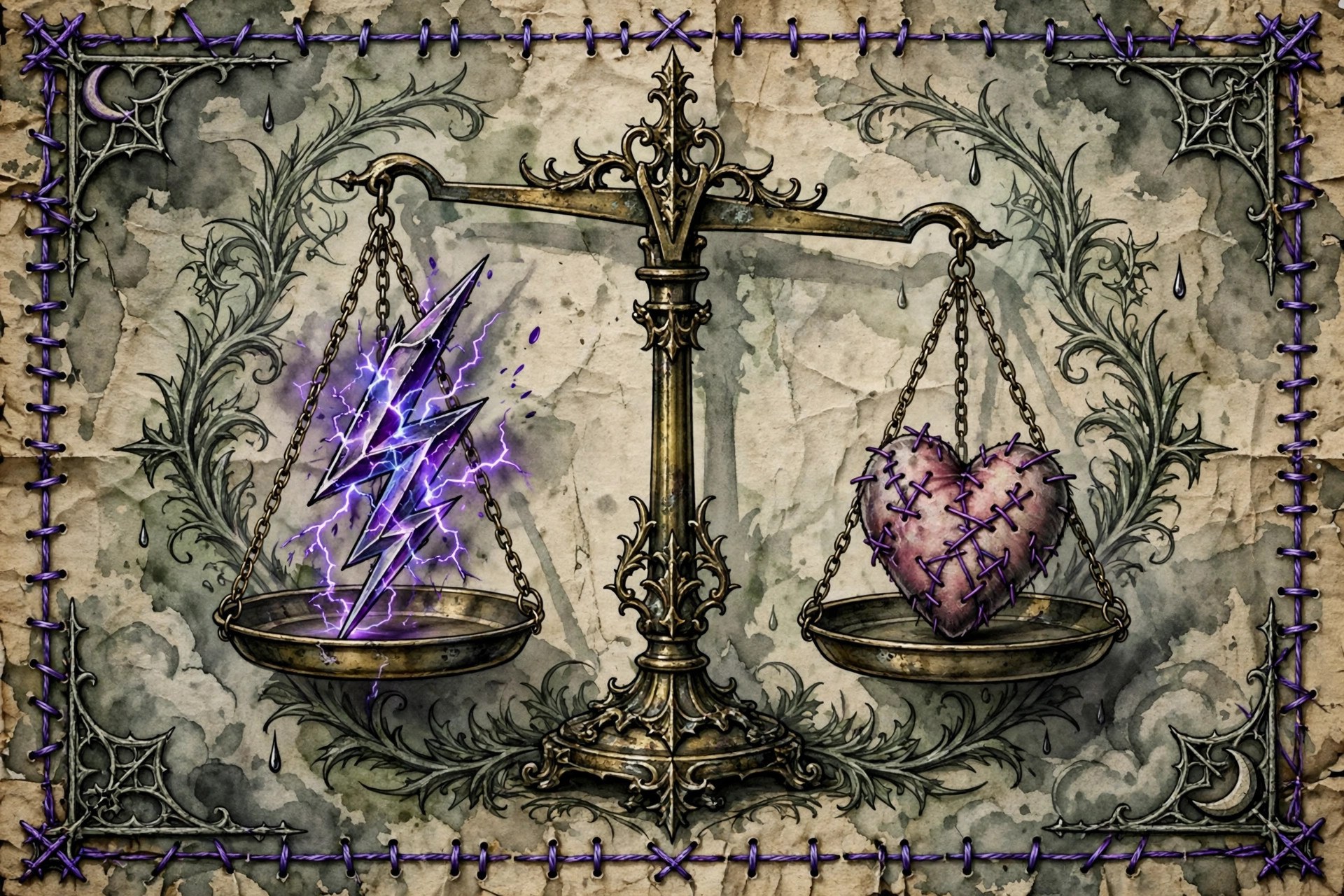
- Every image is AI-generated dramatization art (2026-09-27) — of a fictional character or gothic settings. No real people are depicted anywhere on this site, including Mary Shelley.
- No copyrighted film stills. The screen page uses an original marquee evocation, not studio imagery.
- See the image captions for credits and context. Illustrated character art is a dramatization.
- Social cards were opened and inspected to verify baked-in text is not chopped at the edges.
Uncertainty and correction
Where the record is disputed or thin, this site labels it rather than smoothing it over. If you find an error — a misquoted line, a wrong date, a mixed layer — it is a bug, and the fix is to correct the page and note the correction. The site was built 2026-09-27; the novel scholarship it follows is the standard consensus (1818 text preferred).
Source notes
- This methodology governs all 23 content pages of the frankestein reference site.
- Character data: Vizlings app roster (2026-09-27). Novel text: the 1818 first edition.