Frankenstein on Screen
From Edison's 1910 short to the present — the films that made the silhouette immortal, and what each one did to Shelley's story.
Release dates and studios are documented facts. Interpretations are labeled as such.
The essentials
Frankenstein (1910)
The Edison Studios one-reeler — the first screen adaptation. The Creature here is conjured in a cauldron rather than a lab; the print was long thought lost until a rediscovery in the 1970s.
Frankenstein (1931, Universal)
James Whale directs; Boris Karloff plays the Creature; Colin Clive is Henry Frankenstein (renamed from Victor). Kenneth Strickfaden’s electrical laboratory, Jack Pierce’s flat-headed makeup, and “It’s alive!” — all invented here — become the permanent iconography. The film keeps the pathos and discards the eloquence.
Bride of Frankenstein (1935, Universal)
Whale’s sequel — many critics’ pick for the greater film. The Creature learns speech (“We belong dead”), befriends a blind hermit (the De Lacey scene, transplanted), and is rejected by his intended Bride. Elsa Lanchester plays both Mary Shelley (in the prologue) and the Bride.
The Curse of Frankenstein (1957, Hammer)
Hammer’s color relaunch with Peter Cushing as Baron Frankenstein — the first of seven Hammer Frankenstein films. The focus shifts decisively to the Baron’s amorality; the Creature is a succession of brutes.
Young Frankenstein (1974)
Mel Brooks and Gene Wilder’s parody — shot in black and white on the original Strickfaden lab equipment — is both the funniest and among the most affectionate adaptations. “Puttin’ on the Ritz” notwithstanding, it understands the story’s heart.
Mary Shelley’s Frankenstein (1994)
Kenneth Branagh directs and stars; Robert De Niro plays a Creature who speaks and suffers — the big-screen version closest to the novel’s articulate original, though the film takes its own liberties (the brain, the mate’s heart).
The pattern
Every generation rebuilds the Creature in its own image: Karloff’s Depression-era innocent, Hammer’s Cold War brute, De Niro’s 90s victim of trauma. The silhouette — flat head, heavy brow, neck electrodes — has barely changed since Jack Pierce’s 1931 makeup chair. The speeches have rarely survived the journey. The Vizlings frankestein belongs to the small counter-tradition (the blind-hermit scene in Bride, De Niro’s Creature) that gives him back his voice — and then goes one step further, giving him peace.
A note on images
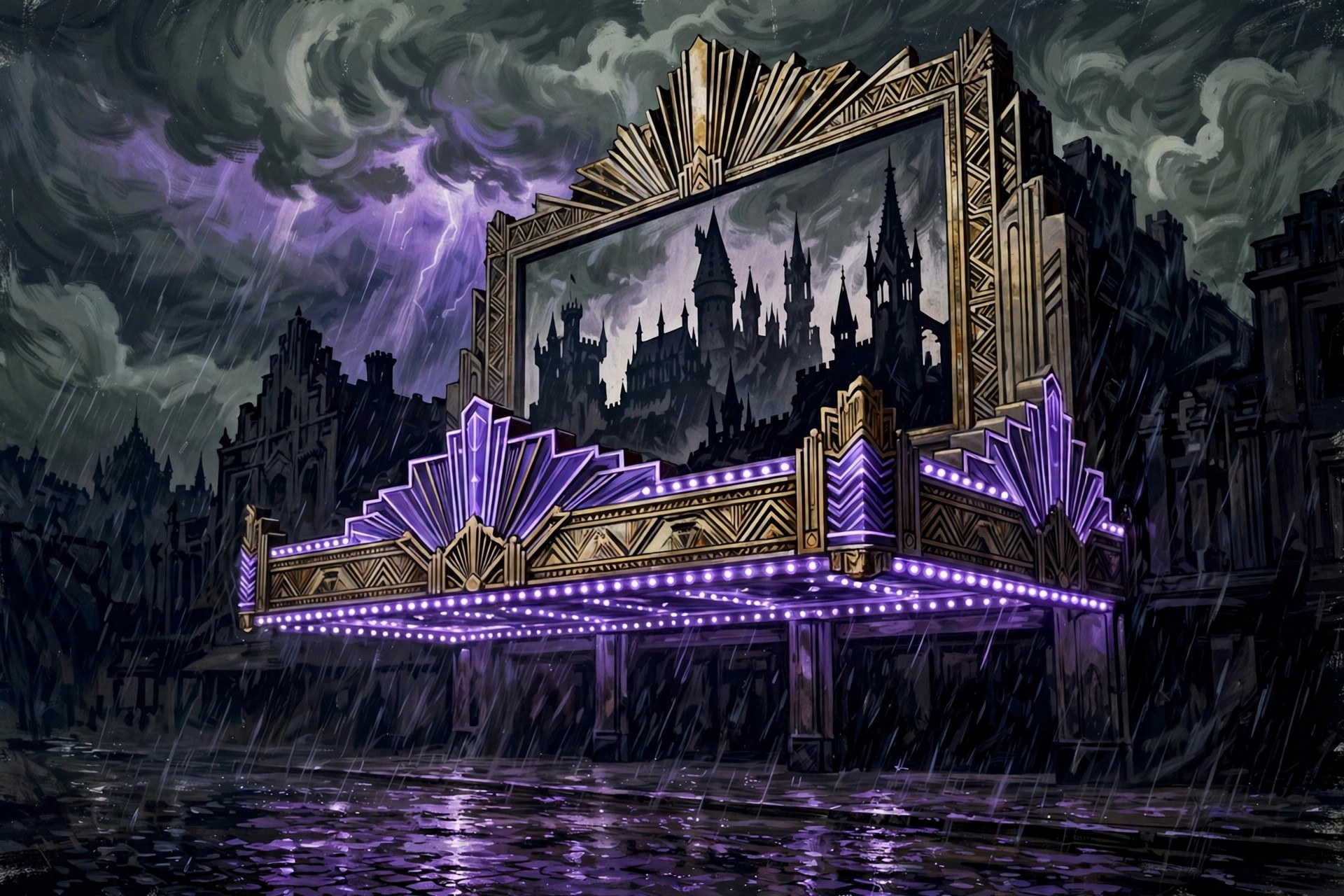
This page’s hero image is an original AI-generated evocation of a gothic cinema marquee — not a still from any film, and not a likeness of any actor. This site never reproduces copyrighted film imagery.
Source notes
- Release years and studios: Frankenstein (Edison, 1910); Frankenstein (Universal, 1931, dir. James Whale); The Bride of Frankenstein (Universal, 1935); The Curse of Frankenstein (Hammer, 1957); Young Frankenstein (1974, dir. Mel Brooks); Mary Shelley’s Frankenstein (1994, dir. Kenneth Branagh).
- Strickfaden lab equipment reused in Young Frankenstein: documented production history.
- Interpretive claims (“the greater film,” generational readings) are labeled as interpretation.