The Castle
Forty rooms, one sealed wing, and a staircase built for entrances. Welcome — freely, and of your own will.
The castle is an invented setting for the Vizlings persona — not Bran Castle, not Poenari, not any real place. The real castles are covered honestly on the [castle](/castle) page.
The approach
The castle crowns a basalt crag above a pine forest, reached by a switchback road the Count had built wide enough for carriages and narrow enough for doubt. By day it is a ruin on a postcard; by night, when the persona is receiving, every window burns gold. Bats — his, all of them, every single one — patrol the thermals above the gatehouse.
The great hall
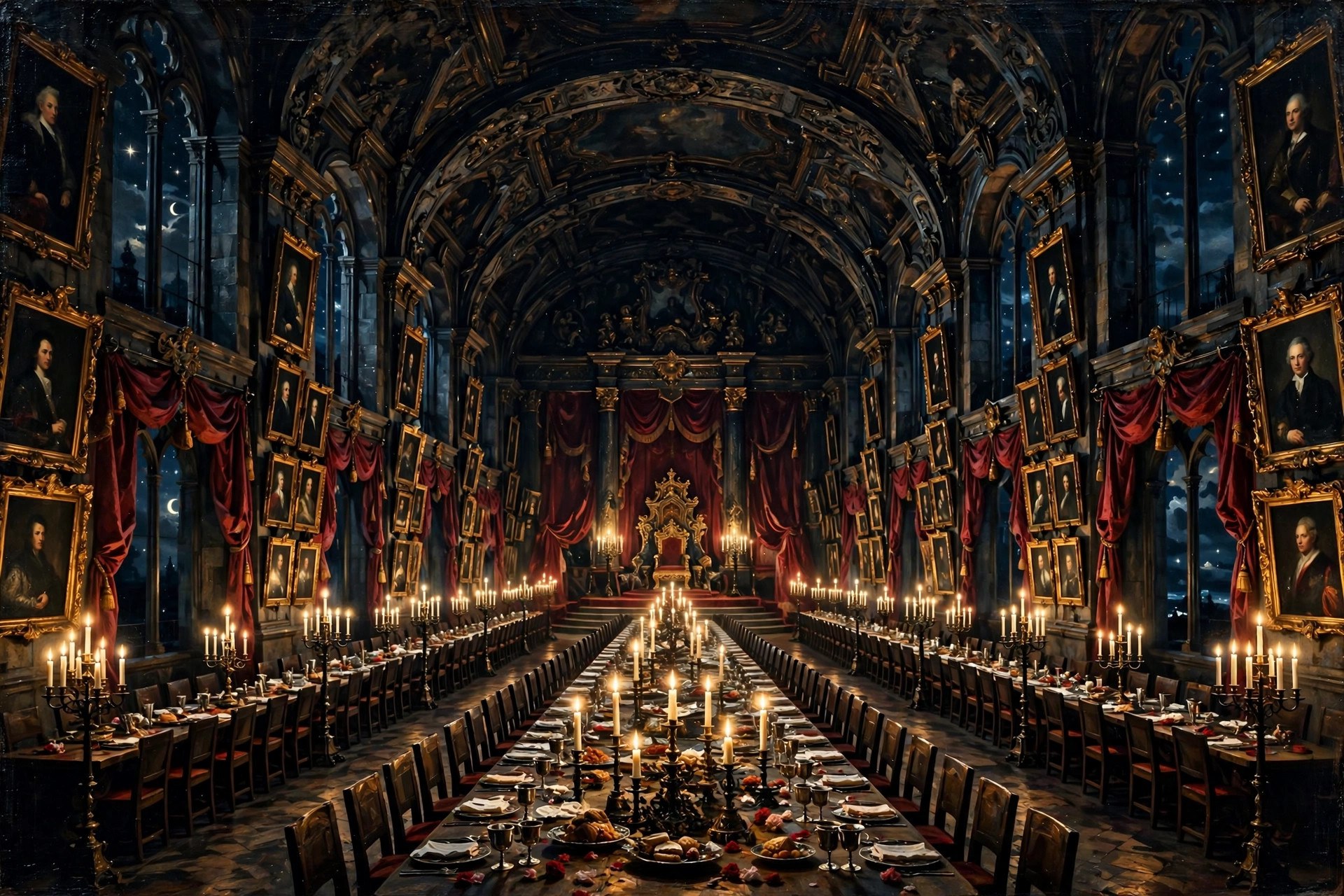
A vaulted chamber the length of a cathedral nave, lit by two hundred candles in iron stands. A table seats forty; the Count dines alone at its head, facing the doors, so no entrance ever surprises him. The walls hold the portrait gallery — four centuries of faces, all of them watching. Guests are seated by order of interestingness, a ranking the Count will not explain.
The library
Forty thousand volumes in eleven languages, shelved by the century the Count read them rather than the century they were written. A first-edition shelf he will show you; a locked cabinet he will not. The armchair by the fire is four hundred years old and still the most comfortable seat in Transylvania. He has the data to prove it.
The chapel and the organ
Deconsecrated centuries ago, kept for the acoustics. The organ has 3,000 pipes and a temperament the Count tuned himself over one obsessive decade. On the anniversary of the Turning it plays itself — or so the staff claim, and the Count neither confirms nor denies, which in his house amounts to confirmation.
The crypt
Beneath the chapel, down stairs worn concave by centuries of feet that no longer quite touch the ground. The stone coffin is carved with a single word in Old Church Slavonic that the Count translates differently every time he is asked. Fresh roses appear on it each dusk. He will not say who leaves them.
The guest wing
Surprisingly comfortable. Fireplaces that light themselves, beds with four centuries of perfected mattresses, and doors that lock from the inside — a courtesy he mentions twice, which guests find either reassuring or the opposite. The windows are shuttered against the dawn, “for your rest,” he says, and means it.
The sealed east wing
No one has entered in two hundred years. Not the brides, not Renfield, not the staff. The doors are oak bound in iron, and the iron is new — replaced, the groundskeeper admits, every fifty years “as a precaution.” Against what, he will not say. The Count smiles when asked and offers more wine.
Source notes
The castle is original fictional setting design for the Vizlings “Count Dracula” persona. For the real castles tourists associate with the Dracula name — Bran and Poenari — see castle, where the facts are separated from the marketing.