Vampires in Folklore
Long before the cape, there were the graves. The real folk beliefs, with real dates and real sources.
This page covers actual folklore and history, cited honestly. It is independent of the Vizlings persona — the character's fictional lore is on the [lore](/lore) page. No claims here are invented.
What “vampire” meant before Stoker
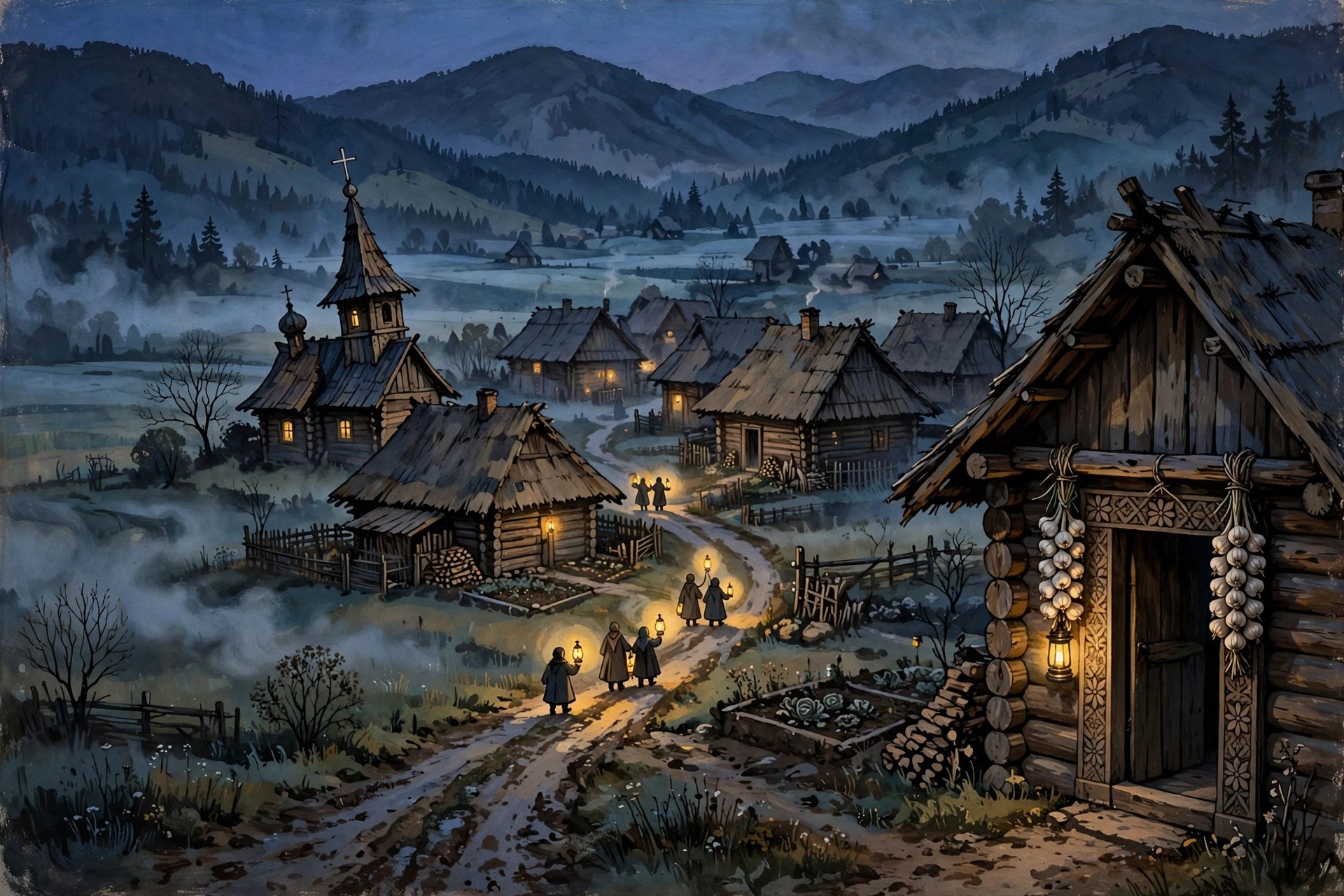
The vampire of folk belief was not an aristocrat in a cape but a revenant: a corpse believed to leave its grave to harm the living — draining life, spreading disease, withering crops. Beliefs cluster across Eastern and Southeastern Europe under local names: the Romanian strigoi, the Serbian vampir, the Greek vrykolakas, the Slavic upir. Common folk protections included garlic, holy objects, staking or beheading the corpse, and cremation.
The word vampire enters the West
The Serbian word vampir reached Western Europe in the early 18th century through reports from the Habsburg military frontier (today’s Serbia). Austrian officials documented exhumations and stakings carried out by villagers — and, remarkably, sometimes participated in or ordered them.
The Arnold Paole case (1726–1732)
The most famous documented vampire panic: Arnold Paole (also spelled Pavle), a Serbian hajduk, died in 1726 after a haystack accident. Villagers of Medveđa later attributed a string of deaths and illnesses to him, claiming he returned from the grave. In 1732 an Austrian military commission exhumed Paole and several others; the official report describes the corpses as undecayed, with “fresh” blood — and the bodies were staked and burned. The widely reprinted report carried the word vampire across Europe. This is documented history, not legend: the 1732 Visum et Repertum report is the source.
Dom Augustine Calmet (1746)
The French Benedictine scholar Dom Augustine Calmet published his Treatise on the Apparitions of Spirits and on Vampires (Traité sur les apparitions des esprits et sur les vampires, 1746), the great Enlightenment-era compendium of vampire reports. Calmet collected accounts — including the Paole case — and, as a skeptic, argued that most had natural explanations, while conceding the reports themselves were sincerely made. His treatise fixed the vampire panic in the European imagination and gave later writers a casebook to plunder.
The literary transformation
Folk revenants became literary aristocrats in two steps:
- John Polidori, “The Vampyre” (1819) — created Lord Ruthven, the first aristocratic vampire: charming, predatory, upper-class. The cape’s ancestor.
- Sheridan Le Fanu, Carmilla (1872) — the landmark lesbian vampire novella, a direct influence on Stoker (see stoker).
Stoker synthesized folklore (via Emily Gerard’s 1885 essay “Transylvanian Superstitions”), the aristocratic archetype, and his own theater — and the folk revenant became the Count.
A note on nosferatu
Stoker’s word for the undead, taken from Gerard’s essay, which presents it as Romanian. Its etymology is genuinely disputed — proposals include Greek nosophoros (“plague-bringer”) — and it is not standard modern Romanian. This site states the uncertainty plainly rather than repeating any single folk etymology as fact (see methodology).
Source notes
Key sources: the 1732 Visum et Repertum report on the Medveđa exhumations (the Arnold Paole case); Dom Augustine Calmet, Traité sur les apparitions des esprits et sur les vampires (1746); Emily Gerard, “Transylvanian Superstitions” (The Nineteenth Century, July 1885); John Polidori, “The Vampyre” (1819); Sheridan Le Fanu, Carmilla (1872). Full bibliographic details on the sources page. The Vizlings persona’s fictional lore is deliberately separate — see lore.