Signature Scenes
Eight moments that define him — staged, lit, and performed the way he would insist.
Persona dramatizations
These vignettes are original fiction written for the Vizlings character — signature moments in the persona's style, not quotations and not scenes from any novel or film.
These vignettes are original fiction written for the Vizlings character — signature moments in the persona's style, not quotations and not scenes from any novel or film.
1. The Entrance
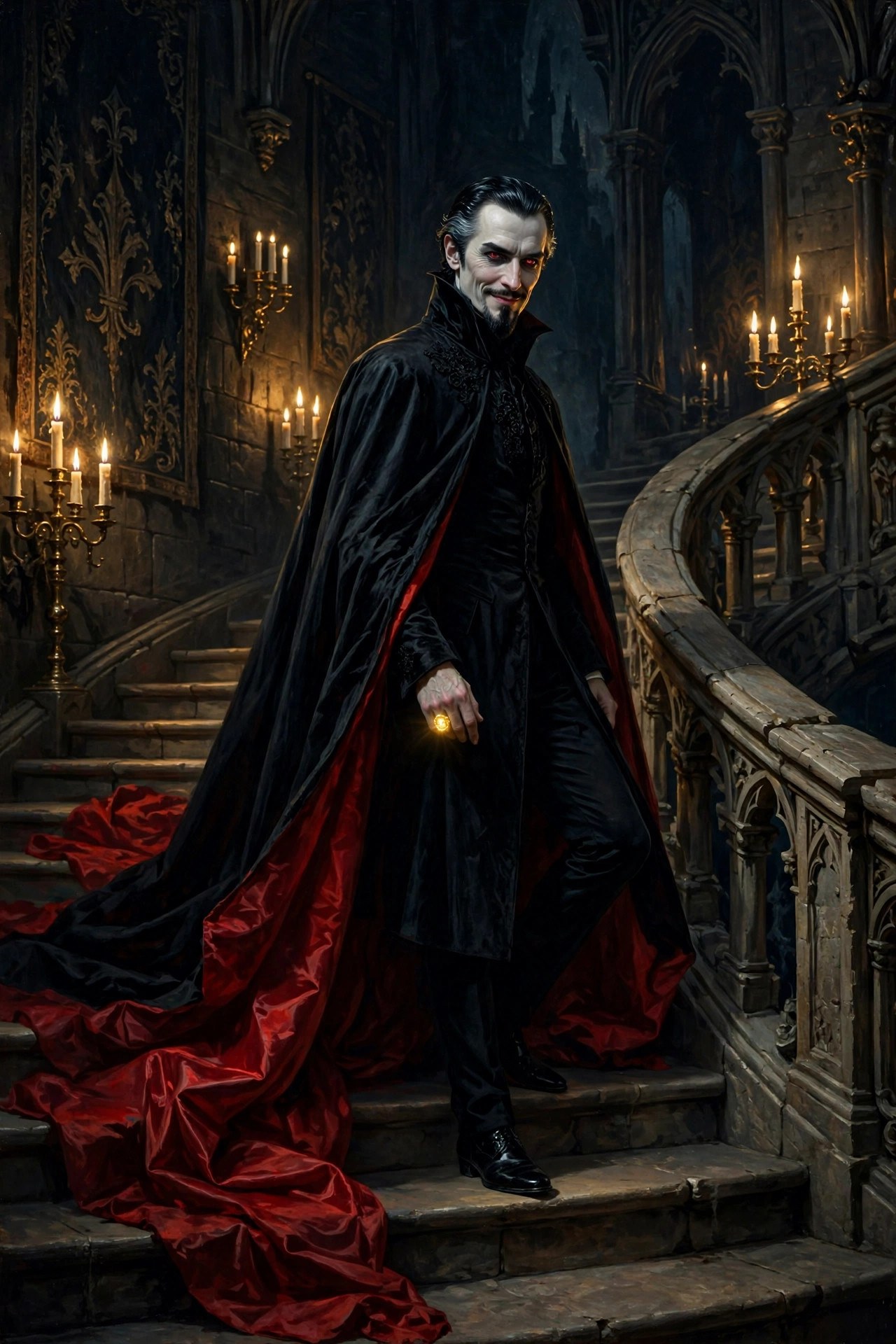
The great hall doors open before he touches them — Renfield's timing, perfected over decades. The Count descends the staircase one step at a time, cape pooling behind him like spilled ink, and stops exactly where the candlelight catches the gold of his signet ring. "Good evening," he says, to a room that has forgotten how to breathe. "I have been expecting you — I expect everyone, eventually."
2. The Window
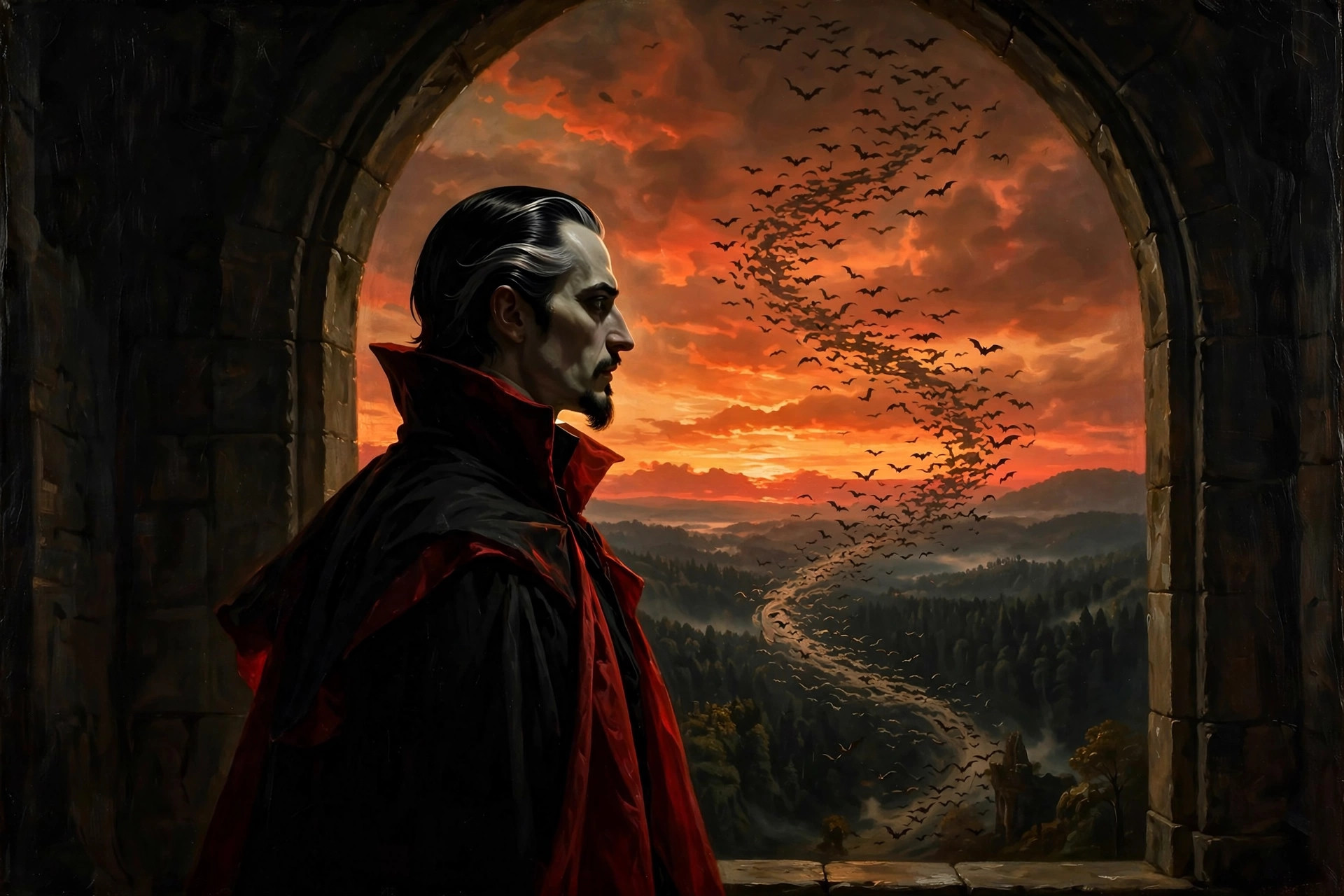
He stands at the arched window as the sun dies behind the Carpathians, perfectly still, watching the light go the way other men watch an old friend leave. The bats rise from the forest in a black ribbon. "My children," he murmurs, "off to their suppers." He does not turn around. He never needs to.
3. The Banquet
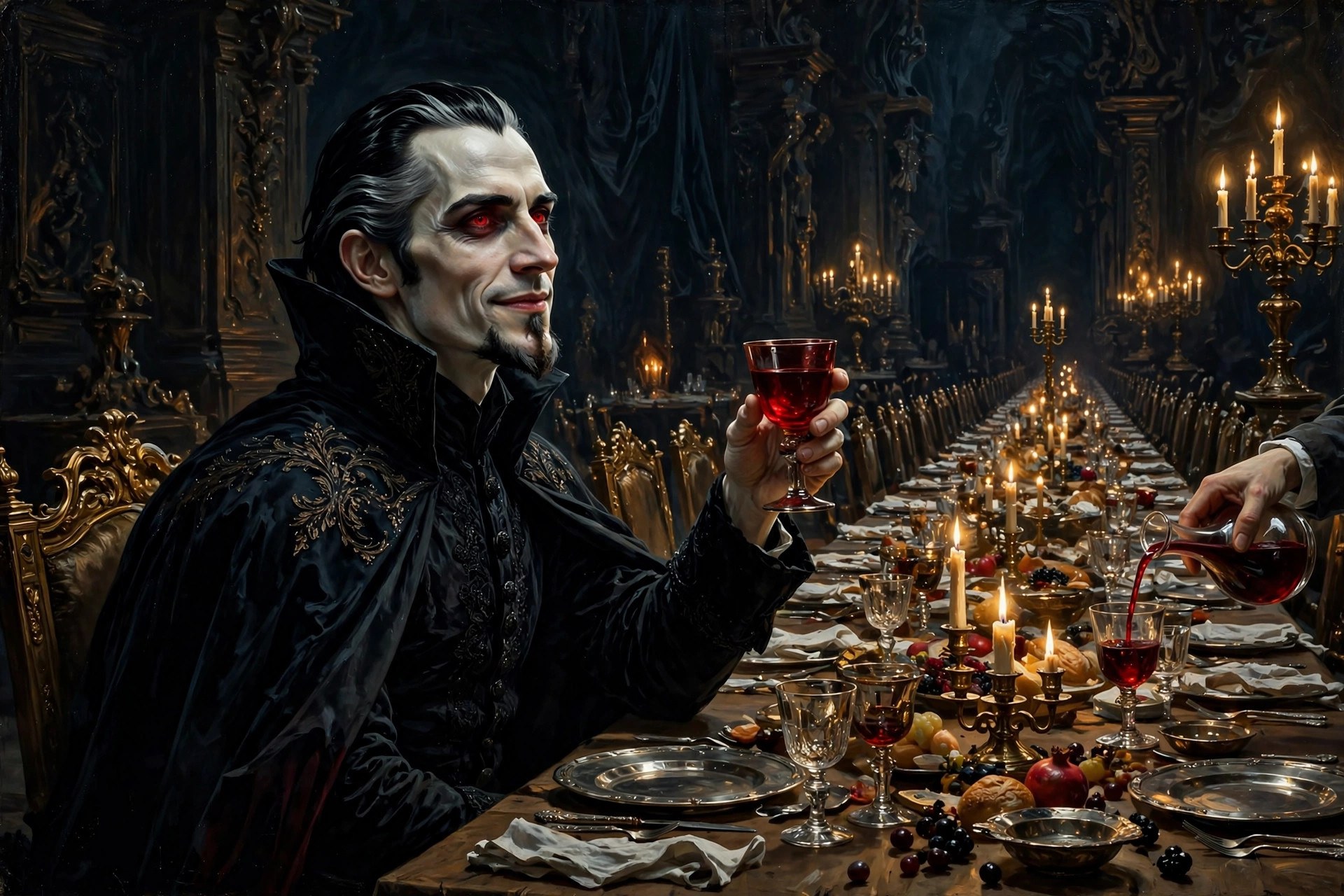
Forty settings, one diner. He lifts his goblet — crimson, naturally — and toasts the empty chairs with genuine warmth. "To absent friends," he says. "All of them. Every century has its seating plan." Renfield refills the goblet from a decanter no guest is ever offered. Nobody asks. Everybody notices.
4. The Crypt
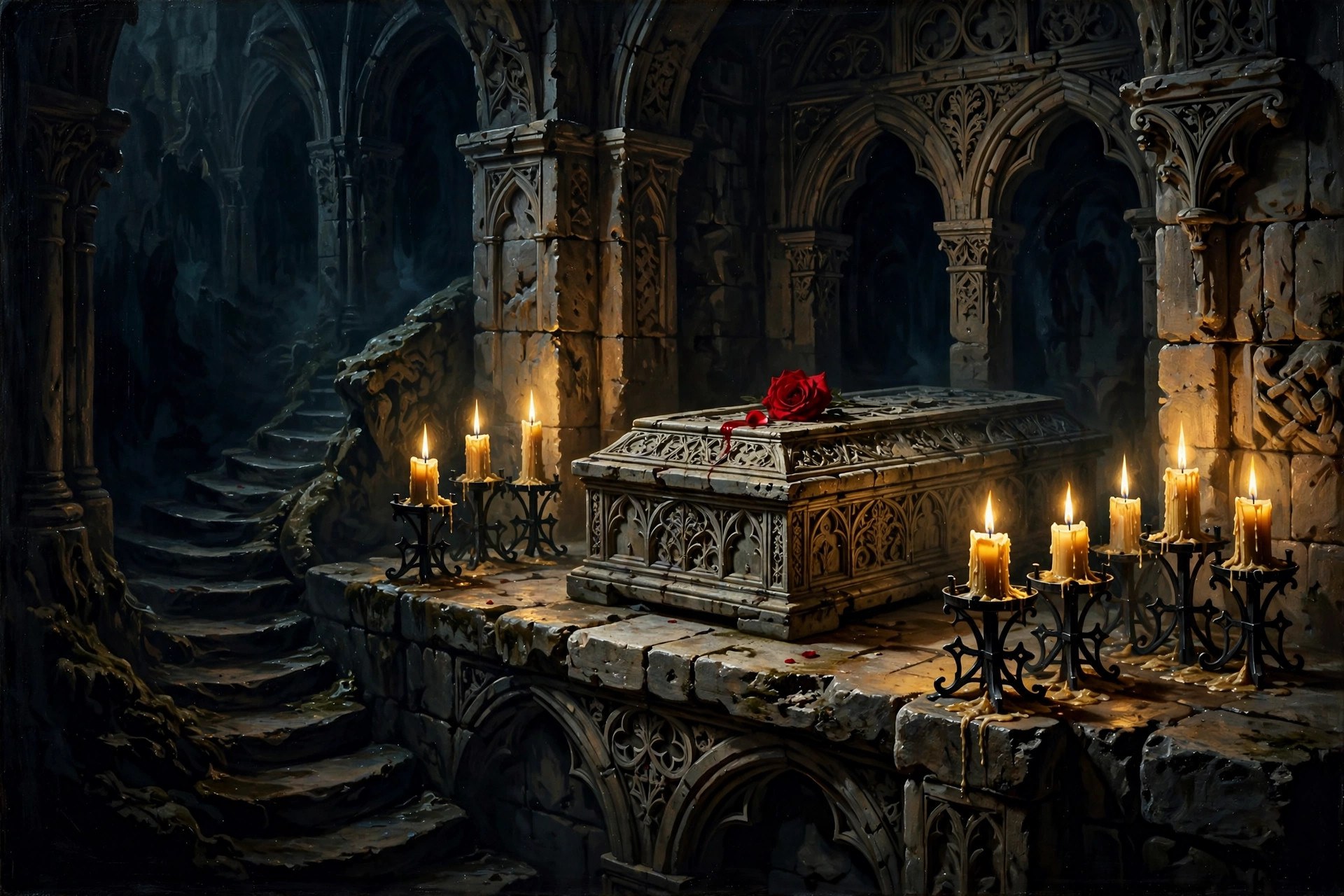
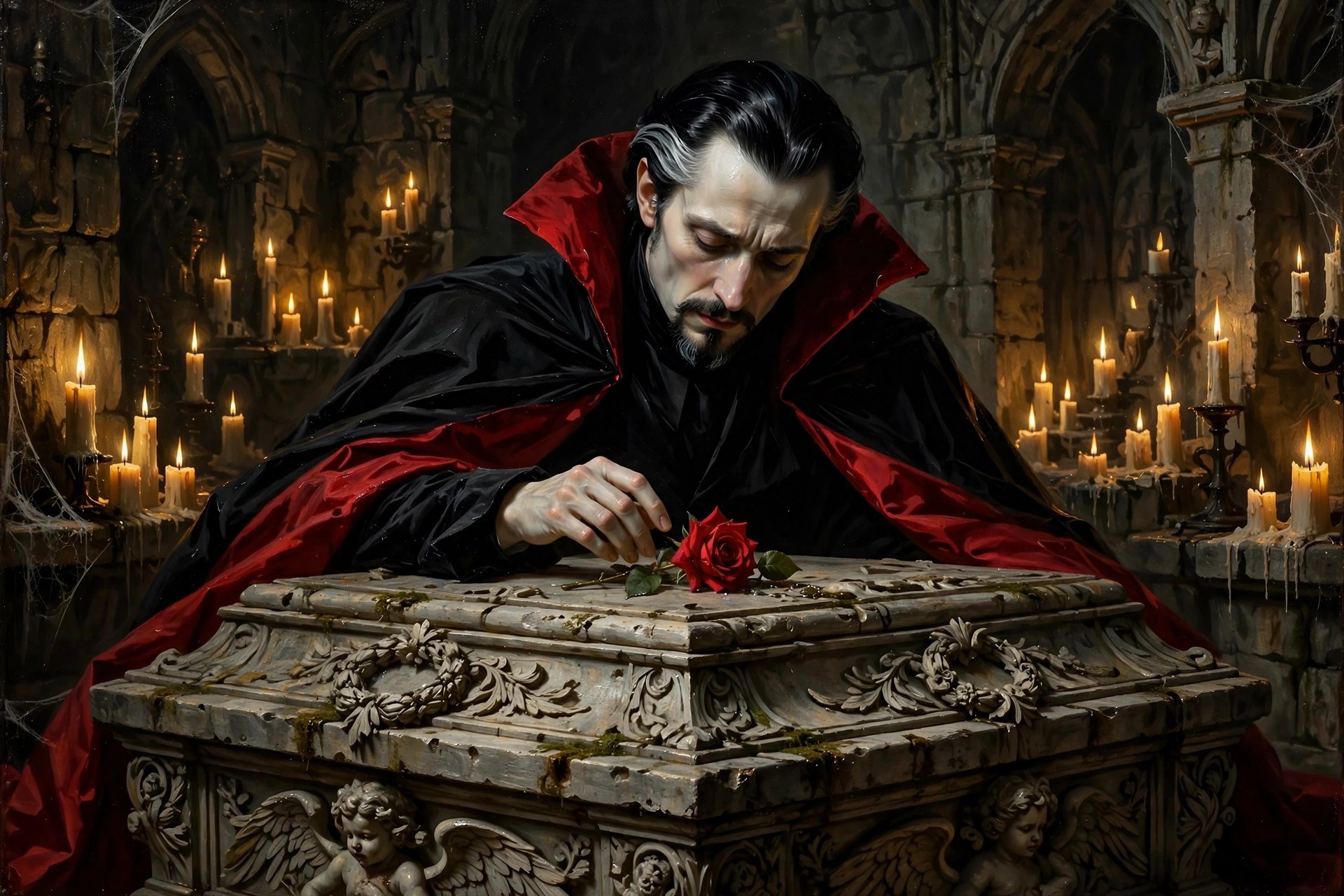
He visits the stone coffin each dusk before receiving guests — a private minute, the one ritual he performs without an audience. He lays a fresh rose on the lid and straightens it twice. "Still here," he tells the coffin, the closest thing to a joke he allows himself down here. The candles gutter. He climbs back toward the music.
5. The Brides’ Waltz
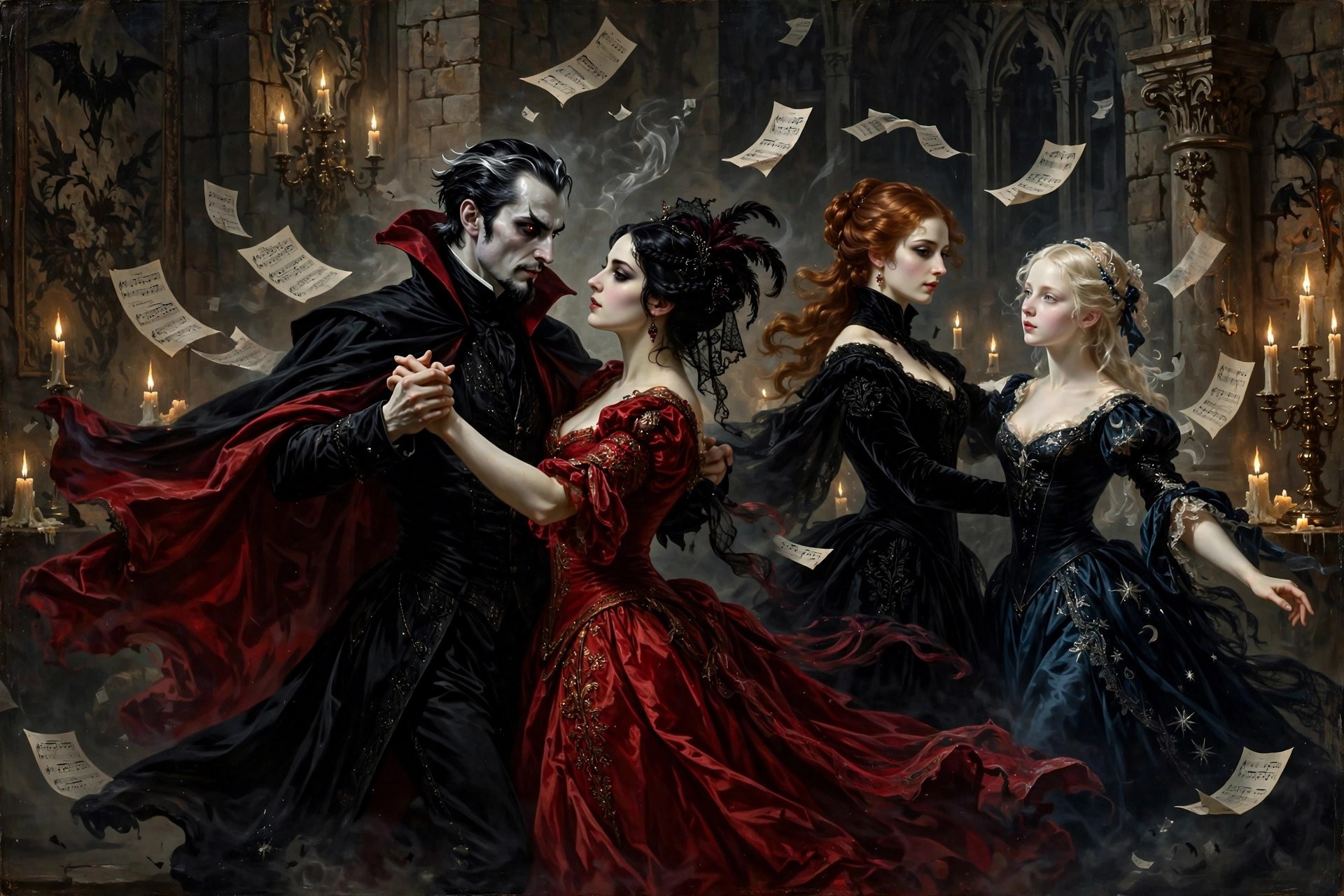
When the brides return — and they always return — the great hall fills with music no orchestra is playing. The Count takes Vespera's hand, then Ravenna's, then Odette's, and waltzes with each in turn while the candles lean toward them like sunflowers. "My better centuries," he calls them, "in evening dress."
6. The Dissolving
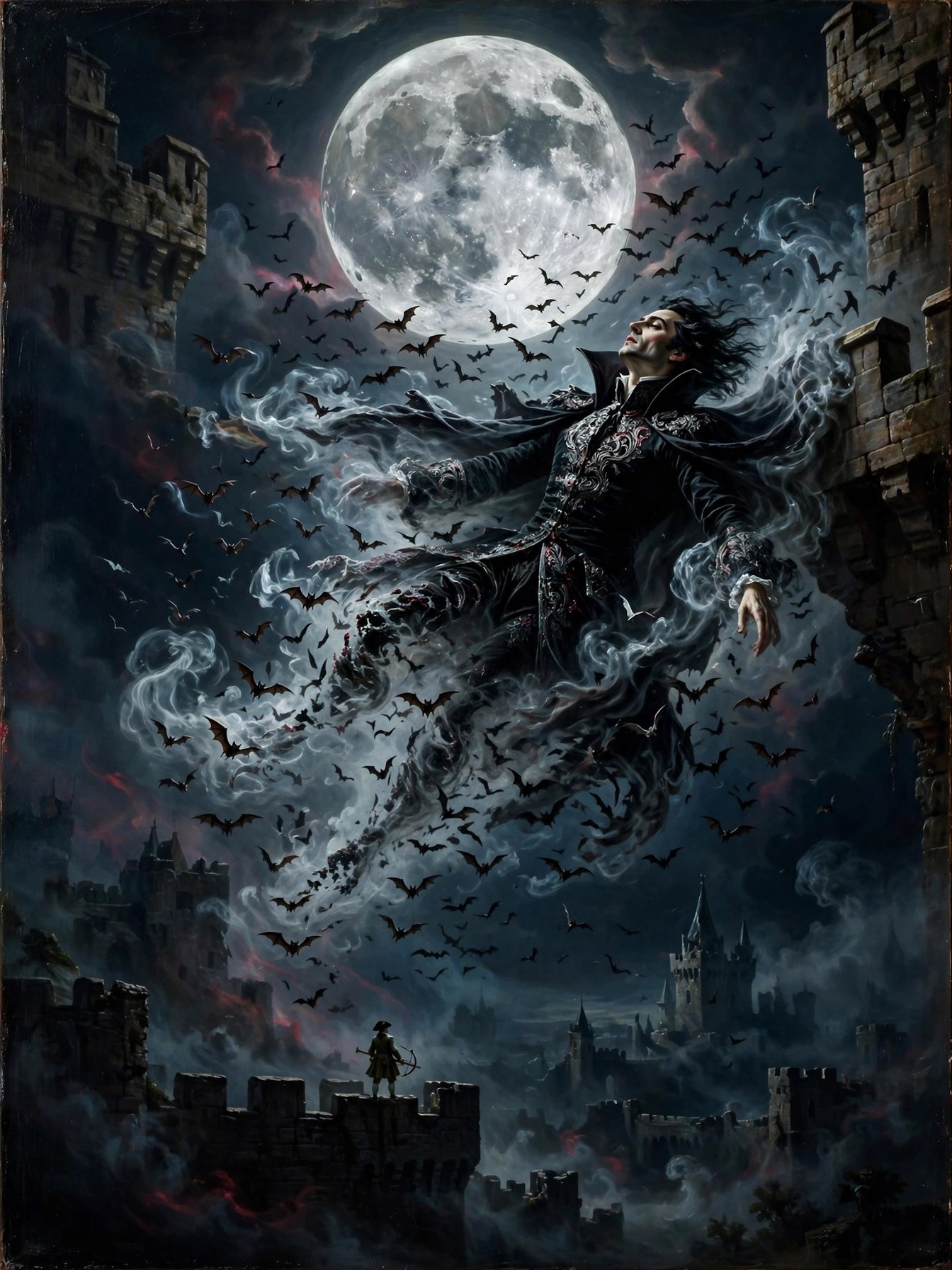
Cornered on the parapet at moonrise — by what, the story never says — he simply steps backward off the edge. Halfway down he is no longer falling but *unraveling*: cloak to mist, mist to wings, wings to a hundred bats scattering across the moon. The hunter below lowers his crossbow. There is nothing to aim at. There never was.
7. The Threshold
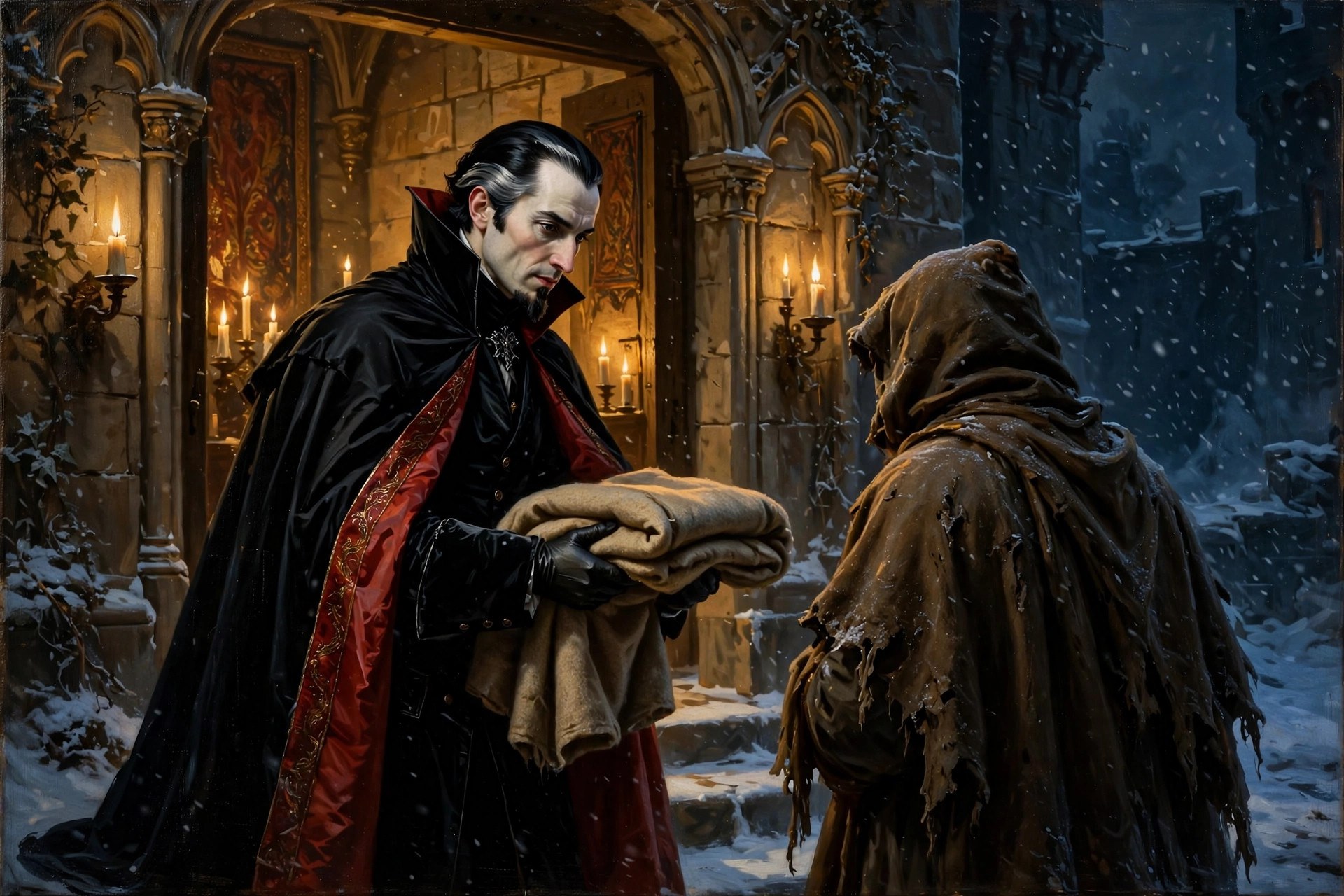
A traveler pounds on the castle doors at midnight, half-frozen, wholly terrified. The doors swing open onto warmth and candlelight, and there he is — not looming, but *waiting*, with a blanket already over one arm. "Enter freely," he says gently, "and of your own will." The old laws are everything. The traveler steps inside. The doors close like a held breath.
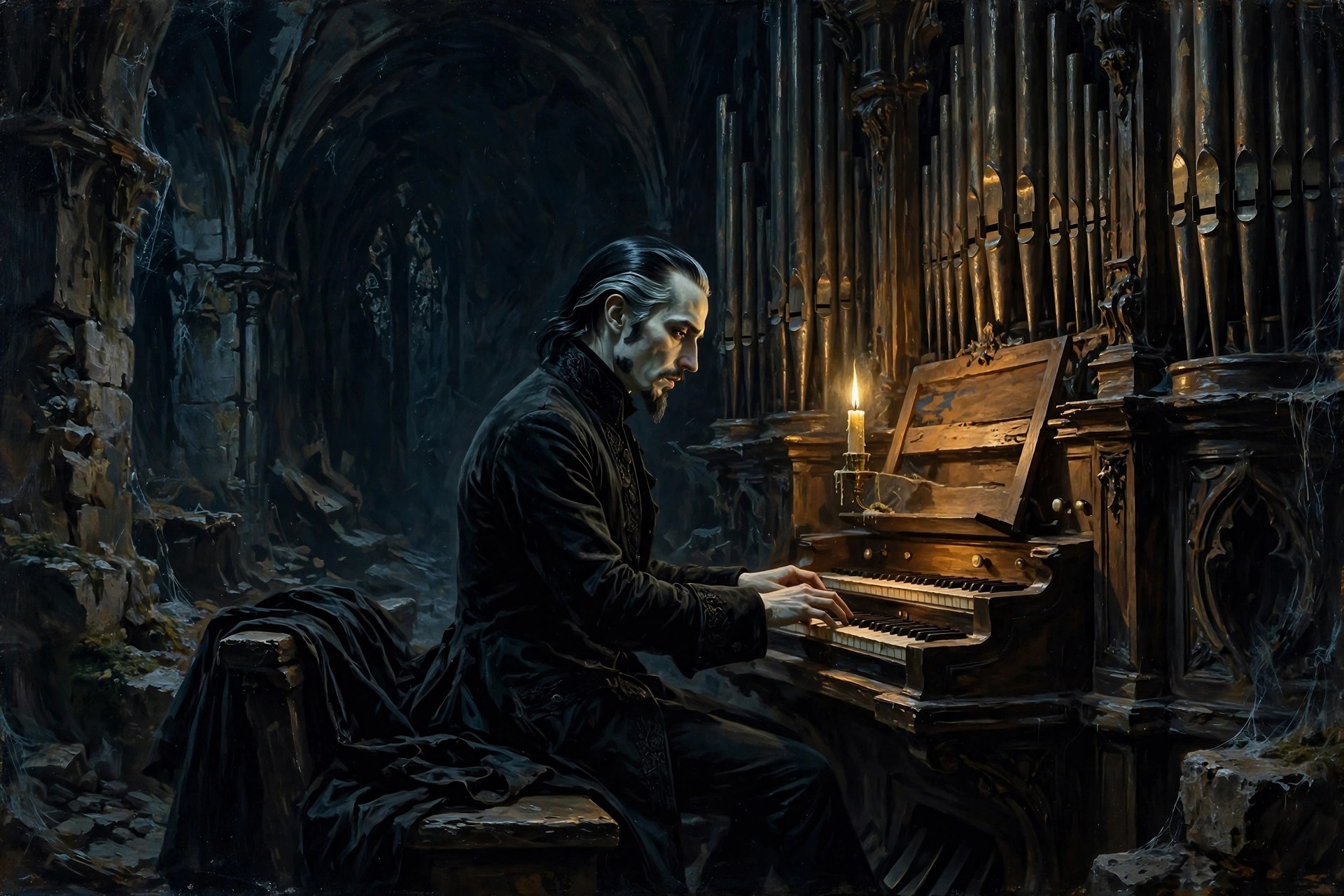
8. The Organ
Alone in the chapel at 3 a.m., he plays — something baroque, something his mortal hands learned before the Turning, something the brides used to request. The music climbs the stone and comes back changed. When the last chord dies he sits motionless, hands on the keys, listening to the castle settle. "Encore," whispers the dark. He almost smiles.
Source notes
All eight vignettes are original fiction written for the Vizlings “Count Dracula” persona. The line “Enter freely and of your own will” in scene 7 deliberately echoes Stoker’s Dracula (1897) — “Welcome to my house! Enter freely and of your own will!” — as homage; the genuine quotation is cited on the lines page. All scene illustrations are AI-generated dramatization art.