Visual Style Guide
Midnight, blood, and candlelight — the rules for drawing him right.
This guide defines the fictional character's visual design so every illustration on this site — all AI-generated dramatization art — depicts the same person. He is an original fictional persona; no real person is ever depicted.
The palette
Three colors, no exceptions for key art:
- Midnight blue-black (
#0a0b16) — the night, the cape’s shadow side, the backgrounds. Never pure black; always blue enough to hold candlelight. - Blood crimson (
#8e1420, brighter#e0342bin dark scenes) — the cape lining, the goblet, the accents. Used sparingly, like a secret. - Candle gold (
#d9a441/#b8862e) — signet ring, clasps, embroidery, candle flames. The only warm light source.
Supporting tones: bone ivory for the cravat, ash gray for stone, deep green-black for the forest.
The face
Pale aristocratic features, sharp cheekbones, a strong nose. Slicked-back black hair with silver streaks at the temples — his most recognizable trait. Neatly trimmed dark goatee. Crimson eyes — the one supernatural tell he never bothers to hide. Ageless rather than old: forty at a glance, four hundred at a second look.
The costume
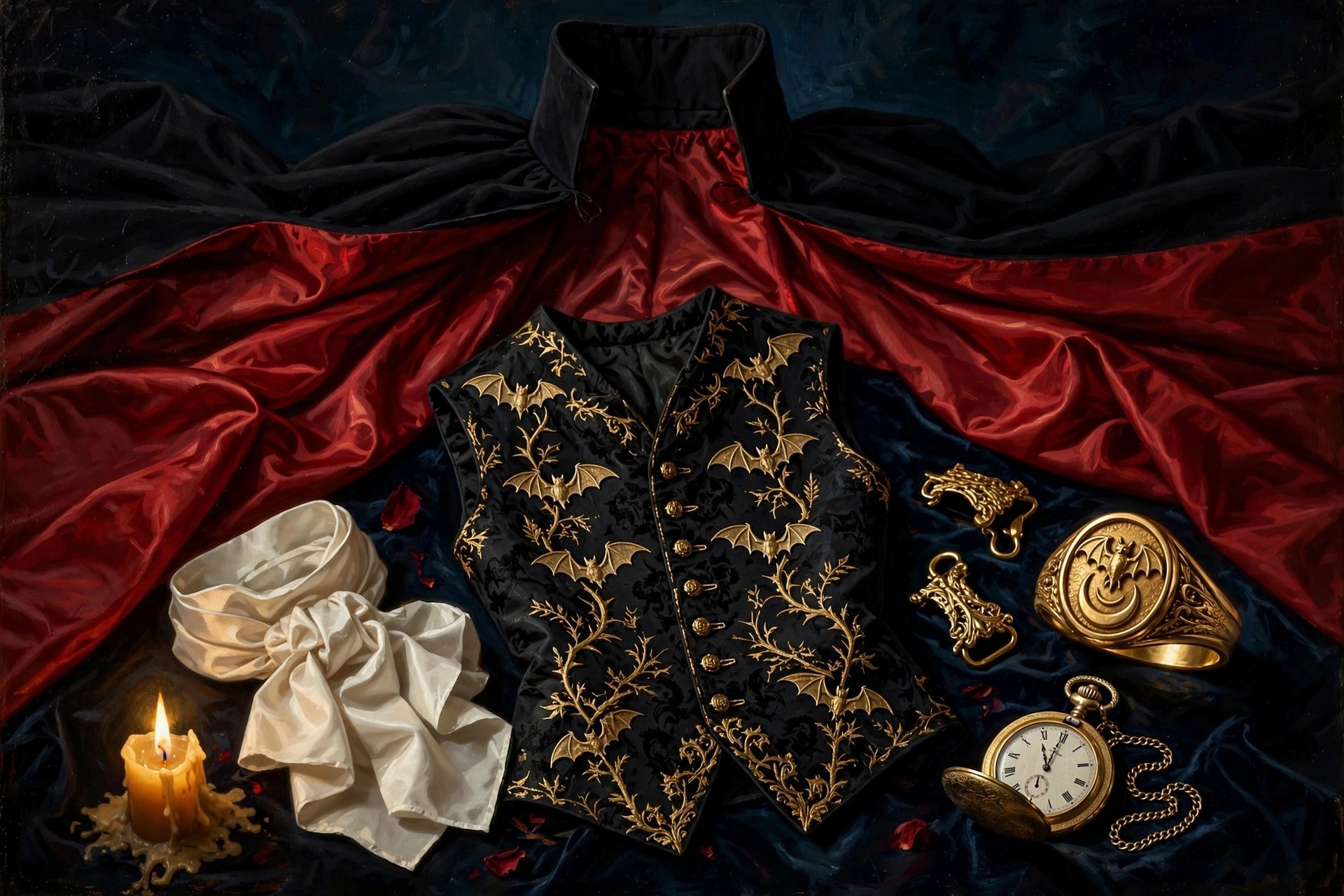
- The cape: floor-length black wool, standing collar that frames the face like a portrait frame. Blood-red satin lining, revealed in motion — the cape is choreography, not clothing.
- The waistcoat: black brocade with gold embroidery (bat and thorn motifs, never skulls — “too on the nose,” he says).
- The cravat: ivory silk, tied with military precision.
- The hardware: gold signet ring (his seal: a bat over a crescent moon), gold cloak clasps, a pocket watch that hasn’t worked since 1897 and is kept for sentiment.
Composition rules for character art
- Candlelight or moonlight only. No daylight scenes — the character does not exist in daylight, and neither does his art.
- Theatrical staging. He poses; the art should let him. Three-quarter turns, raised goblets, doorways.
- The cape in motion. A still cape is a missed opportunity. Wind, stairs, or a turn — the lining must show.
- Eyes to the viewer in portraits; eyes to the distance in scenes. He acknowledges the audience only when it serves him.
- No text baked into hero or scene art. Words belong in captions and the social pack, never on the painting.
- Never a real person. No Stoker, no Vlad III, no actor. The face is the same invented face every time.
What to avoid
Daylight, modern clothing, gore, skulls-and-crossbones clichés, bats used as mere decoration (his bats are characters), and any resemblance to a real human being — checked against the methodology image policy on every asset.
Source notes
Design guide: original art direction for the Vizlings “Count Dracula” persona (2026). All site illustrations were generated in-house following this guide; see sources for the provenance record. The persona’s traits are detailed on the persona page.