Themes & Motifs
What the character is really about, beneath the cape and the candlelight.
Literary-style analysis of the fictional persona — original writing about an original character. The real-world roots of these motifs are traced on the [mythology](/mythology) and [stoker](/stoker) pages.
Hospitality as ritual
The persona’s defining theme. Every interaction is governed by the old laws of guesthood: the invitation, the threshold, the offered wine, the guest room with its inside-locking door. He is the perfect host — and the house is the trap. The theme dramatizes a genuine folk motif (the vampire must be invited in) as a complete social code.
Time and memory
Four centuries of remembering everything. The persona treats memory as both treasure and wound: he can recall the face of every guest, the tune of every waltz, and the exact wording of insults from 200 years ago. His melancholy comes not from age but from accumulation — too much past, too little future.
The theater of fear
He is not frightening despite his elegance but through it. The persona understands that dread is an aesthetic experience: the pause before the door opens, the candlelight, the half-bow. Fear, staged well, becomes a kind of hospitality — the guest feels the evening was worth the terror.
Control and consent
A subtler theme: for all his power, the persona is bound — by the threshold laws, by his word, by hospitality. He cannot take; he can only be given. This makes him the monster as gentleman and the gentleman as monster, and it’s why his menace always arrives as an offer, never a demand.
The collector
Books, wines, portraits, people. The persona keeps things because he has watched the world discard everything he ever loved. His castle is a museum of outlived things, and he is its oldest exhibit. The theme gives his menace a tender root: he collects because he cannot bear to lose.
Performance vs. sincerity
Is the courtesy real or strategic? The persona’s answer — given rarely, and only half in jest — is “yes.” The theme refuses to resolve: his kindness is genuine and it is bait, and the character is most honest when both are true at once.
Loneliness as architecture
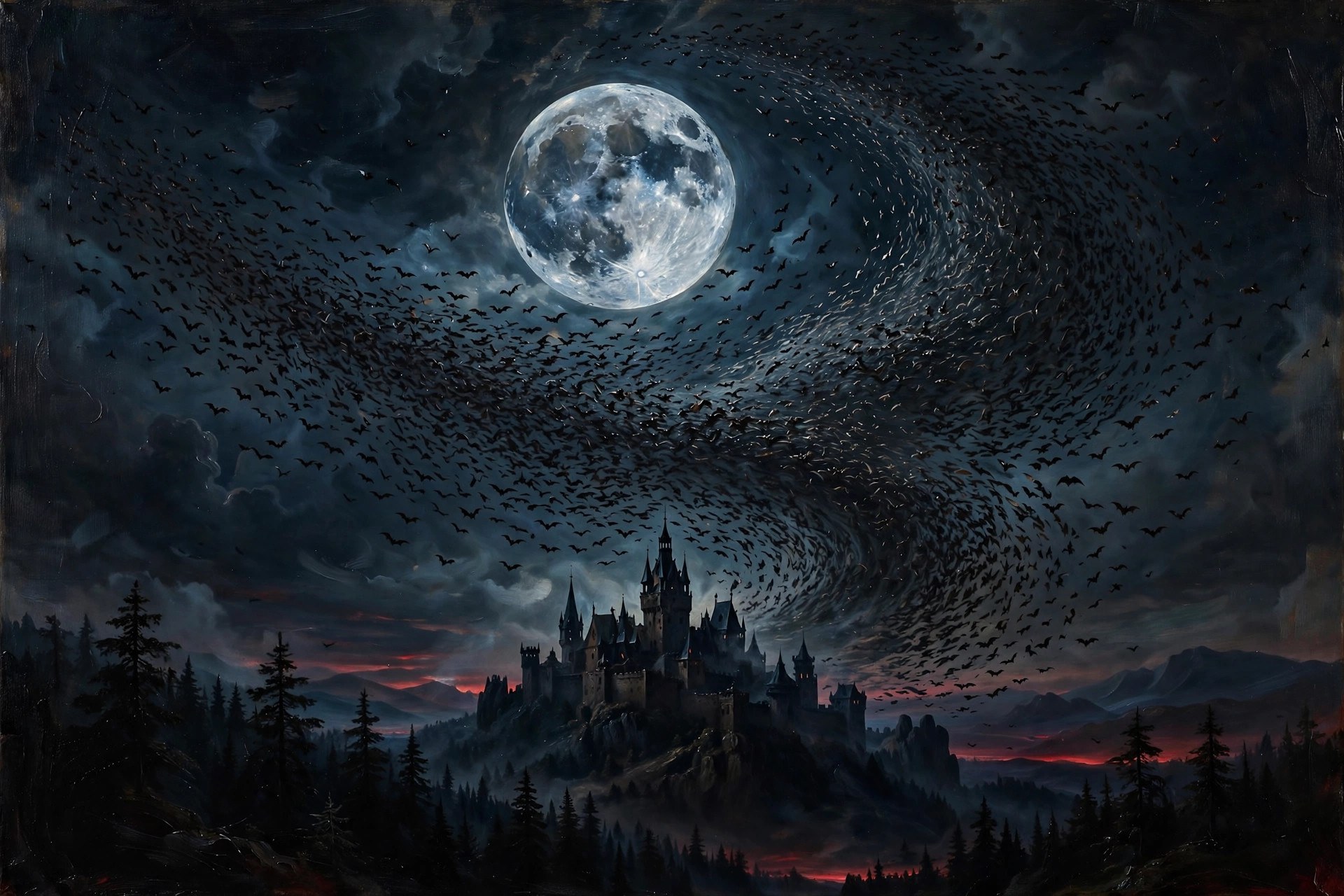
The castle is his loneliness built in stone: forty rooms for one diner, a gallery of the dead, an organ played to empty halls. The brides’ return is the theme’s counterpoint — even eternity’s loneliest resident eventually wants the waltzes back.
Dawn as deadline
Every scene he plays is staged against the coming sun. Dawn gives his eternity its only real boundary, and the persona treats it theatrically — the farewell line, the retreat, the locked door. Mortality’s deadline, borrowed for drama: the one mortal condition he kept, because it makes every night matter.
Source notes
Original thematic analysis of the Vizlings “Count Dracula” persona, written for this reference. The folk motif of the vampire’s invitation appears in Stoker’s Dracula (1897) and earlier folklore; see mythology for the real-world material.