The Successors
Alexander left no plan and no competent heir. His generals spent forty years fighting over the wreckage — and built the Hellenistic world in the process.
Babylon, June 323 BC
The crisis was immediate. Alexander’s half-brother Philip Arrhidaeus (mentally disabled, a figurehead) and the unborn child of Roxana (the future Alexander IV) were proclaimed joint kings. Real power went to Perdiccas, the chiliarch, as regent. Within two years Perdiccas was murdered by his own officers (321 BC) during a failed invasion of Ptolemy’s Egypt.
The empire was then repeatedly partitioned — Babylon (323), Triparadisus (321) — each settlement lasting until the next war. The pattern never varied: coalitions formed against whichever Successor grew too strong, fought him down, and re-divided the spoils.
The players
- Antigonus I Monophthalmus (“the One-Eyed”) — the most formidable soldier of them all, who came closest to reuniting the empire. Defeated and killed at Ipsus in 301 BC, aged eighty-one, by a coalition of Cassander, Lysimachus, and Seleucus.
- Ptolemy I Soter — seized Egypt in 323 and never let go. Founded the Ptolemaic dynasty (305–30 BC), the dynasty of Cleopatra. The only Successor to die in his bed, of old age, as king.
- Seleucus I Nicator — lost everything, regained Babylon in 312 (the Seleucid era begins there), and built the largest kingdom: the Seleucid Empire, from Asia Minor toward India.
- Cassander — Antipater’s son. Took Macedon and Greece; murdered Olympias (316), then Roxana and Alexander IV (c. 310) — extinguishing the Argead line. Founded Thessalonica (named for his wife, Alexander’s half-sister).
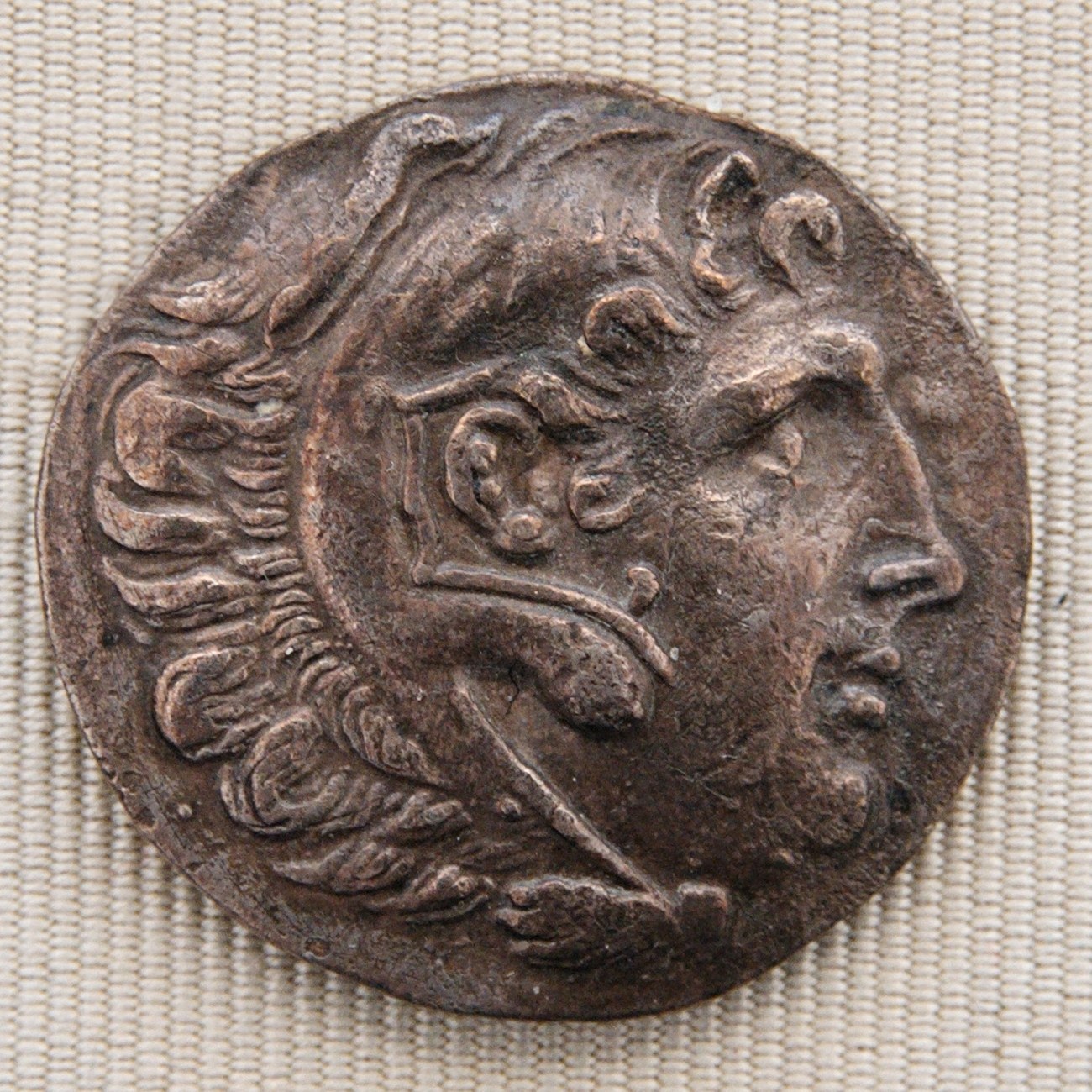
- Lysimachus — took Thrace and much of Asia Minor; his coins gave the world the horned Alexander portrait type.
Also-rans with outsize historical footprints: Eumenes the Greek secretary, the most gifted general of the first wars, betrayed by his own troops (316); Antipater, who held Europe until his death in 319.
The settlement: three kingdoms
By ~280 BC the wars burned out into three dynasties:
- Ptolemaic Egypt — Alexandria, the Library, the Museum; Greek kings over an Egyptian population.
- Seleucid Asia — Antioch, a vast multi-ethnic empire, slowly shrinking.
- Antigonid Macedon — Antigonus’ grandson Antigonus Gonatas secured the homeland.
This is the Hellenistic world: Greek cities and Greek language from the Nile to the Oxus, Buddhist art with Greek drapery in Gandhara, the Septuagint translated in Alexandria. None of it was Alexander’s plan — it was the unintended consequence of his generals’ failure to preserve his empire.
The Argead extinction
The human cost is worth stating plainly. Within thirteen years of Alexander’s death, his mother (Olympias, executed 316), his wife (Roxana, murdered c. 310), his son (Alexander IV, murdered c. 310), and his half-brother (Philip Arrhidaeus, murdered 317) were all dead by violence — most of it ordered by Cassander. The dynasty Alexander belonged to was deliberately exterminated.
Source notes
- The narrative backbone: Diodorus Books 18–20 (the fullest continuous account of the Diadochi); Plutarch’s Eumenes; Justin.
- Modern: Waterfield, Dividing the Spoils (2011); Bosworth on the Babylon settlement.
Limitations
- Diodorus 18–20 is detailed but partisan (pro-Antigonid in stretches) and chronologically tangled; dates in the 320s–310s carry ±1 year uncertainty.
- “Forty years of war” is the conventional frame (323–281 BC, ending with the deaths of Lysimachus and Seleucus); the last Diadoch died in 281, but the kingdoms’ wars continued.