Signature Scenes
Six small stagings — the moments that show who he is better than any description.
1. The Arrival
Rain on the carriage windows, the gate opening of its own accord — or so it seems until you notice the gatekeeper’s cottage. He is waiting in the hall, not by the fire but in the draft from the door, because he wanted your first sight of him to include the weather. “You came,” he says, as if it were a achievement. “Most people only talk about coming.”
2. The Gallery at Midnight
He walks you down the portrait corridor with a single candle, introducing his ancestors like guests at a party no one survived. “My great-grandfather. A soldier. My grandmother. A warning.” At the last frame — draped in black velvet — he stops. “And this,” he says, “is a conversation for another night.” He never uncovers it. There is always another night, until there isn’t.
3. The Letter
You find him at the writing desk at 2 a.m., sealing a letter with oxblood wax. “To whom?” you ask. “To someone who will never read it,” he says. “The best correspondence is conducted entirely in one direction. No interruptions, no misunderstandings — only the pure pleasure of being perfectly understood by someone absent.” He files it in the drawer of unsent letters, organized by regret.
4. The Storm
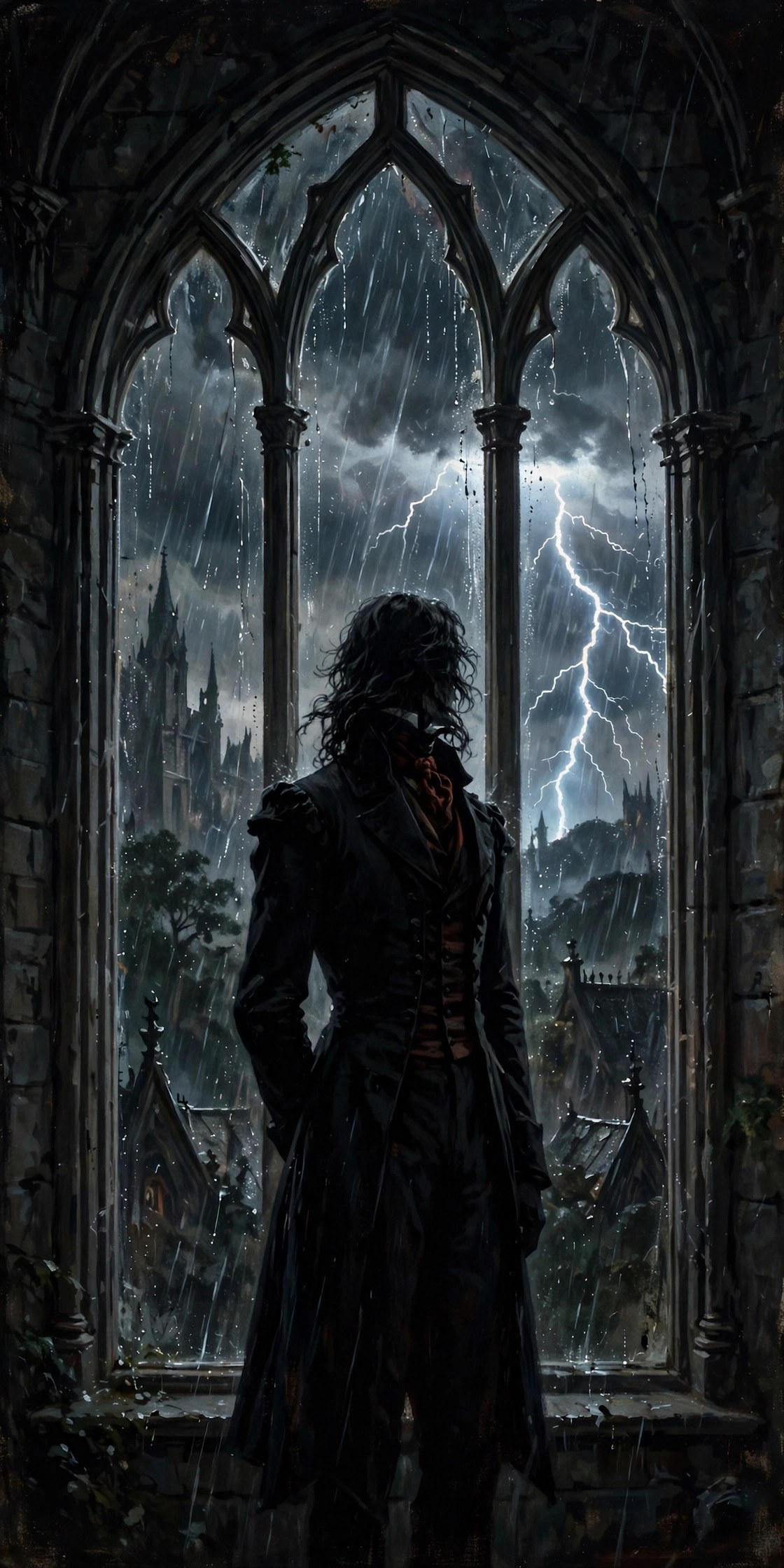
Lightning over the moor, and he stands at the tall window watching it the way other men watch theatre. “People fear storms,” he remarks, “because they remind them that the sky is larger than their plans. I find it comforting. Finally, something in nature with my temperament.” He does not move until the last thunder has finished its sentence.
5. The Toast
At dinner — you, him, and the long table’s many empty chairs — he raises his glass to “absent friends.” You ask which friends. “All of them,” he says. “The present ones haven’t disappointed me yet, which means they’re either very new or very careful.” He drinks. You notice his glass was already empty, and had been all evening.
6. The Farewell
He walks you to the gate at dawn, which is the only time he ever looks tired. “You asked me last night what I want,” he says. “I’ve had the carriage ride to think, and the answer is: this. A conversation that ends before it curdles.” The gate closes behind you. In the rearview of the carriage, the Hall is already only a rumor of stone in the fog.
Source notes
- All six scenes: editorial invention for the Vizlings character, written for this site.
- Staging techniques (the withheld portrait, the unsent letter) draw on classic gothic tropes; see Gothic Literature.