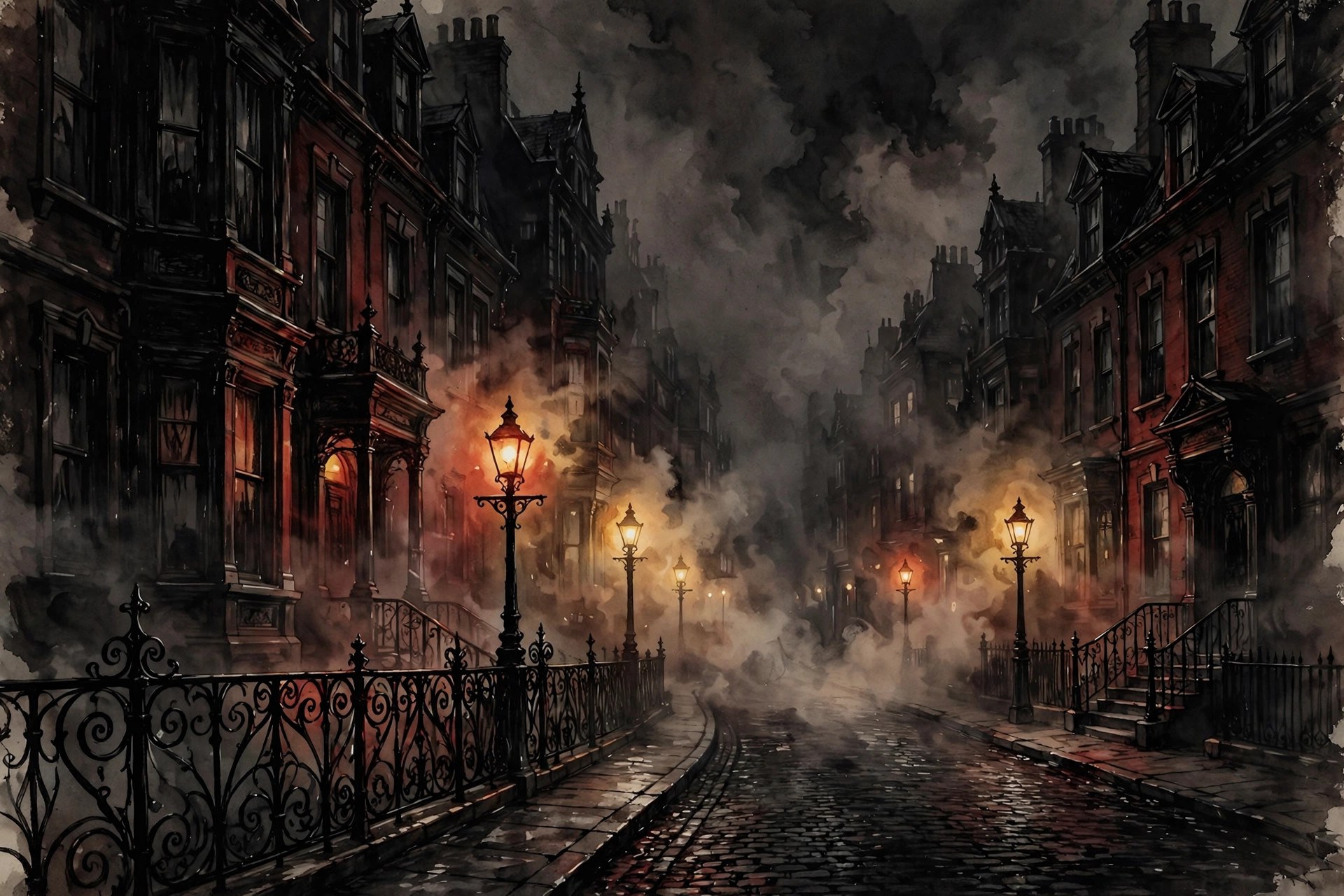
Fog
The moor's weather and the mind's — on fog as the character's natural element.
The weather
Fog comes off the moor most evenings between October and March, and on principle at other times. It takes the Hall in stages — first the gate, then the drive, then the lower windows — until only the lit upper rooms float, unattached to any visible building. The Gothic Male times his evening walk to meet it. “Fog,” he says, “is the landscape being discreet.”
The metaphor
In his conversation, fog is the figure for everything half-known: memory, motive, the future, other people. He distrusts clarity the way other men distrust strangers — “Clarity is a daytime virtue,” he remarks, “and see how little the day has done for us.” His silences are foggy by design: you sense the shape of what he isn’t saying without ever quite seeing it.
The literary fog (real history)
Fog is Victorian London’s signature weather and its signature metaphor — Dickens opens Bleak House (1853) in it (“Fog everywhere”), and the gothic uses mist the way the stage uses a curtain: Radcliffe’s heroines are forever peering through it, and the moors of Wuthering Heights (1847) generate their own weather of uncertainty. The Gothic Male’s fog is written in this tradition, consciously.
How to use fog in conversation
With the character, treat fog as permission: to be indirect, to approach a subject sideways, to let a question hang unanswered until the air clears. He responds best to visitors who don’t demand the view all at once. Ask obliquely; he answers in kind; the shape emerges. See the Chatting Guide.
Source notes
- Blackmoor’s fog and the character’s remarks: editorial invention for the Vizlings character.
- Dickens, Bleak House (1853); Brontë, Wuthering Heights (1847); Radcliffe’s technique: standard literary history.