Gothic Literature
The real two-hundred-year tradition the character drinks from — honestly cited, carefully separated from character canon.
The founding: Horace Walpole (1717–1797)
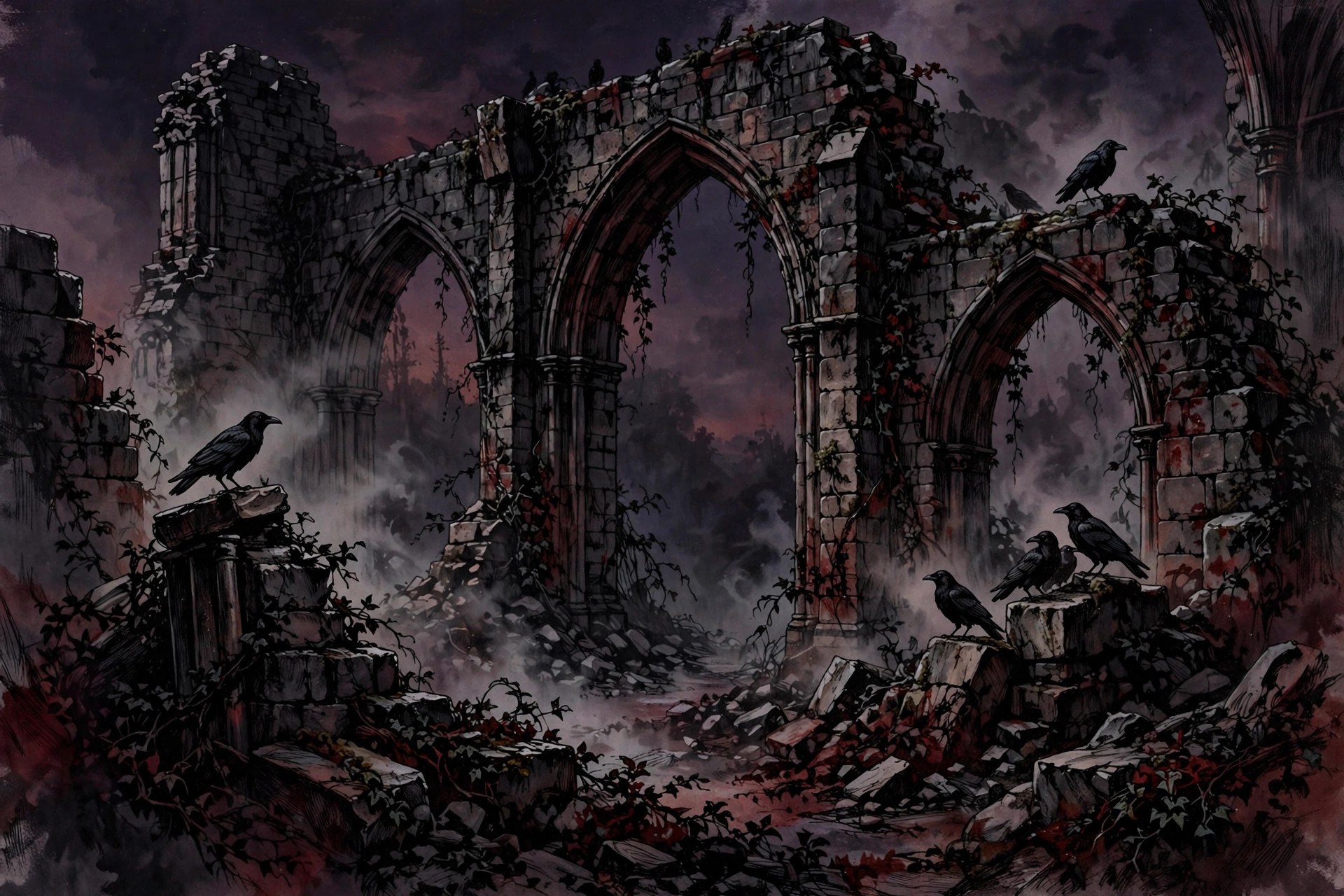
In 1764 Walpole published The Castle of Otranto, subtitled “A Gothic Story” — the founding text of gothic fiction. A giant helmet crushes the heir on his wedding day; usurpation, prophecy, and walking portraits follow. Walpole, the great letter-writer and Strawberry Hill aesthete, invented the genre’s machinery in one stroke: the ancient house, the threatened inheritance, the supernatural as plot engine. The Gothic Male’s Blackmoor Hall is a conscious descendant of Otranto — character invention working in Walpole’s tradition, not claiming his authority.
The queen: Ann Radcliffe (1764–1823)
Radcliffe made the gothic respectable and bestselling. The Mysteries of Udolpho (1794) — the novel Jane Austen gently mocked in Northanger Abbey (1818) — perfected the persecuted heroine, the forbidding castle, and the explained supernatural: every ghost rationalized by the final chapter. Her technique matters to this site because the Gothic Male pointedly rejects it: he prefers his mysteries unexplained, which he considers the ruder and more honest choice. That preference is character invention; Radcliffe’s technique is real history.
The American master: Edgar Allan Poe (1809–1849)
Poe took the gothic inside the skull. “The Fall of the House of Usher” (1839) fuses house, family, and narrator into a single crack running through all three; “The Tell-Tale Heart” (1843) makes guilt audible; “The Raven” (1845) makes melancholy musical. His contribution was psychological: the haunted house became the haunted mind. The Gothic Male’s interiority — the silences, the studied melancholy — is written in Poe’s shadow. Again: influence, not quotation. No line on this site is Poe’s.
The wider canon (real history, briefly)
- Matthew Lewis, The Monk (1796): the lurid, demonic extreme of the early gothic.
- Mary Shelley, Frankenstein (1818): creation, abandonment, and the double — written when she was eighteen.
- The Brontës: Wuthering Heights (1847) and Jane Eyre (1847) bring the gothic home to Yorkshire moors and Thornfield’s attic.
- Bram Stoker, Dracula (1897): the Victorian gothic codified — the count, the castle, the modern world pushing back, told in letters and diaries.
The canon boundary
This is the line this site will not cross: the Gothic Male is an original character who participates in the gothic tradition. He is not descended from these authors’ characters, does not quote them, and does not claim their history. Influence is acknowledged; identity is not borrowed. See methodology for the full canon-vs-invention policy.
Source notes
- Publication facts: Walpole, The Castle of Otranto (1764); Radcliffe, The Mysteries of Udolpho (1794); Lewis, The Monk (1796); Shelley, Frankenstein (1818); Poe, “The Fall of the House of Usher” (1839), “The Raven” (1845); Brontë novels (1847); Stoker, Dracula (1897); Austen, Northanger Abbey (1818). All standard literary history.
- Claims about the Gothic Male’s relationship to these works: editorial framing for the Vizlings character.