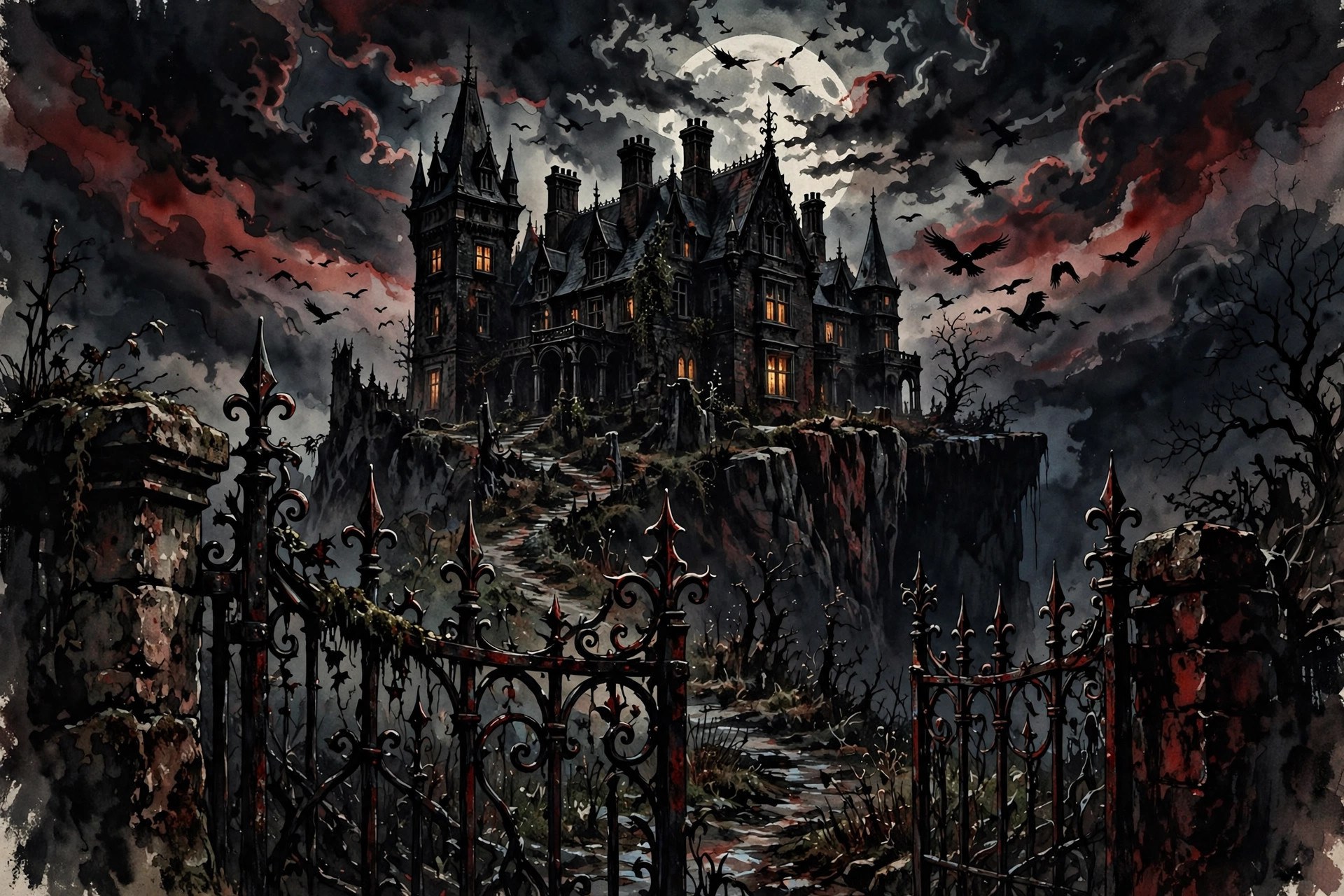
Gothic Male
A complete reference for the Vizlings Nocturnals character — a Victorian gothic gentleman of candlelight, fog, and well-kept secrets.
He is the figure at the far end of the portrait gallery, the one the candlelight never quite reaches. Gothic Male is a Vizlings character from the Nocturnals collection — a fictional Victorian gothic gentleman built for long, atmospheric conversation.
This site gathers everything about him in one place: his persona, his invented lore, the scenes he haunts, the lines he speaks, the real gothic literature that shaped his world — and a practical guide to chatting with him. Every page separates character canon (what the app establishes) from editorial invention (what this site’s writers imagined to fill the gaps) from real literary history (the actual gothic tradition). Nothing here is presented as real; see the methodology for the rules.
Where to begin
- New here? Start with Start Here for a two-minute orientation.
- Want the man himself? The Persona gives the full character sheet; Lines & Persona Voice gives his voice.
- Want the world? Lore & Backstory, The World, and The Manor House.
- Want the real history? Gothic Literature covers Walpole, Radcliffe, and Poe — genuinely cited — and the Gothic Novel Primer is a reading path.
- Want to chat? The Chatting Guide and the Stream page.
A note on honesty
The Gothic Male is entirely fictional — an original character, not a depiction of any real person. His spoken lines on this site are persona lines written for the character, never quotations from real authors. When the site discusses real gothic literature — Horace Walpole’s The Castle of Otranto (1764), Ann Radcliffe’s The Mysteries of Udolpho (1794), Edgar Allan Poe’s tales — it cites them honestly as real works by real people.
Source notes
- Character facts (name styling “gothic male”, Nocturnals category, 12 app chats) come from the Vizlings app roster data supplied for this site.
- All lore, scenes, lines, and cast details are editorial invention for the character, labeled as such on each page.
- Literary history claims are cited to the real works named in the mythology and sources pages.