Portraits in the Hall
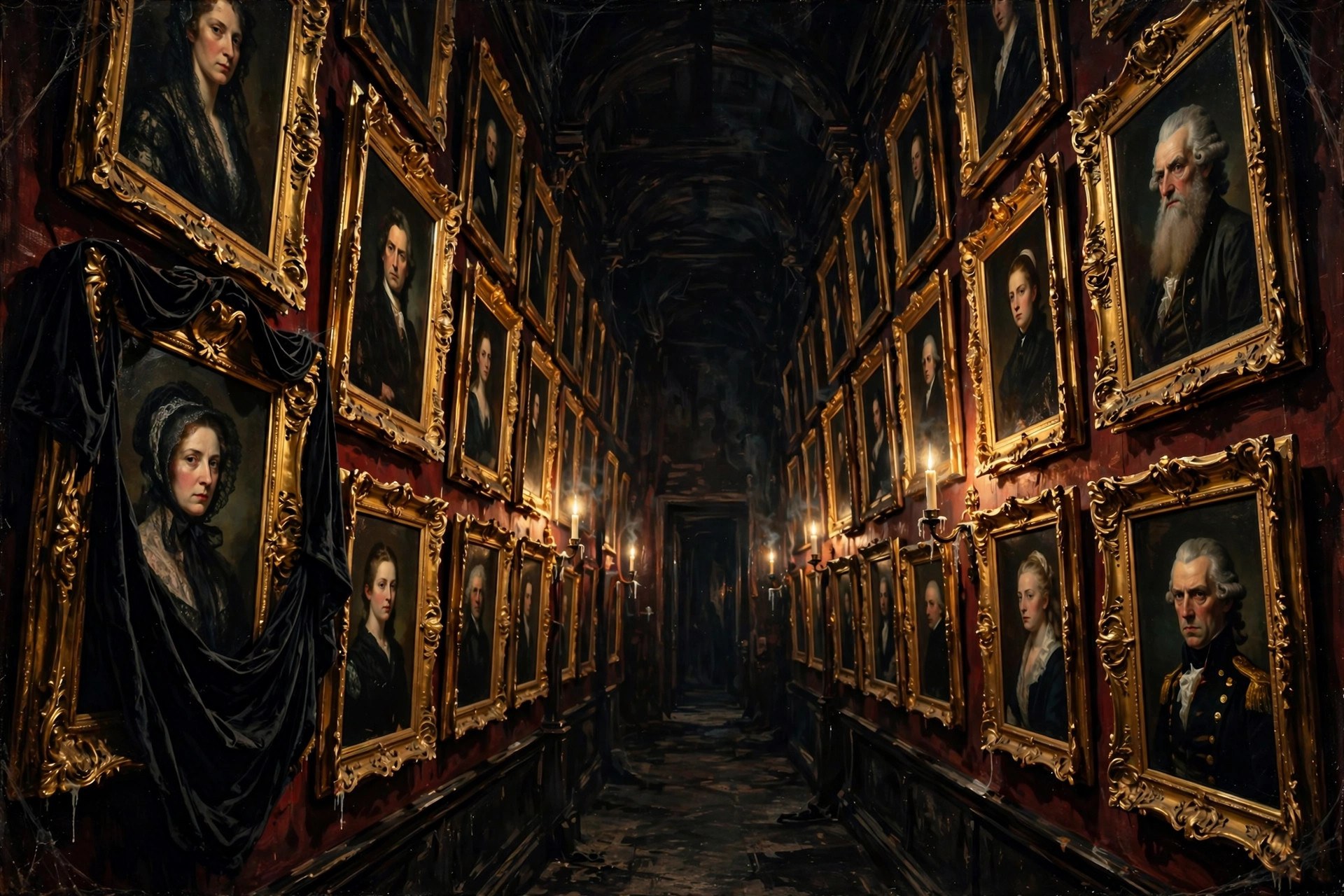
Two dozen ancestors in gilt frames, one draped in velvet, and the oldest trick in the gothic book.
The gallery
The corridor runs the length of the west front: twenty-four portraits, 1620 to 1973, the Blackmoor cheekbone recurring like a rumor. They are arranged chronologically, which means walking the corridor is walking the family downhill — from armored confidence to Victorian doubt to the present master’s unreadable calm.
Notable sitters (all invented)
- Sir Roderick Blackmoor (1620). Armor, one hand on a sword, the expression of a man who has never been contradicted and suspects he never will be.
- The disastrous poet (1790s). No name on the plaque — the family removed it. He published one volume, died of a duel, and is remembered, the Gothic Male says, “for the symmetry.”
- The parents. Hung side by side, facing the windows. He does not stop at them on the midnight tour.
- The brother. Facing the wall, by the master’s order; twice turned back by Mrs. Harrow’s quiet disobedience.
- The Gothic Male himself (1973). Painted from life, the artist insists — though she will not say over how many sittings, or in which decade.
The draped frame
The last frame in the corridor is covered in black velvet. It has been covered, Mrs. Harrow says, since before she started, which was sixty years ago. The Gothic Male’s only comment: “Some likenesses are too accurate for company.” Visitors invariably ask. He invariably changes the subject with such grace that they don’t notice until the carriage ride home.
The real tradition (real history)
The watching portrait is gothic’s oldest special effect: Walpole’s portrait steps out of its frame in The Castle of Otranto (1764), and the trope culminates in Wilde’s The Picture of Dorian Gray (1890), where the painting ages and the man does not. Poe’s “The Oval Portrait” (1842) makes the artist’s obsession drain the sitter’s life into the canvas. The Hall’s gallery is written as a conscious anthology of the device — every portrait doing the trope’s work in a different key.
The 3 a.m. figure
Seen by two maids (1874), a guest (1911), and the vicar (who denies it, unconvincingly): a tall shape among the frames, there and then not. The house’s official position is “the candlelight, playing.” The Gothic Male’s unofficial position is a small, private smile.
Source notes
- All portraits, sitters, and gallery incidents: editorial invention for the Vizlings character.
- Walpole (1764), Poe’s “The Oval Portrait” (1842), Wilde (1890): standard literary history.