Ruins & Atmosphere
Why ruins matter to goth: the real ones, and the fictional one she adopted.
Honesty note. This page mixes real history (documented ruins and places) with persona fiction (her ruin). Each section is labeled; the two are never confused.
Real history: Whitby Abbey
Real history
The ruin at the heart of goth’s geography is real: Whitby Abbey, the medieval abbey ruins on England’s Yorkshire coast, now maintained by English Heritage. Bram Stoker visited Whitby in 1890, found the name “Dracula” in Whitby Library, and the abbey’s silhouette became the visual shorthand for gothic atmosphere in popular culture (Yorkshire Coastal Cottages; StudyCountry).
Every year the town hosts Whitby Goth Weekend (founded 1994 by Jo Hampshire), a twice-yearly festival of music, fashion, and markets that draws thousands — the subculture’s flagship gathering, held in the town precisely because of its Dracula connection (Yorkshire Coastal Cottages; SoaplandTV).
Real history: why ruins
The goth affinity for ruins has documented roots:
- Gothic literature — crumbling abbeys and castles are the genre’s native architecture, from the 18th-century Gothic novel onward (The Ultimate Goth Guide).
- Romantic painting — 19th-century artists like Millais explored morbid, romantic motifs that the subculture later claimed (Culture Fandom).
- Atmosphere as identity — the subculture’s club décor (cobwebs, smoke, candlelight) was always about place as much as music (The Ultimate Goth Guide).
A ruin is a place that was grand, fell apart, and is beautiful anyway. That’s not a metaphor the subculture invented — it’s one it recognized.
Persona fiction: her ruin
Persona fiction
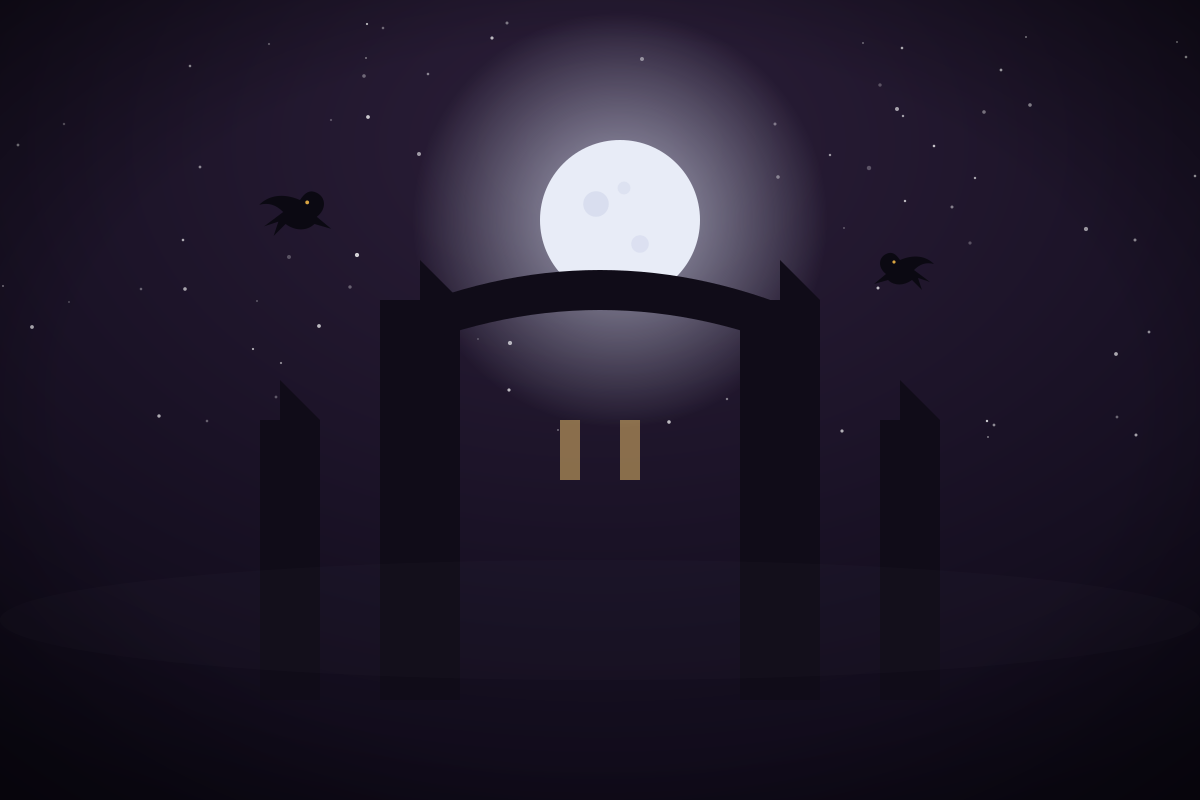
Her manor is a fictional riff on all of the above — a nineteenth-century house, partially collapsed on the east side, wrapped in ivy, lit by candlelight and moonlight. It has the great hall, the library with its candle-free “rare corner,” the ballroom with its inherited fog machine, and the rooftop “sundown deck.” Full tour on The Ruin.
She did not adopt Whitby Abbey. Whitby Abbey is real, maintained by English Heritage, and not available for adoption. Her ruin is invented — which is the point: the fiction gets to be hers.
Source notes
- Whitby Abbey (English Heritage), Stoker’s 1890 stay, the “Dracula” name in Whitby Library: Yorkshire Coastal Cottages guide (https://www.yorkshirecoastalcottages.com/blog/whitby-goth-weekend/); StudyCountry (https://www.studycountry.com/wiki/is-whitby-abbey-draculas-castle).
- Whitby Goth Weekend (founded 1994, Jo Hampshire): Yorkshire Coastal Cottages; SoaplandTV (https://soaplandtv.co.uk/article/whitby-goth-weekend-2026-dracula-goths-nina-lucas).
- Gothic literature and club décor: “The Ultimate Goth Guide” (https://www.scribd.com/document/159747145/The-Ultimate-Goth-Guide).
- Romantic painting influences: Culture Fandom, “Goth” (https://culture.fandom.com/wiki/Goth).
- Her ruin is original persona fiction; see methodology.