Dark Playlists
Real music for a fictional girl's fictional playlists. The bands are documented reality; her taste in them is persona fiction.
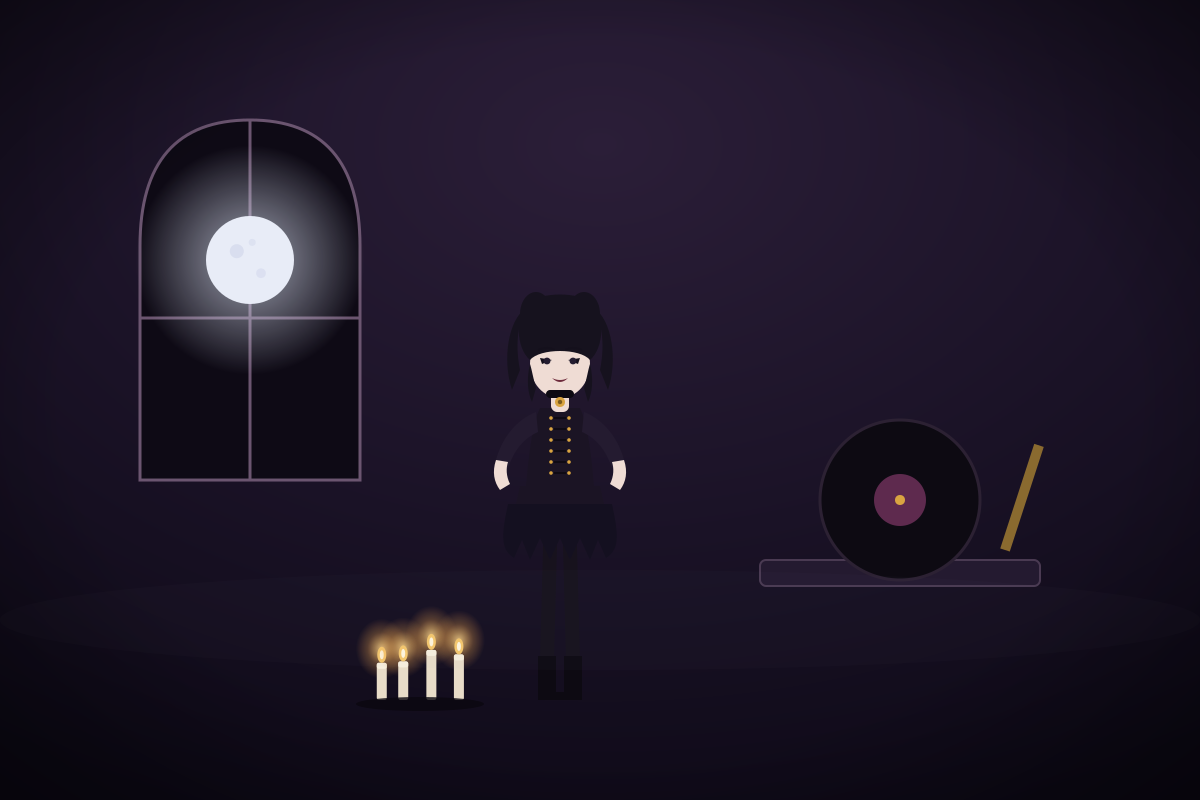
Honesty note. The bands and records below are real, documented music. Goth Girl is a fictional character — she doesn’t actually listen to anything. These are the real records her fictional playlists would draw from, chosen to match her persona.
How to read this page
Each playlist is a persona-fiction framing (“what she’d play at 3 a.m.”) around real, verifiable music. The framing is invented; the music is fact. No artist is claimed to endorse the character, and the character claims nothing about the artists.
Persona fiction framing · Real music
Persona fiction framing · Real history music
1. “Bats in the Belfry” — the foundations
What she’d play to explain where it all started: Bauhaus — “Bela Lugosi’s Dead” (1979); Siouxsie and the Banshees — The Scream (1978); Joy Division — Unknown Pleasures (1979). The documented roots of the sound (see Goth: Music & Fashion).
2. “3 a.m. Ballroom” — the 1980s wave
The Sisters of Mercy — Floodland (1987); The Cure — Disintegration (1989); The Mission — God’s Own Medicine (1986); Fields of the Nephilim — Dawnrazor (1987). The decade the genre went widescreen.
3. “Candlelit and Baritone” — the deep voices
Nick Cave and the Bad Seeds — Tender Prey (1988); The Sisters of Mercy’s Andrew Eldritch — Vision Thing (1990). For the advice-hours crowd: low voices, high stakes.
4. “Fog Machine” — the theatrical
The Damned — Phantasmagoria (1985); Alien Sex Fiend — Acid Bath (1984). High camp, horror-movie joy — the Batcave end of the spectrum.
5. “Rain on the Ruin” — the atmospheric
Cocteau Twins — Head Over Heels (1983); This Mortal Coil — It’ll End in Tears (1984). Ethereal wave for storm-reading nights.
6. “Midnight Soup” — the warm dark
The Cure — Kiss Me, Kiss Me, Kiss Me (1987); Depeche Mode — Black Celebration (1986). Dark, but make it a hug. The surprisingly-warm-advice playlist.
7. “Sundown Deck” — the cinematic
Fields of the Nephilim — The Nephilim (1988); The Cult — Love (1985). Big skies, big guitars, best experienced from a rooftop with a dark mug.
8. “Advice Hours” — the 2 a.m. handoffs
The playlist she’d actually hand a guest: one track per wound, sequenced like a conversation. Bauhaus to open, Cocteau Twins to land softly, and something with a heartbeat bassline in the middle so you remember you’re alive.
Source notes
- All artists, records, and years are documented real music; genre context is cited on Goth: Music & Fashion and Goth Subculture.
- The playlist framings and the character’s “taste” are persona fiction written for this site.
- No endorsement by any artist is claimed or implied. See methodology.