Themes & Motifs
What the black-and-gold is about — the ideas under the armor. (Literary analysis of original fiction; see source notes.)
Gold as value vs. gold as values
The saga’s central tension. Every villain is a theory of gold: Voss (gold as property), the Mask (gold as redistribution), the Counterfeiter (gold as lie), Platinum (gold as inferior — silver endures). The hero’s answer is the first tenet of the code: gold protects — never hoards. The armor is the argument made wearable.
The noir city
Aurum City is drawn from the noir tradition: rain, towers, corruption in high places, decency in low ones. But the saga inverts the detective’s arc — the hero isn’t uncovering the city’s rot, he’s outlasting it. The noir here isn’t cynicism; it’s the lighting that gold looks best in.
Class and labor
Kade Mercer is a foundryman, and the saga never lets you forget it: the villains are a CEO, an heiress, a disgraced engineer, a forger — the professional class. The allies are a junior engineer, a detective, a bike courier, retired foundrymen. The Heart of Aurum was built by magnate money and saved by foundry hands. The gold chose the worker.
The mask
Two masks in the saga: the hero’s visor (which hides a man to serve a city) and the Gilded Mask’s porcelain (which hides a thief to serve a hospital). The code’s third tenet — the mask serves the city — is the difference between the hero and Platinum, whose mirrored armor serves only its wearer.
Light against dark
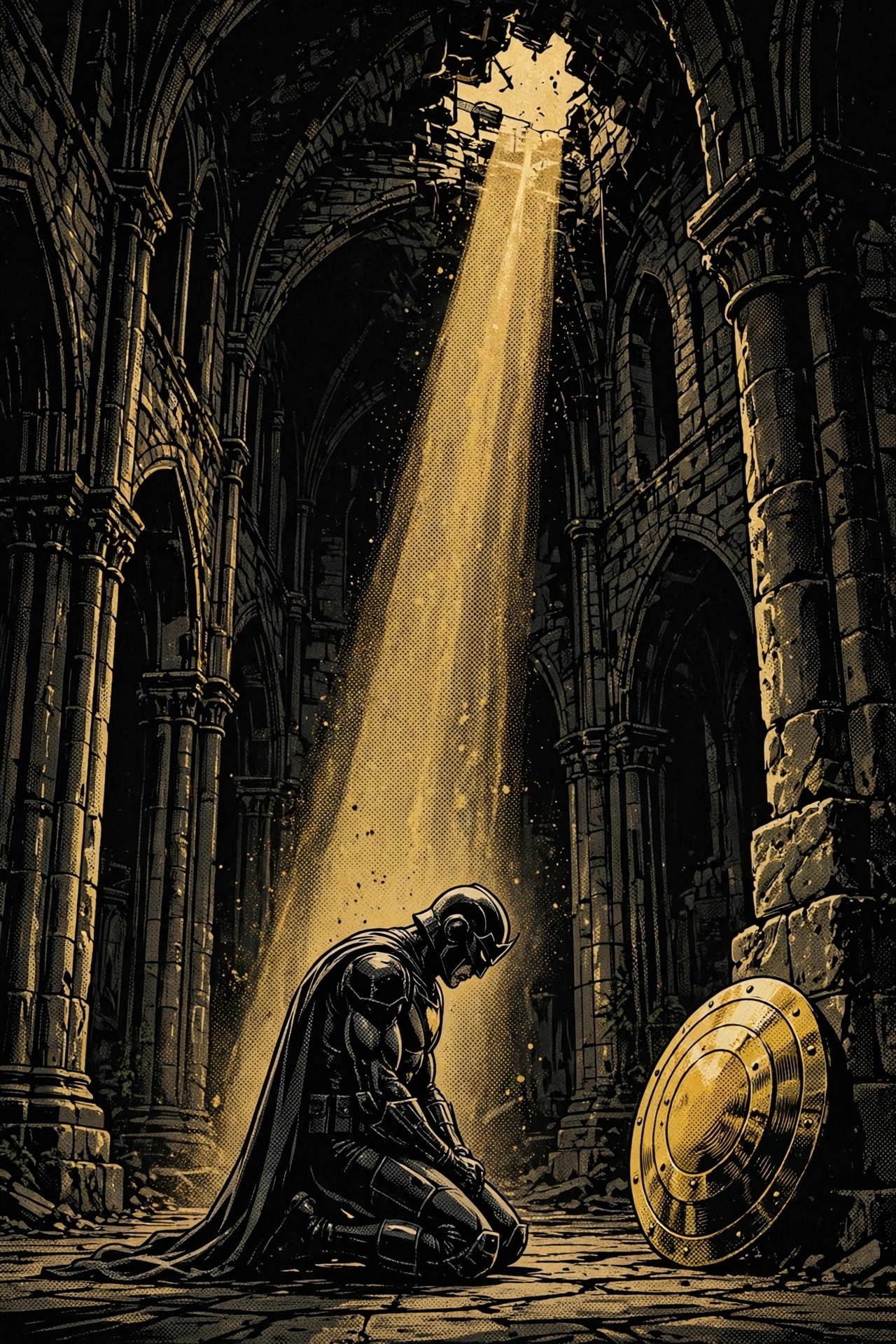
The visual thesis: black plate that drinks light, gold channels that carry it. The hero is the city’s lighting scheme — the Umbra Cloak for the shadows he works in, the Golden Pulse for the light he brings. Issue #8’s title says it outright: the Golden Hour is noon at midnight, the moment the dark loses.
Source notes
- This page is literary analysis of original fiction written for this reference site (2026-09-26).
- Themes are drawn from the issue recaps, the code, and Aurum City.
- Every image is AI-generated dramatization art; see sources & provenance.