Other Works
The memoirs overshadow everything — but Casanova published novels, philosophy, and pamphlet wars.
The Dux writings
Casanova was a working writer long before the memoirs were known. At Dux he produced:
Icosameron (Prague, 1788)
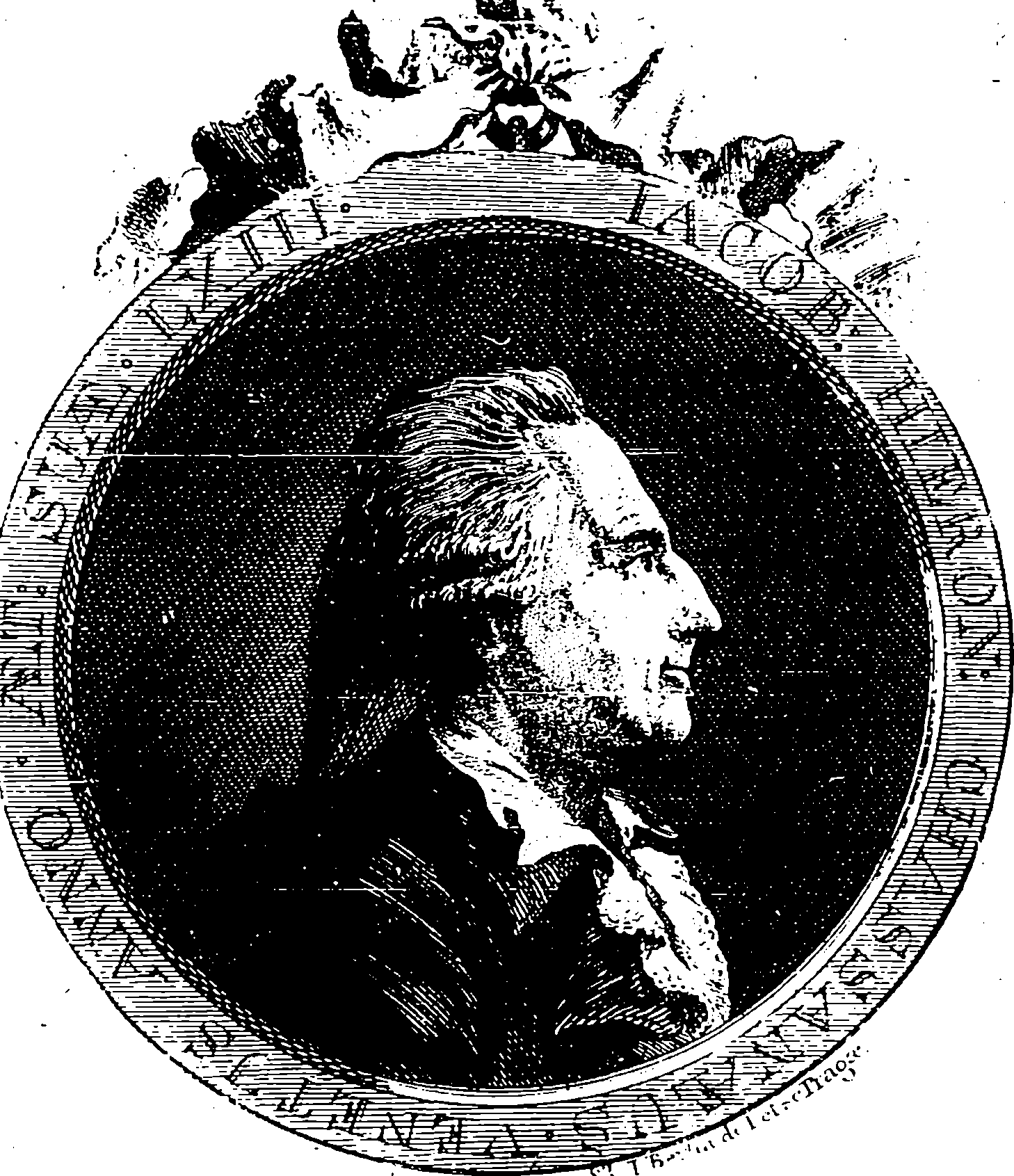
A five-volume utopian novel — Icosameron ou Histoire d’Édouard et d’Élisabeth — imagining a subterranean world. It is the work that gave us the one certain lifetime portrait of its author: Johann Berka’s engraving, drawn from life in March 1788, served as its frontispiece. The novel itself is little read today; scholars value it mainly as evidence of Casanova’s reading in philosophy and science.
Histoire de ma fuite (Leipzig, 1788)
Histoire de ma fuite des prisons de la République de Venise qu’on appelle les Plombs — “Story of my escape from the prisons of the Republic of Venice called the Leads.” Published in French in 1788, it is the first published version of the escape narrative, later absorbed into the memoirs. It made the escape famous across Europe within Casanova’s lifetime.
Soliloque d’un penseur (1786)
A philosophical pamphlet — the “soliloquy of a thinker” — on religion, morality, and free will, consistent with the deistic views expressed in the memoirs’ preface.
Pamphlets and quarrels
Casanova was a prolific controversialist: satirical pamphlets against his enemies (notably the 1782 Né amori né donne ovvero la Stalla d’Augea, a libel that helped drive him from Venice), translations, and essays on mathematics — including a refutation of the duplication of the cube. The full bibliography runs to dozens of items; the BnF’s “Fonds Casanova” catalogues the surviving corpus.
The letters
Thousands of Casanova’s letters survive, and they are a historian’s treasure: they corroborate — and sometimes correct — the memoirs. The correspondence with his brother Francesco, with patrons, and with women named in the memoirs lets scholars check the old man’s memory against the young man’s handwriting.
Source notes
- Bibliography follows the BnF “Fonds Casanova” catalogue and the Pléiade edition’s (2015) bibliographic apparatus.
- Histoire de ma fuite (Leipzig, 1788) and Icosameron (Prague, 1788) are the standard citations for the first editions; the Berka frontispiece detail follows the print’s own caption (“in his 63rd year”).