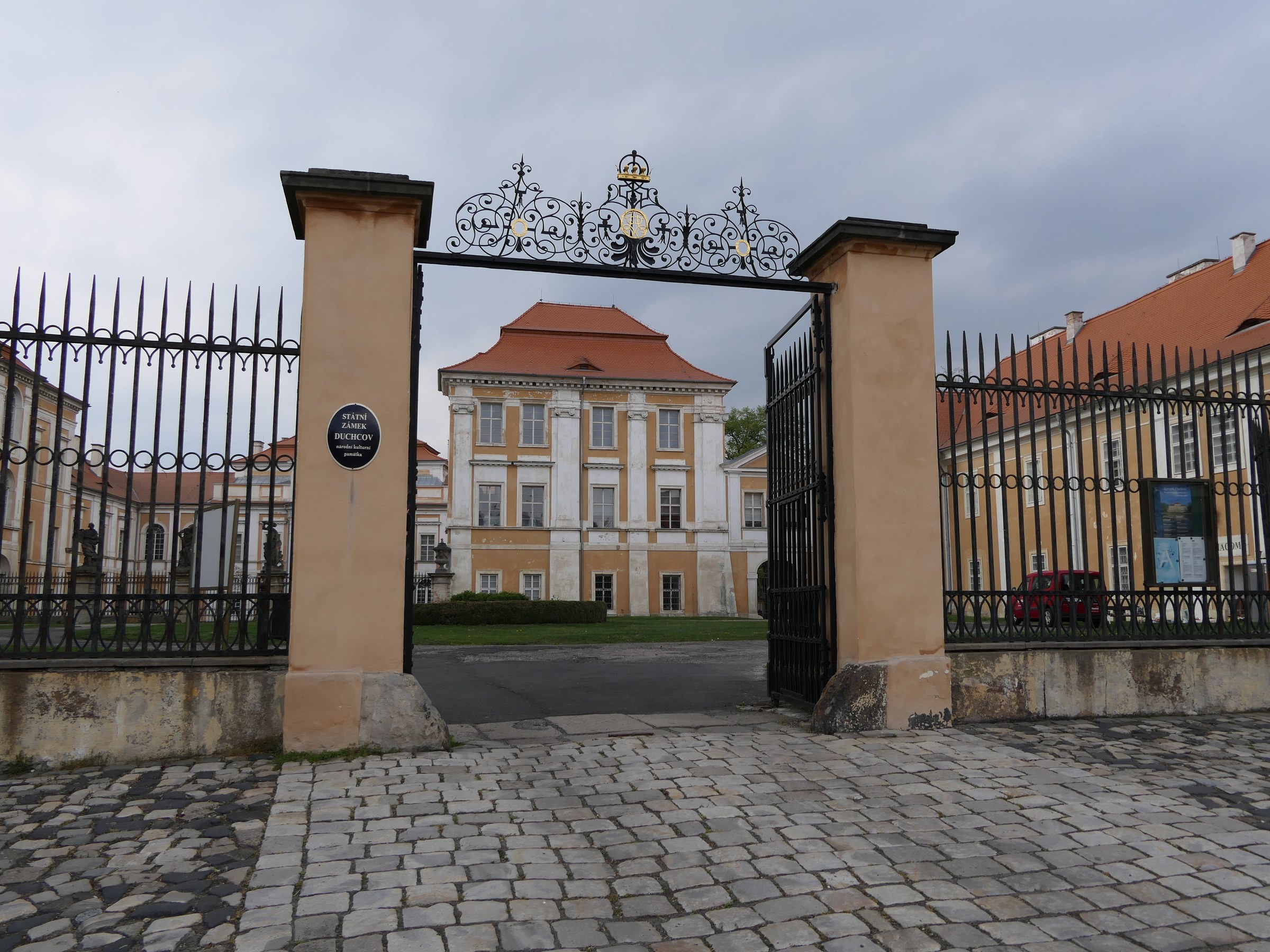
"Dux: The Last Years"
Thirteen years in a Bohemian library — where the adventurer became an author.
The appointment
In 1785, after drifting through Paris, Vienna, and Prague, Casanova accepted the post of librarian to Count Joseph Karl von Waldstein at the château of Dux (Duchcov) in Bohemia. He was sixty. The wandering was over.
The writing years
Dux was productive. Between 1786 and 1788 he published the philosophical pamphlet Soliloque d’un penseur, the escape narrative Histoire de ma fuite, and the five-volume novel Icosameron — and then, from 1789, began the work that mattered: Histoire de ma vie. He wrote it in French, from memory, in roughly 3,700 manuscript pages, working until shortly before his death. Visitors — notably the Prince de Ligne — heard him read passages aloud and described the readings as possessing “the dramatic, the rapid, the comic.”
The old man’s Venice
Casanova never returned to Venice after the 1782–83 expulsion. He followed the news of the revolution in France and, in 1797, the dissolution of the Republic of Venice itself — his native state, ended by Napoleon’s Treaty of Campo Formio. He died at Dux on 4 June 1798, aged seventy-three, and was buried there. The grave is unmarked; its exact location is uncertain.
Source notes
- The Waldstein appointment (1785), the Dux publications, and the death date follow the BnF “Fonds Casanova” documentation and the Pléiade edition (2015).
- The Prince de Ligne’s description of the readings (“du dramatique, de la rapidité, du comique”) is from Ligne’s own memoirs, as quoted in the scholarly literature.
- The unmarked grave and uncertain location are the consensus of the biographical literature; no authenticated tomb survives.