People
Monarchs, philosophers, patrons, and priests — the documented cast of the memoirs.
Zanetta Farussi (1708–1776) and Gaetano Casanova (d. 1733)
His parents, both actors. His mother toured Europe’s stages; his father died when Giacomo was eight.
Michele Grimani (1697–1775)
Venetian patrician and Casanova’s godfather. Casanova hints in the memoirs that Grimani may have been his true father. Uncorroborated — flagged as anecdote, not fact.
Matteo Bragadin (1689–1767)
Venetian senator who, after Casanova “saved” his life during a stroke (the memoirs’ account), effectively adopted him, funding his early career. A documented patron; the occult dabbling they shared fed the 1755 arrest dossier.
Marino Balbi
Renegade priest and Casanova’s fellow prisoner in the Piombi; the co-escapee of the night of 31 October – 1 November 1756. A documented figure; the escape account is corroborated by Venetian records.
The Abbé de Bernis (1715–1794)
François-Joachim de Pierres de Bernis, French cardinal and diplomat, Casanova’s patron in Paris and the conduit for the 1757 lottery scheme.
Jeanne de Lascaris, Marquise d’Urfé (1706–1775)
Wealthy widow and occultist; Casanova’s alchemical schemes with her (1759–60) ended with his flight from France. Documented in correspondence as well as the memoirs.
Voltaire (1694–1778)
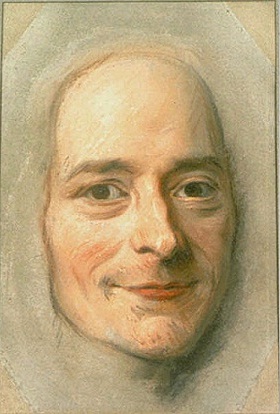
Casanova visited him at Ferney in August 1760; days of debate. The portrait on this page is Maurice Quentin de La Tour’s 1735 pastel — a genuine likeness, public domain. The meeting itself rests on Casanova’s memoirs.
Frederick the Great (1712–1786)
Audience at Sans-Souci in 1764. Documented in the memoirs; no Prussian record of substance survives.
Catherine the Great (1729–1796)
St. Petersburg, 1764–65. Casanova proposed calendar reform; it was not adopted. The memoirs’ account is uncorroborated in Russian archives.
Marie Charpillon
London courtesan of 1763; the memoirs’ most destructive affair. Her historical trace outside the memoirs is thin — treat the details as his account.
Manon Balletti (1740–1776)
Parisian actress, one of the memoirs’ great loves (1757–60). A genuine portrait by Jean-Marc Nattier (1757) survives — one of the few verifiable faces in Casanova’s story.
Joseph Karl von Waldstein (1755–1814)
Bohemian count who appointed Casanova librarian at Dux in 1785 and supported him for thirteen years. Documented.
The Prince de Ligne (1735–1814)
Charles-Joseph, Prince de Ligne, the Austrian field marshal who visited Casanova at Dux and heard him read from the memoirs; his own memoirs describe Casanova’s readings as possessing “du dramatique, de la rapidité, du comique” — the dramatic, the rapid, the comic.
Source notes
- Biographical details follow the Pléiade Histoire de ma vie (2015) notes and the BnF “Fonds Casanova” documentation. Where a figure is known only from Casanova’s account, that is stated.
- The Voltaire portrait: Maurice Quentin de La Tour, Portrait of Voltaire, 1735 (Nationalmuseum, Stockholm) — public domain; the artist died in 1788.